From the Observer archive, 24 May 1964: Mods v Rockers: Britain’s summer of discontent

I have discovered the digital archives of several publications and they contain fascinating contemporary reports of events and happenings in the past. More importantly, I can also access them.This is one about the Mods in 1964 and the leaders known as Faces. Incredible! I’ve found lots more like this and I feel quite excited by it all. Will post more as I collect them.
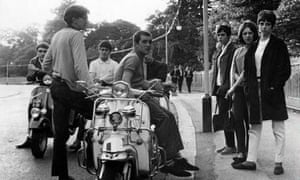
Observer journalist Peter Dunn hangs out at the Scene for a Mods’ eye view of the tribal war that led to the vicious battle of Margate in 1964.
Teenage mods

Teenage mods keeping up with the fashion.


The Mod and Rocker season will probably last in its present form until August Bank Holiday. It will feature renewed forays to the south coast and possibly to Southend. Last Monday’s fighting at Brighton and Margate, followed by skirmishes throughout the week in London, is then expected to enter its final phase. That, in any event, was the opinion of a Mod who stood outside the Scene, the rhythm and blues club off Great Windmill Street, early yesterday. It was raining and dark and he wore sunglasses.

He was a smallish boy who came from Liverpool to find work and had got a job loading crates in a London milk depot. The languid Merseyside tone underplayed the alternating exhilaration and disappointments of his life – the T-shirt he got by “chatting up a Yank”; the purple heart pills he could buy at 18s 6d for 20; the singlehanded fight he almost had in Paddington with three Rockers; and the battle of Margate. “We just charged up the beach. There were 800 of us and 100 Rockers. I didn’t see what was going on because I was at the back with my tart.”

Last week’s fighting in London isolated both factions even further from the public, which welcomed the hearty talk about “hooligans… rats… and miserable specimens” from the seaside magistrates’ bench. The heavy sentences handed down last week have led to some ominous threats of retaliation. “If anyone fined me £75,” a Mod said, “I’d go back and do some real damage; put a few windows through with a hammer.”

Mods and Rockers have co-existed comparatively well for a year or so – the Mods, neatly dressed and on scooters, the Rockers in studded leather jackets and on motorbikes. The Rockers may have jeered at the Mods’ fancier ways (sublimating sex, as one Mod’s father put it, to the problems of motorbike clutchplates) but they had been slowly copying the Mods’ form of dress. When, for example, the Mods’ high-heel boots went out of fashion, the Rockers started wearing them.

Mods are losing interest in their scooters but they do care about changing fashions and spend £4 or £5 a week to keep up to date. The latest trend is towards American crew-cuts, T-shirts with big letters, Y for Yale, H for Harvard.

Seventy-five per cent of the Scene’s members are reckoned to be middle class and can usually afford to follow the trends; the rest tend to say that fashion is no longer so important.

Four of the Mods outside the Scene at 2am yesterday – two still carrying their Margate war wounds – said they stayed out all night because they wanted to enjoy themselves while they still had time. One said: “My old lady raised hell the first few times. I’m not going home tonight. I might go in for a wash-up tomorrow but I’ll be out again all tomorrow night.”(Observer 24th May 1964)

Faces that lead the Mods

The Beat Generation

Vinyl Renewal's avatarVinyl Renewal

You’re sitting in a coffeehouse in New York – Greenwich Village to be precise. To your left sits a cup of what you hope will fuel a productive afternoon of writing, with the spread of papers, pens and books that adorn the small, round table. As the sun rears its head through the misty window, your senses are aroused by the plumes of smoke and rumblings of music, your ears prick to the excited conversation – it’s the 1950s and you’re part of something, something vaguely resembling a counter-culture revolution (or at least that’s what you like to think.) Throngs of dissidents, poets, artists, writers, social explorers fill the joint. Creative anarchists reacting against the ugly bloat of materialism induced by World War II, experiencing the mysticism of drugs to the Beat.

Image

“Beat” was a condition, a radical removal from the mindless conformity fraught by consumerism. A common theme that…

View original post 1,169 more words

A Review of 2015 – Covers by Warhol, Blake, Voormann, Hirst & Banksy

An interesting blog showing the scale of Andy Warhol’s cover art. Truly prodigious, and it doesn’t even cover the 50s jazz albums.

rockdoc999's avatarrecordart

My collection of record cover art by my favourite five artists continues to grow. 2015 provided almost fifty new covers on record and CD. The statistics show there were:
– Twenty-seven covers with Andy Warhol’s art (eleven on CD) and four covers that were Warhol related – more of those later.
– Five covers (well three really) with Klaus Voorman’s art,
– Three covers with Damien Hirst art
– Two covers with Banksy’s art
– Five covers with Peter Blake’s art
– One cover with Nat Finklestein’s portrait of Andy Warhol
– One cover with images of diverse pop artists works.

ANDY WARHOL COVERS
There were four really rare covers that I got hold of in 2015. These were:
1. Ultra Violet‘s 1973 album “Ultra Violet“, which I bought in April,
2. A copy of The Rolling Stones‘ “Sticky Fingers” nicely autographed by Andy…

View original post 1,371 more words

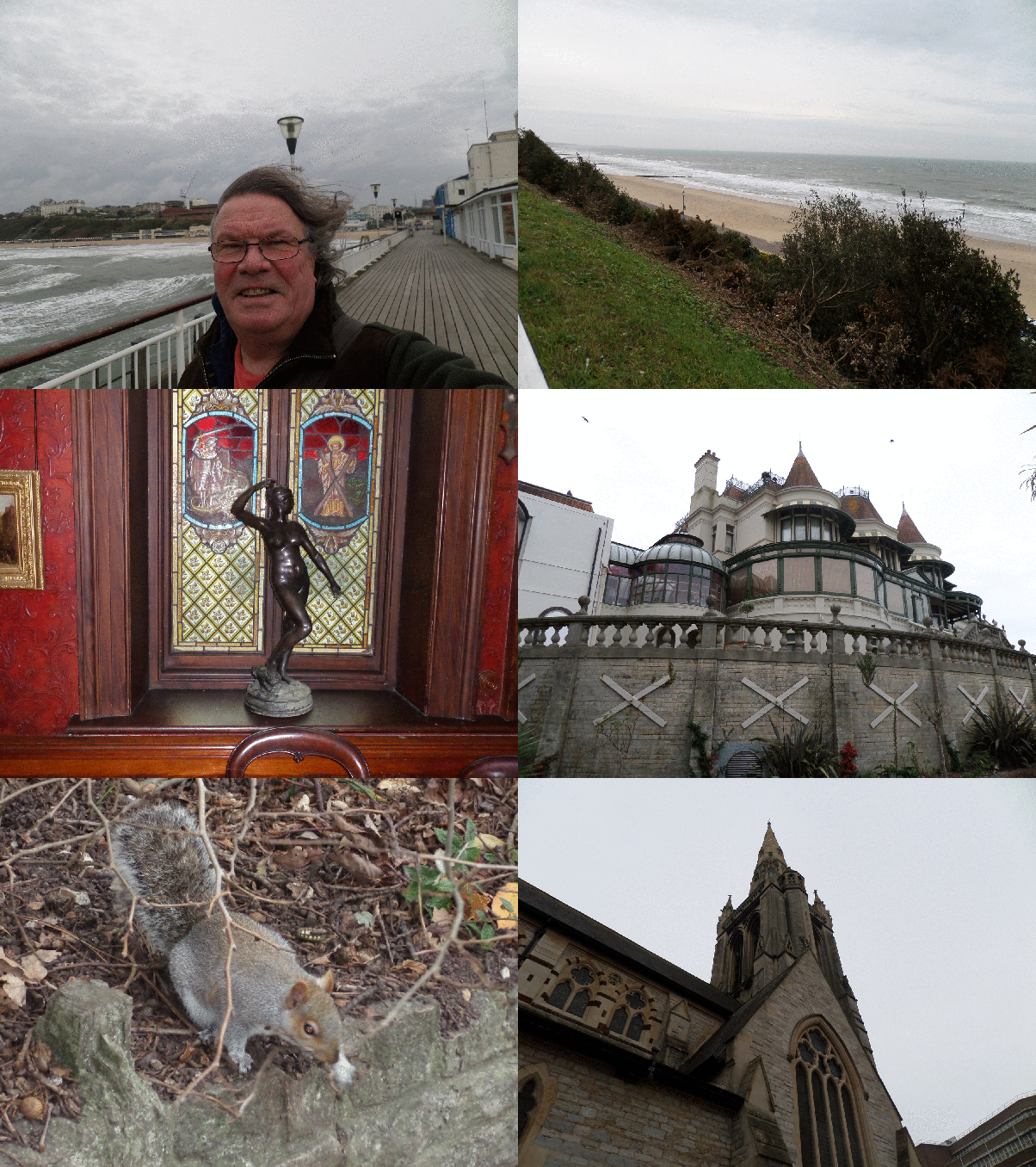
Photo Gallery of Bournemouth 2nd December 2015

Bournemouth Gif

Here are some photos I took of Bournemouth in December 2015. I was there for a day and was amazed how interesting and beautiful it is, especially the beach!

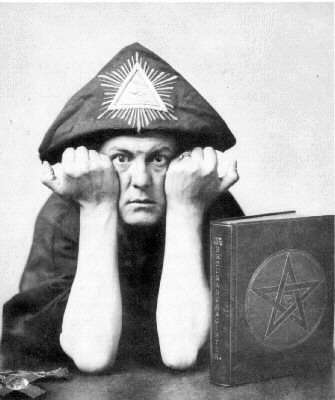
Jimmy Page, Aleister Crowley and the curse of Eddie And The Hot Rods

peterwatts1975's avatarThe Great Wen

For the full story of the curse of “Do Anything You Wanna Do”, see my interview with the band in this month’s issue of Uncut magazine. 

It’s easy to turn your nose up at any mention of Aleister Crowley, especially if you have little interest in the occult and esoteric world in which he thrived. But to do so means ignoring the man’s often brilliant writing – his Diary of A Drug Fiend is a superior pulp classic, for instance – and also missing out on some of the greatest anecdotes of the 20th century.

For the uninitiated, Crowley (1875–1947) was a British writer who used sex, drugs and magic –often simultaneously – to try to attain altered states of mind and who achieved such a level of notoriety for his activities that he was brandished the ‘wickedest man in the world’. If not wicked, he was certainly a character. As well as signing his letters ‘666’ and conducting numerous affairs…

View original post 561 more words

Robert Fraser: the butterfly, Performance and the Rolling Stones

Another good 60s London piece.

peterwatts1975's avatarThe Great Wen

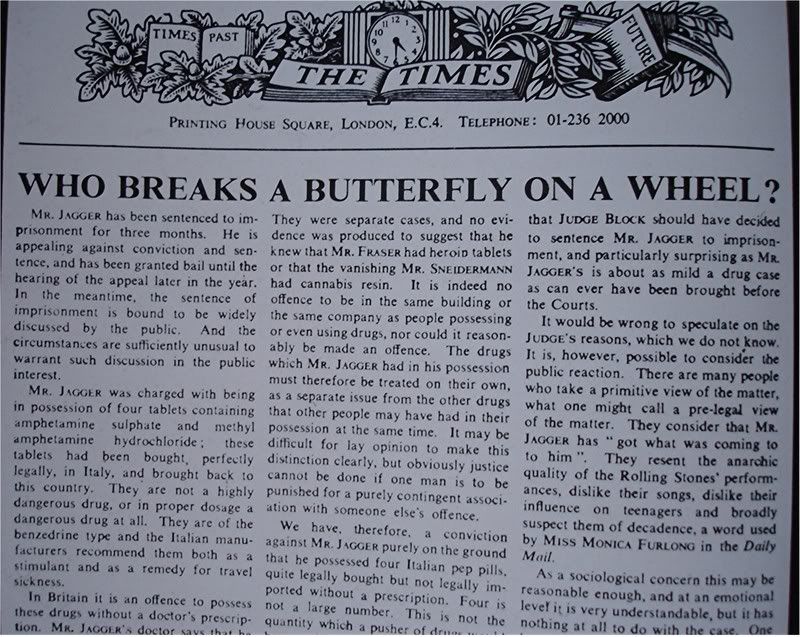
I’ve often thought that when William Rees-Mogg wrote his famous editorial in the wake of the Redlands court case, the butterfly was not so much Mick Jagger or Keith Richards but the third party in that sorry affair. Art dealer Robert Fraser was convicted alongside the Rolling Stones for possession, but while Richards and Jagger were spared prison partly thanks to the Times editorial, Fraser pleaded guilt and was sent to Wormwood Scrubs. It’s difficult now to think of Richards and Jagger as butterflies; Fraser was the one that got left behind to get broken.

Some of letters and telegrams Fraser received and sent while during his four months at the Scrubs feature in the Pace Gallery’s superb exhibition, A Strong Sweet Smell Of Incense, which runs until 28th March. The title comes from Richard Hamilton’s collage, created as a response to the Redlands bust.

It is displayed alongside one…

View original post 698 more words

Syd, psychedelia, If…. and the Olympics: an interview with Kevin Whitney

I enjoyed reading this. Insight into Syd Barrett and the London counterculture of the 60s.

peterwatts1975's avatarThe Great Wen

I have a piece in the current issue of Uncut about Psychedelia,  a film made in 1969 and featuring Syd Barrett. The film has been sitting underneath Kevin Whitney’s bed for 40 years, but will be shown in June 2014 at the ICA ahead of its sale. Whitney was on the fringes of the psychedelic movement in the late-1960s and later became the first official artist of the Olympic movement. ‘In my work there are still hints of psychedelic imagery,’ he tells me. ‘But using beautiful athletes instead of mad freaks.’ 

Psychedelia can be seen at Room&Book: ICA Art Book Fair, ICA, 6-8 June. 

——-

‘I was at art school until 1970 and during I was making the film. I was inspired by psychedelic light shows, which I’d screen on the front of Chelsea Art School  at underground pop shows at the Roundhouse. Chelsea Art School was a modern building off…

View original post 980 more words

2014 in review

The WordPress.com stats helper monkeys prepared a 2014 annual report for this blog.

Here’s an excerpt:

The concert hall at the Sydney Opera House holds 2,700 people. This blog was viewed about 8,400 times in 2014. If it were a concert at Sydney Opera House, it would take about 3 sold-out performances for that many people to see it.

Click here to see the complete report.