Kenny Wilson Live at The Donkey, Leicester 15th August 8 p.m.

“Steady Rollin’ Man” a drawing by Andrew Jackson

Here’s a recent pencil drawing of me by Leicester artist Andrew Jackson. It shows me playing a guitar that I bought from him, and mutual influences in the background: Leonard Cohen, Bob Dylan, Joni Mitchell, Django Reinhardt. What an amazing piece of work!

“Act III” a new recording by Kenny Wilson

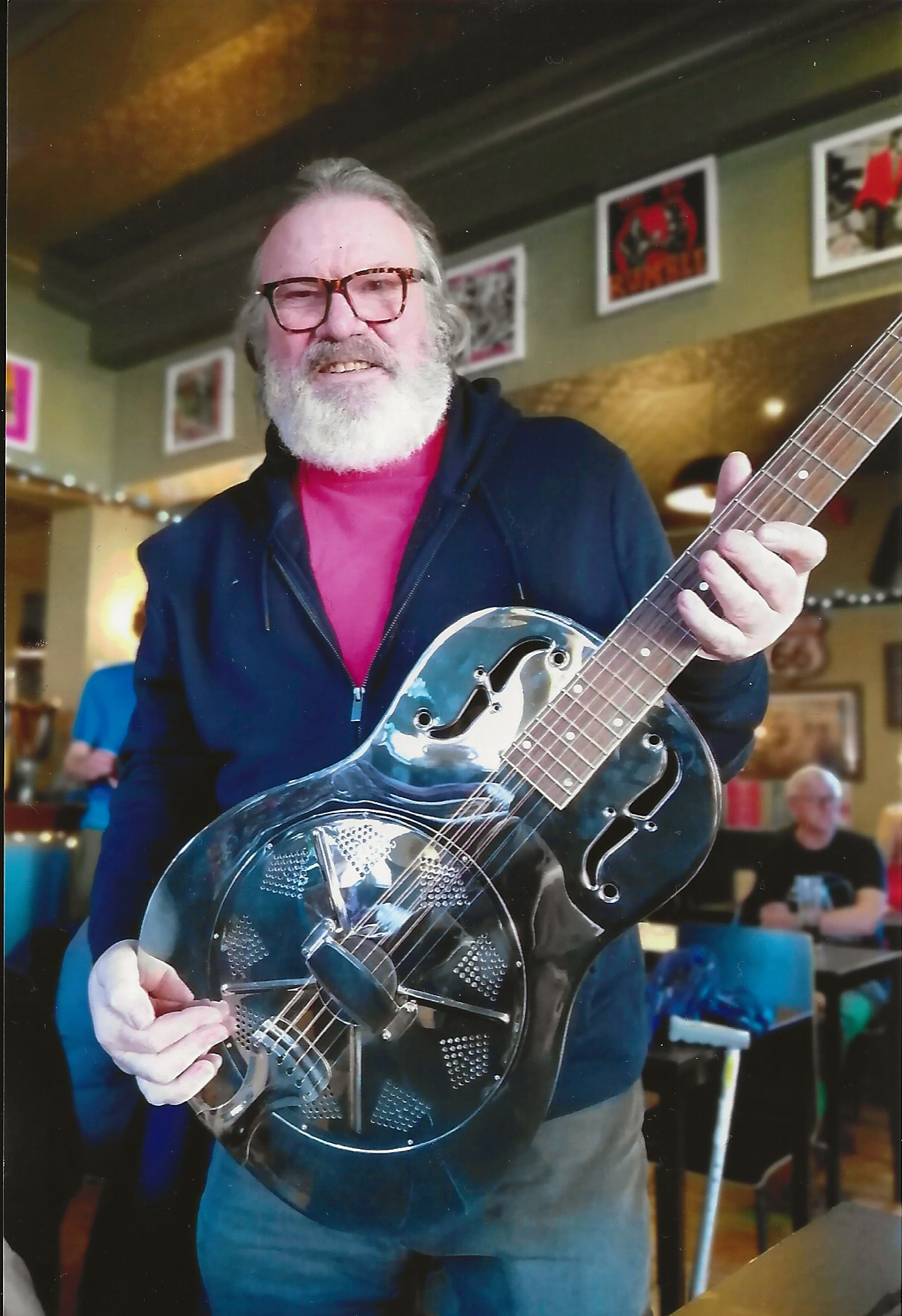
My new Gold Tone Resonator featured on this recording

Here is a new recording I have done of a song by Kenton Hall called “Act III”. It is part of a project called “Omniopath” which features cover recordings of his new album “Idiopath” that can be found here:

Kenton Hall “Idiopath”

It is a hugely ambitious project involving 36 different artists from around the World. This is what he messaged me about it:

“We’ve got the unenviable task of mastering 36 tracks by 36 different artists together. 😂 Oh and here’s the link to pre-orders for the covers album if you care to tell anyone”

https://kentonhallthenecessarymeasures.bandcamp.com/album/omniopath

Kenton Hall

I feel honoured to be a part of this. Here is my recording;

“Act III” by Kenny Wilson on Soundcloud

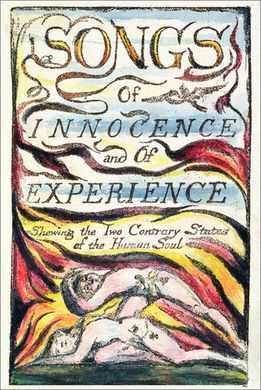
“Auguries of Innocence” by William Blake

I’ve been really slow in posting this. It is my adaption of William Blake’s poem “Auguries of Innocence” and I did it more than six months ago. It is very long and I recorded it in my home studio and created a video. It took a very long time, but I think it was worth it!

I have always been impressed and inspired by the work of Blake. Two years ago I went to an excellent exhibition of his work in London. It showed it in the original context of the books he printed, and for the first time I really felt I understood what he was trying to say. Before then I was only guessing. Previously, the pictures tended to be isolated from the poems. I had his poetry in a book without illustrations, and I had seen the pictures in art books. The meanings totally change, and become clear, when they are brought together and seen as a whole.

This is the poem that was the inspiration for Jim Morrison of the Doors and used in his song “End of the Night”. I have spoken most of it and sang the ending lines which are powerful and iconic:

Every night and every morn, some to misery are born

Every morn and every night, some are born to sweet delight

Some are born to sweet delight, some are born to endless night

Auguries of Innocence adapted and recorded by Kenny Wilson

Watch the Tate Modern Restore Mark Rothko’s Vandalized Painting, Black on Maroon: 18 Months of Work Condensed Into 17 Minutes


Here is a video and article from the site Open Culture. It relates to what I have written previously about art vandalism and the harsh treatment of it’s less famous perpetrators, especially as it is seen as real artistic expression by some major World artists, particularly Chinese dissident Ai Weiwei. It raises real issues of cognitive dissonance in how art is viewed, commodified and fetishized by modern capitalistic society.

“The people who weep before my pictures are having the same religious experience I had when I painted them. And if you, as you say, are moved only by their color relationship, then you miss the point.” — Mark Rothko

In 2012, a Russian artist calling himself Vladimir Umanets wrote his name and the words “A potential piece of yellowism” in black marker on the corner of Mark Rothko’s 1958 canvas Black on Maroon. The damage to the painting, housed at the Tate Modern since 1970, was substantial, and it turned out to be one of the museum’s most challenging restoration projects, as well as one of its most successful — “far more successful than any of us dared hope,” said Tate director Nicholas Serota. The painting went back on display in May of 2014.

Due to Rothko’s layered technique, the painting’s “surface is really delicate and it turned out that most of the solvent systems that could dissolve and remove the ink could potentially damage the painting as well.” Patricia Smithen, the Tate’s head of conservation, told The Guardian. The video above from the museum shows the art and science that went into restoring the famous work, an eighteen-month-long process that involved some reverse engineering from a canvas donated by the Rothko family.

Black on Maroon seemed like an odd choice for a protest, as a blogger at Art History Abroad wrote the following day: “‘Why Rothko?’. His paintings [are] often criticised by those who don’t favour their abstraction, but rarely deemed politically or socially motivated to a point that they might provoke vandalism.” The presence of Black on Maroon and other Seagram Murals at the Tate, in fact, mark an act of protest by Rothko himself (who committed suicide the day the paintings arrived at the London museum).

The Seagram Murals were originally commissioned for the Four Seasons restaurant in the Seagram building in New York, designed by Mies van der Rohe and Philip Johnson. Seven paintings were commissioned, Rothko made 30. He reportedly told Harper’s editor John Fischer he wanted to create “something that will ruin the appetite of every son-of-a-bitch who ever eats in that room.” When he finally got the chance to dine at the completed restaurant, he was disgusted, withdrew his work, and returned his commission, writing, “it seemed clear to me at once that the two were not for each other.” He spent the next decade thinking about how and where to display the paintings.

Umanets did not seem to care much about the history of the murals in the Tate’s Rothko Room and claims his choice had no meaning. “I didn’t single out Rothko to make my statement,” he wrote in a public letter of apology published after he spent a year and a half in prison. “I would have done the same had the artist been Damien Hirst or Tracey Emin. It was a spontaneous decision and nothing personal.” Likewise, his Dada-esqe “Manifesto of Yellowism” outlines a program with a distinct lack of concern for specificity and a vaguely satirical desire to flatten art into one color, one purpose, one meaning.

Even as he publicly abjured his act of protest (maybe by order of the court?), Umanets also expressed a genuine concern for the future of art, “Art has become a business, which appears to serve only the needs of the art market. As a result the art world no longer has radical thinkers and polemicists willing to scythe new and different pathways. Everyone is playing safe.” He might have made his point more clearly by going after Jeff Koons. Rothko was a radical thinker, and his Seagram Murals represent a final refusal to compromise with the demands of the art market.

Black on Maroon by Mark Rothko

Black on Maroon is a large unframed oil painting on a horizontally orientated rectangular canvas. The base colour of the painting is a deep maroon. As is suggested by the work’s title, this is overlaid with a large black rectangle, which in turn encloses two slimmer, vertical maroon rectangles, suggesting a window-like structure. The black paint forms a solid block of colour but the edges are feathered, blurring into the areas of maroon. Different pigments have been used within the maroon, blending the colour from a deep wine to a muted mauve with accents of red. This changing tone gives a sense of depth in an otherwise abstract composition.

Black on Maroon was painted by the abstract expressionist artist Mark Rothko. He is best known, alongside fellow Americans Barnett Newman and Robert Motherwell, as a pioneer of colour field painting. The movement was characterised by simplified compositions of unbroken colour, which produced a flat picture plane. Black on Maroon was painted on a single sheet of tightly stretched cotton duck canvas. The canvas was primed with a base coat of maroon paint made from powder pigments mixed into rabbit skin glue. The glue within the paint shrank as it dried, giving the painting’s surface its matt finish. Onto the base Rothko added a second coat that he subsequently scraped away to leave a thin coating of colour. The black paint was then added in fast, broken brushstrokes, using a large commercial decorator’s brush. With broad sweeping gestures Rothko spread the paint onto the canvas surface, muddying the edges between the blocks of colour, creating a sense of movement and depth. Accents of red acrylic paint were dabbed onto the lower left corner. With time these have become more apparent as the pigments within the maroon portion of the canvas have faded at different rates.

In early 1958 Rothko was commissioned to paint a series of murals for the exclusive Four Seasons restaurant in the Seagram Building in New York, designed by Mies van der Rohe and Philip Johnson. Rothko was interested in the possibility of having a lasting setting for his paintings to be seen as a group. He wanted to create an encompassing environment of the sort he had encountered when visiting Michelangelo’s vestibule in the Laurentian Library in Florence in 1950 and again in 1959:

I was much influenced subconsciously by Michelangelo’s walls in the staircase room of the Medicean Library in Florence. He achieved just the kind of feeling I’m after – he makes the viewers feel that they are trapped in a room where all the doors and windows are bricked up, so that all they can do is butt their heads forever against the wall.
(Quoted in Breslin 2012, p.400.)

Rothko started work on the Seagram commission in a large new studio, which allowed him to simulate the restaurant’s private dining room. Between 1958 and 1959 Rothko created three series of paintings, but was unsatisfied with the first and sold these paintings as individual panels. In the second and third series Rothko experimented with varying permutations of the floating window frame and moved towards a more sombre colour palette, to counter the perception that his work was decorative. Black on Maroon belongs to the second series. By the time Rothko had completed these works he had developed doubts about the appropriateness of the restaurant setting, which led to his withdrawal from the commission. However, this group of works is still referred to as the ‘Seagram Murals’.

The works were shown at Rothko’s 1961 retrospective at the Whitechapel Art Gallery in London, and in 1965 Norman Reid, then Director of Tate, approached Rothko about extending his representation in the gallery’s collection. Rothko suggested a group of paintings from the ‘Seagram Murals’, to be displayed in a dedicated room. Black on Maroon was the first painting to be donated in 1968, although it was known as Sketch for ‘Mural No. 6’ or Two Openings in Black Over Wine. The following year Reid provided Rothko with a small cardboard maquette of the designated gallery space to finalise his selection and propose a hang. (This maquette is now in Tate’s Archive, TGA 872, and is reproduced in Borchardt-Hume 2008, pp.143–5.) Rothko then donated eight further paintings and the title of Black on Maroon was brought in line with the rest of the group (Tate T01163T01170), four of which are also titled Black on Maroon and four Red on Maroon (Tate T01163–T01170). The ‘Seagram Murals’ have since been displayed almost continuously at Tate, albeit in different arrangements, in what is commonly termed the ‘Rothko Room’ (for installation views see Borchardt-Hume 2008, pp.98, 142).

Statement by Vladimir Umanets

Back in 2012 I made a mistake. I wanted to change the art world by introducing Yellowism – an autonomous phenomenon in contemporary visual culture – to the people. But defacing Mark Rothko’s Black on Maroon at the Tate Modern was not the right way of going about it.

First, it was wrong to deface the work of a fellow artist, more poignantly a piece by Rothko, whose work and ethos I greatly admire. In the words of Oscar Wilde, “Yet each man kills the thing he loves.” I didn’t single out Rothko to make my statement; I would have done the same had the artist been Damien Hirst or Tracey Emin. It was a spontaneous decision and nothing personal.Advertisement

Second, my actions were wrong because they served not only to heap ridicule upon myself, but also to turn the public against Yellowism. It doesn’t matter how important one believes one’s ideas to be, nor how genuine one’s intentions are, it is unacceptable to deface someone’s property without permission. What I did was selfish. My act has hurt many art enthusiasts and I deeply regret it.

I spent a year and a half in prison, in which time the British public has paid huge restoration costs, and Yellowism has became associated with crime. While doing time I tried to be as constructive as possible, making drafts and notes on art, and studying British culture. After being released, I realised that as long as one’s health is good, and one is able to live freely, the problems we face, big or small, are things that everyone has to go through and there is no need to sweat the small stuff.

Notwithstanding the negative repercussions of my actions, I believe I can use this valuable experience for good. For example, I think it is important to comment on the contemporary art world as it stands today, which to my mind isn’t good.

Contemporary artists simply produce things which aren’t creative in their essence or spirit. Every work is a duplicate of a previous piece. It’s like dealing with exactly the same work only in different variations. The graphic designer Neville Brody once compared this condition to that of using the ingredients of different colours, shapes and sizes, where in fact real creativity is missing.

Our generation has become more productive but less effectual in the visual language that we use. Maybe because of the demands of the market, artists have lost genuine creativity. Where are the new art movements? Where lies the voices of visceral dissent and thirst for change? Art has become a business, which appears to serve only the needs of the art market. As a result the art world no longer has radical thinkers and polemicists willing to scythe new and different pathways. Everyone is playing safe.

Yellowism was established to confront this issue. I still believe that the concept of Yellowism is apposite, and for me, it is a tool that can bring about necessary change in visual culture. It shows that any intellectual or even emotional messages can be easily changed and reversed. Using very primitive and absurd examples of flattening all the meaning into a yellow colour, Yellowism shows in a very direct way that creativity in its pure form has completely vanished. That said, Yellowism cannot be used as an excuse to scribble on someone else’s art.

From this whole farrago, I have gained a valuable experience and learned an expensive lesson. I offer my sincere apologies to the Rothko family, to art enthusiasts and to the British public. I am very glad that the restoration project has finished, and visitors can enjoy Rothko’s masterpiece again.

The Guardian Thu 15 May 2014

Further reading
Simon Wilson, Tate Gallery: An Illustrated Companion, London 1991.
Achim Borchardt-Hume (ed.), Rothko: The Late Series, exhibition catalogue, Tate Modern, London 2008, reproduced pp.114–15.
James Breslin, Mark Rothko: A Biography, Chicago 2012.

Phoebe Roberts
May 2016

Supported by the Terra Foundation for American Art.

Related Content: 

A Short Documentary on Artist Jeff Koons, Narrated by Scarlett Johansson

Watch an Art Conservator Bring Classic Paintings Back to Life in Intriguingly Narrated Videos

The MoMA Teaches You How to Paint Like Pollock, Rothko, de Kooning & Other Abstract Painters

Great Art Explained: Watch 15 Minute Introductions to Great Works by Warhol, Rothko, Kahlo, Picasso & More

Josh Jones is a writer and musician based in Durham, NC. Follow him at @jdmagness

Phil Riley: “Such a Tiny Boat” new E.P. released on Spotify and YouTube 1st June 2021

Phil Riley is part of a group I belong to called “Reynard Collective”. We are all singer/songwriters promoting and developing our work. It is already yielding results. Here is a link to a Spotify playlist of Phil’s new E.P. “Such a Tiny Boat”

“Such a Tiny Boat” by Phil Riley

Out on June 1st, ‘Such a Tiny Boat’ is the latest digital-only release from Phil Riley. Available on Spotify, YouTube Music, Amazon and other major streaming platforms, it is a five song EP of original material, recorded in-home in true lockdown fashion, mixed, mastered and produced by Phil. Two tracks feature Chris Chambers on lap-steel, dobro and electric guitar. Listen carefully too for a special backing vocal guest appearance from Deborah Seabrook.

“Such a Tiny Boat” on YouTube