The Velvet Underground & Nico at 50: A New York Extravaganza in Paris

It is 50 years since The Velvet Underground & Nico album was recorded. A major new exhibition in Paris tells the story of the group which created it and of the New York scene which produced them. Parisians hold the Velvets in particular esteem and, as Allan Campbell notes, the city itself has often been the scene of key moments in the Velvets’ history, not least a legendary appearance at Le Bataclan.
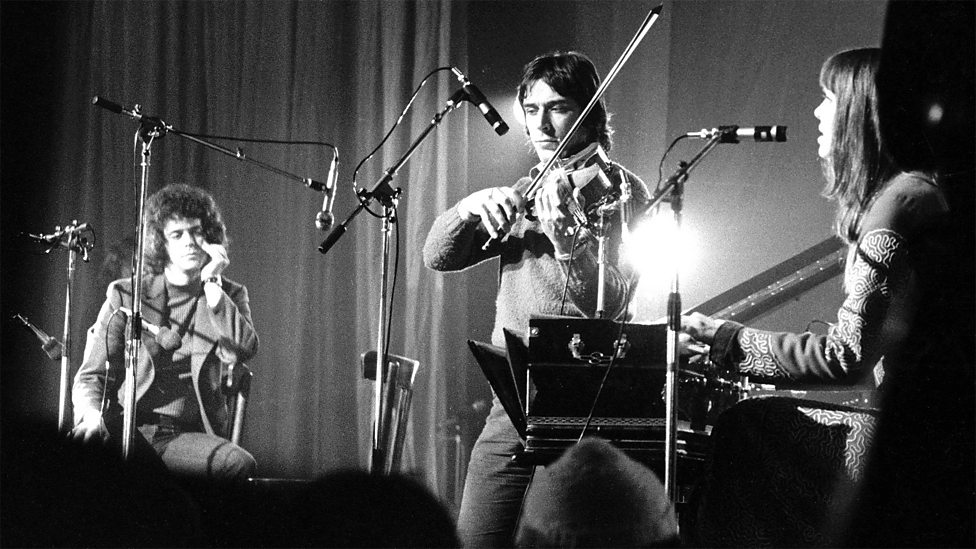
 

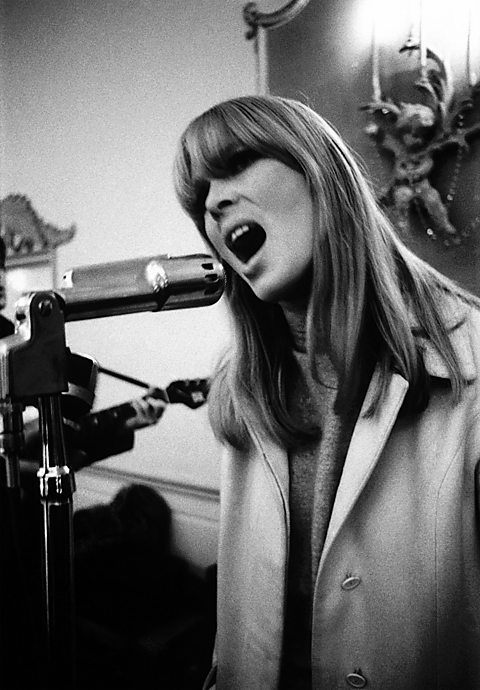
Lou Reed, John Cale and Nico at Le Bataclan, Paris, 1972 | Mick Gold / Redferns / Getty Images


It’s a cold January evening in Paris. Outside Le Bataclan an estimated 2,000 disconsolate rock fans are milling around in front of the ornate Chinese-style theatre on the Boulevard Voltaire. They are ticket-less and unable to gain access to a concert which would later be considered the venue’s most famous; a title only lost on Friday 13 November 2015, when dreadful events unfolded at an Eagles of Death Metal show.

For the first time since the demise of the original Velvet Underground, co-conspirators Lou Reed and John Cale with ‘chanteuse’ Nico were to perform a one-off acoustic set at Le Bataclan for the benefit of French TV show Pop 2 and one thousand grateful fans.

It was 1972; Nico was already a veteran of three solo albums; Cale had made his debut with Vintage Violence, remixed a Barbra Streisand album and cut an LP with minimalist composer Terry Riley, while Reed – surprisingly – was yet to release a solo album.

In fact, on the night of the Paris concert he should have been at the Portobello Hotel in London for a ‘listening party’ for his debut LP, Lou Reed, with no less than Lillian Roxon, then the leading rock critic in the US.

Despite what Melody Maker described as “a minor ‘speed-freak riot’ in the foyer”, the Bataclan concert was a languid, beguiling affair but not quite as languid as the ensuing live album, which had been mastered at the wrong speed.

France’s on-off love affair with US culture was nothing new; notably, réalisateurs Jean Luc Godard and Jean Pierre Melville had already expressed it on screen. But with the Velvets, the relationship seemed to become more geographically specific.

In return for the Statue of Liberty, New York had belatedly returned the favour by sending its dark emissaries to the City of Light. And the French, who had after all defined noir, seemed especially appreciative.
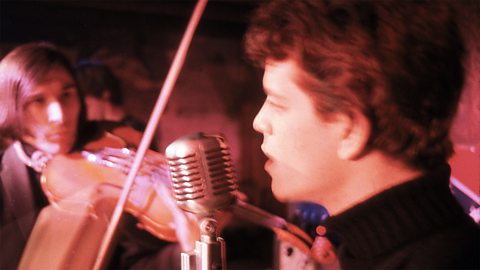
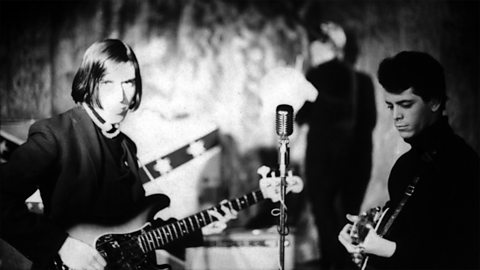
 

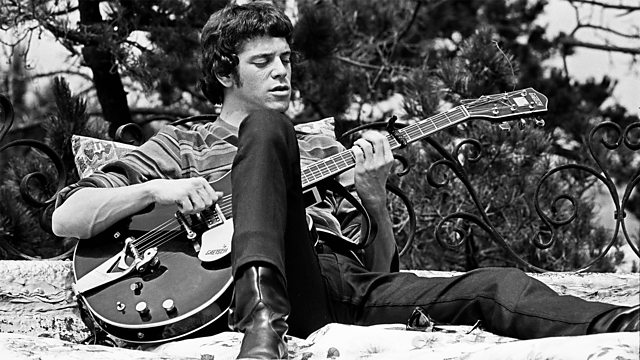
John Cale and Lou Reed at Cafe Bizarre on West 3rd Street, New York City, 1965 © Adam Ritchie

John Cale, Maureen Tucker and Lou Reed at Cafe Bizarre on West 3rd Street, New York City, 1965 © Adam Ritchie

In 1990, when the Velvets reunited – spontaneously, it seemed – once again it would be in Paris. This time it was at the Fondation Cartier pour l’art contemporain, which had mounted an Andy Warhol multi-media show and invited key members of his Factory crowd to attend.

It was expected that Reed and Cale would play something from their Warhol tribute album, Songs for Drella, but they were soon joined onstage by band mates Sterling Morrison and Mo Tucker.

“We kicked into Heroin, which we hadn’t played in twenty-two years”, said Cale, “And it was just the same as always. After I got off stage … I was on the point of tears”.

As the location for this rapprochement suggests, it seems that Parisians have always viewed the Velvet Underground as a work of art and not just because of their association with Warhol.

Now, with the 50th anniversary of the recording of their debut, The Velvet Underground & Nico, the city has again come good for the Velvets with an extensive celebratory show at the Philharmonie de Paris entitled The Velvet Underground: New York Extravaganza.
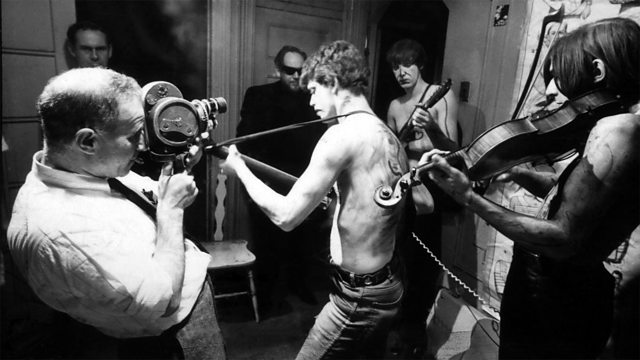
 

The Making of an Underground Film, a report about Piero Heliczer’s film Venus In Furs, with the Velvet Underground performing Heroin, was broadcast on December 31, 1965 on the CBS Walter Cronkite Show. © Adam Ritchie


Curated by Christian Fevret, founder of Les Inrockuptibles music magazine, with art director and producer Carole Mirabello, the exhibition places the Velvets at the centre of New York’s post war avant garde, probably the only environment which could have produced such a group.

Paris, don’t forget what you taught the rest of us: if you keep an open heart it will beat forever. Goodnight.
John Cale

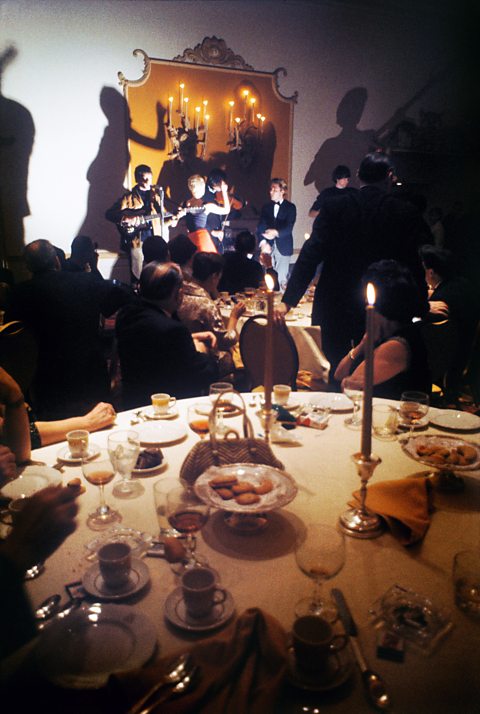
Music and visuals tell the VU story, taking in Reed and Cale’s first meeting in 1964 to their first show with Nico at the annual dinner of the New York Society for Clinical Psychiatry (Hotel Delmonico, New York, 1966), then their appearances at Warhol’s legendary Exploding Plastic Inevitable multimedia show and then on to the group’s eventual disintegration.

Even after all these years, the music and photographs of the Velvets scintillate.

John Cale returned to Paris to open the exhibition, with full band, string quartet and guests including Pete Doherty, Mark Lanegan and Lou Doillon. Cale, in a nod both to the city’s recent pain and its ability to inspire, reportedly concluded the concert with these words:

“Paris, don’t forget what you taught the rest of us: if you keep an open heart it will beat forever. Goodnight.”

The Velvet Underground: New York Extravaganza is at the Philharmonie de Paris until 21 August, 2016.
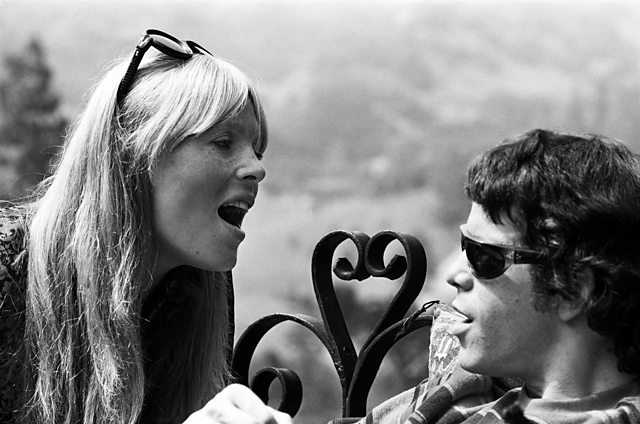
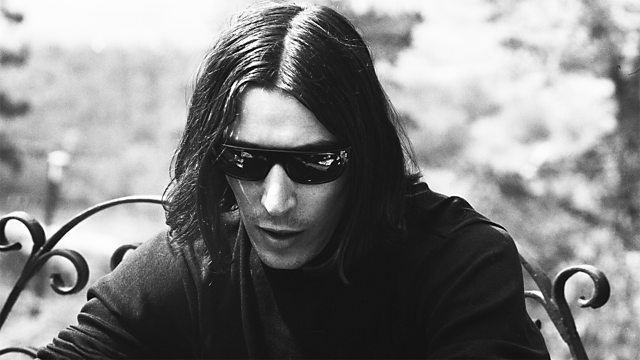
Nico and Lou Reed at The Castle, Los Angeles, 1966 © Lisa Law

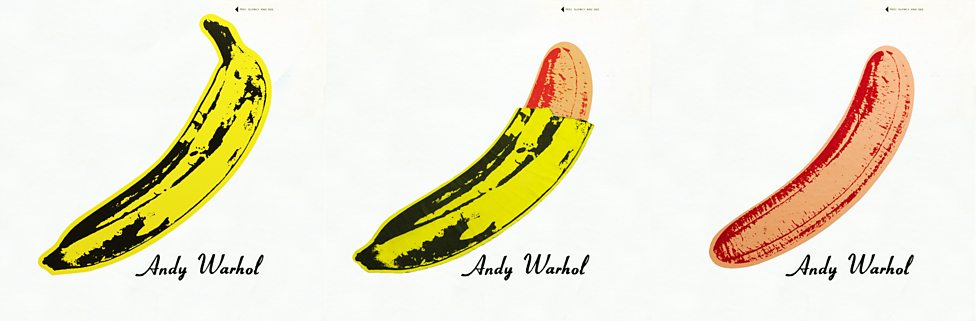
The Exploding Plastic Inevitable: Photograph on back cover of The Velvet Underground & Nico album

Story behind the album cover [recordart blog]
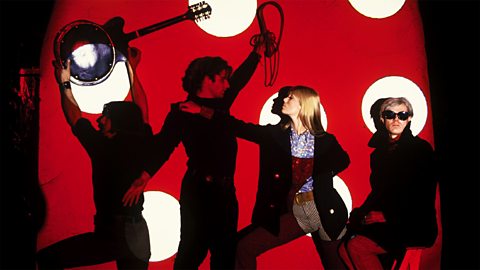
Left to right: John Cale, Gerard Malanga, Nico, Andy Warhol, New York City, circa 1966 | Photo by Herve Gloaguen / Gamma-Rapho via Getty Images

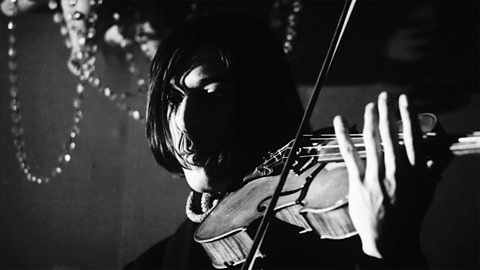
John Cale at Hotel Delmonico, New York, 1966 © Adam Ritchie

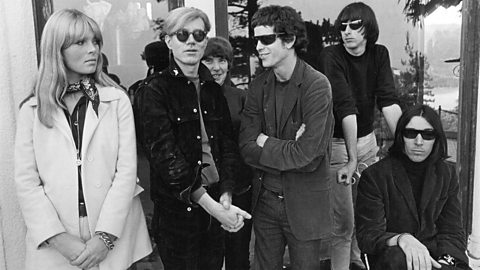
The Velvet Underground & Nico with Andy Warhol, Hollywood Hills, 1966 © Gerard Malanga / Courtesy Galerie Caroline Smulders, Paris

John Cale and Lou Reed at Cafe Bizarre on West 3rd Street, New York City, 1965 © Adam Ritchie

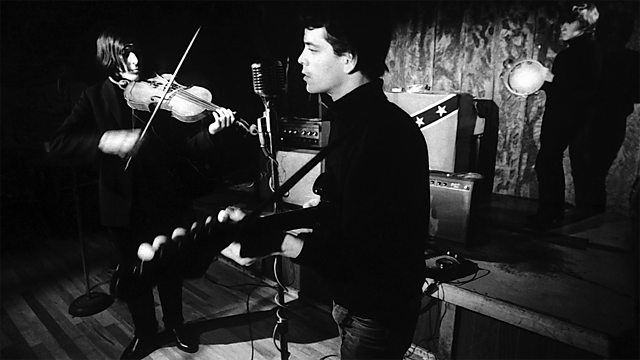
The Velvet Underground at Cafe Bizarre on West 3rd Street, New York City, 1965 © Adam Ritchie

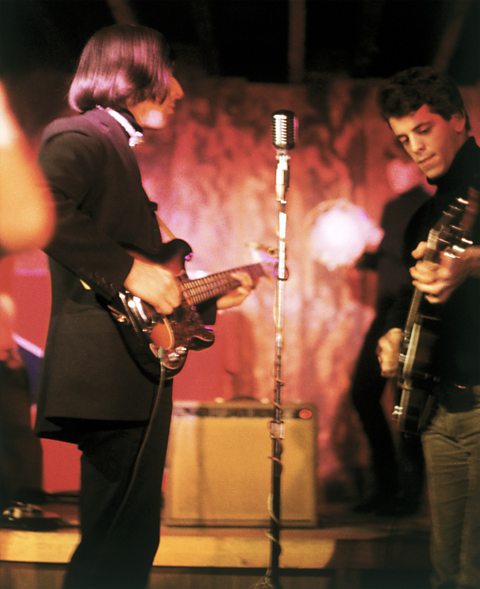
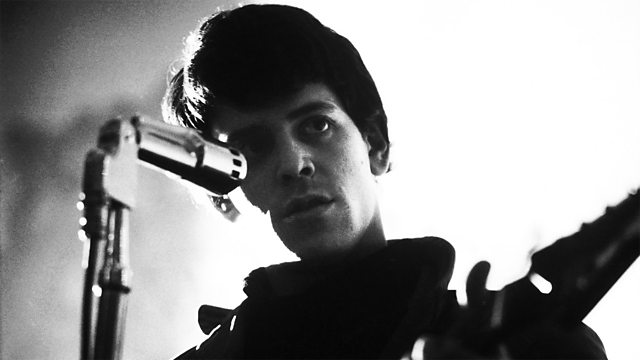
Lou Reed at The Castle, Los Angeles, 1966 © Lisa Law

Edie Sedgwick and Gerard Malanga on stage with The Velvet Underground at the New York Society for Clinical Psychiatry annual dinner at the Delmonico Hotel, New York, 13 January 1966 | Photo by Adam Ritchie / Redferns

John Cale at The Castle, Los Angeles, 1966 © Lisa Law

Lou Reed at Hotel Delmonico, New York, 1966 © Adam Ritchie

Nico at Hotel Delmonico, New York, 1966 © Adam Ritchie

John Hopkins Guardian Obituary 15/02/2015

This obituary is so good with so many interesting links that I have decided to repost it here. The complete movie of “Tonight Let’s All Make Love in London” is stunning!

John 'Hoppy' Hopkins in 2000.

John ‘Hoppy’ Hopkins in 2000. Photograph: Sarah Lee

John “Hoppy” Hopkins, who has died aged 77, was one of the best-known counterculture figures of London in the 1960s, not just as a photographer and journalist, but as a political activist. He was the co-founder of at least three underground projects: International Times magazine; a fabled but short-lived music venue called the UFO Club; and the London Free school, a community-based adult education initiative. During the couple of years up to June 1967, when Hoppy was jailed for cannabis possession, Britain’s fertile and diverse counterculture took much of its inspiration from him, and he was the closest thing the movement ever had to a leader.

Son of Victor and Evelyn Hopkins, John was born in Slough, Berkshire; his father was a naval engineer. After attending Felsted school, Essex, he took a general science degree at Emmanuel College, Cambridge, receiving his MA in 1958. As Hoppy put it, he discovered sex, drugs and jazz at Cambridge and pursued all three with great diligence. After graduation, he worked as a lab technician for the Atomic Energy Authority at Harwell, but lost his security clearance following a jaunt to Moscow for a communist youth festival.

In 1960, he moved to London and became a photographer. I first encountered him backstage at the 1964 Blues and Gospel Caravan, photographing Muddy Waters and Sister Rosetta Tharpe for Melody Maker. His photographs are among the most evocative of the era, including brilliantly insightful shots of Beatles and Stones, John Lee Hooker and Thelonious Monk, as well as an early 60s underbelly of tattoo parlours, bikers, fetishists and derelict architecture. They are gathered together in the book From the Hip (2008).

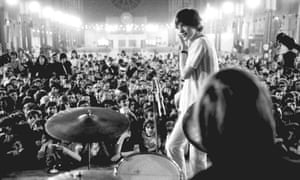
The Rolling Stones performing at the All Night Rave in 1967.

The Rolling Stones performing at the All Night Rave in 1967. Photograph: John ‘Hoppy’ Hopkins/Redferns

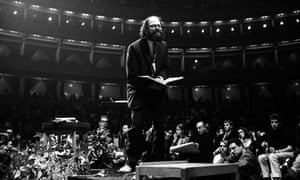
In the summer of 1965, Hoppy joined Barry Miles (future biographer of Allen Ginsberg and William Burroughs) and the poet Michael Horovitz to organise the first of the events that went on to be known as the Poetry Olympics at the Royal Albert Hall, London. It featured Ginsberg, Lawrence Ferlinghetti, Christopher Logue and many others; that night, the standing-room-only audience recognised themselves for the first time as a counterculture.

Two months later, Hoppy started the first of a lifelong series of projects to democratise communication and information. The London Free school, based in Notting Hill, achieved few of these goals, but its cash-raising events gave Pink Floyd its start and Hoppy’s inspired collaboration with the local West Indian community helped bring about the first annual Notting Hill Carnival.

In October 1966, he and Miles published the first edition of International Times, Europe’s first underground paper. The IT launch party at the Roundhouse – with music by Pink Floyd and Soft Machine – inspired Hoppy and me to open the UFO Club in a West End dance hall. Every Friday, Hoppy would sit atop a scaffold at the back of the club, playing records, making gnomic announcements, showing films, and projecting light shows; he imbued those nights of music, theatre and dance with an unforgettable atmosphere.

In response to a police raid in March 1967 on the IT offices, Hoppy mounted the 14 Hour Technicolor Dream, a fundraising concert at Alexandra Palace; Peter Whitehead’s film of the event, Tonite Let’s All Make Love in London (1967), shows a dazed John Lennon wandering in the huge crowd, transfixed by Yoko Ono cutting a paper dress off a girl as Pink Floyd greet the north London sunrise.

Allen Ginsberg at the Albert Hall in 1965.

Allen Ginsberg at the Albert Hall in 1965. Photograph: John ‘Hoppy’ Hopkins


Revolutions are, almost by definition, factional, but during those golden years, the working-class anarchists, vaguely aristocratic bohemians, musicians, crusaders, poets and dropouts were united in their respect and affection for Hoppy. That he was seen as leader of this amorphous movement espousing recreational drug-taking, political protest, sexual liberation and “obscene” literature led to his downfall. Hoppy’s flat was raided and a small amount of hashish found.

At his trial, he attacked the prohibition on drugs and, having been branded a “menace to society” by the judge, was handed a nine-month term in Wormwood Scrubs. Outrage at the sentence inspired ubiquitous Free Hoppy graffiti as well as a full-page celebrity protest in the Times, paid for by Paul McCartney. Without him, UFO lost its way and closed by October; the scene he had inspired was reduced in his absence by internal bickering, police harassment and better-funded competition.

Though prison drained his energy for leadership, the following decades saw Hoppy persevere with his ideals. Inspired by the Paris events of May 1968, he and Miles converted IT into a workers’ co-operative. He started Bit, an information service, and continued to review and give advice on drugs in IT, under the pseudonym Bradley Martin.

Tonite Let’s All Make Love in London, 1967, by Peter Whitehead

With his partner, Sue Hall, in 1969 he formed Fantasy Factory, a facility that revolutionised lowtech video editing, bringing it within reach of community activists and independent directors. Unesco funded Fantasy Factory’s educational package and distributed it widely in the developing world. A chance meeting in 1990 led to Hoppy designing and constructing a greenhouse for horticultural research at the University of Westminster.

Diagnosed with Parkinson’s disease in 2007, he never lost his curiosity or his charm. In his final months, though his speech and movement were severely hindered, he was still able to open wide his brightest eye and say “wow.”

A marriage to Susan Zeiger (aka Suzy Creamcheese) in 1968 ended in divorce. Hoppy is survived by his sister, Marilyn.
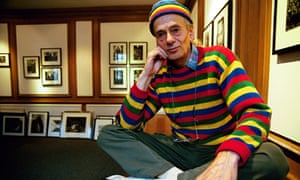
Joe Boyd

BBC – 50s Britannia – Trad Jazz Britannia 2013 – Video Dailymotion

Documentary telling the story of Britain’s postwar infatuation with old New Orleans jazz. With rare 78rpm imports as their only guide, a generation of amateur jazz enthusiasts including Humphrey Lyttelton and Chris Barber created a traditional jazz scene that strove to recreate the essence and freedom of 1920s New Orleans in 1950s Britain. While British youth jived in smoky dives, the music itself was beset by arguments of authenticity. Begging to differ with the source material, Ken Colyer embarked on a pilgrimage to New Orleans in search of the real deal while a larger ideological war raged between mouldy figs and dirty boppers- traditional and modern jazz fans. As its popularity grew, commercial forces descended and a ‘trad’ boom sent the purists running for cover at the turn of the decade – the first and last time New Orleans jazz became British pop. Featuring Acker Bilk, Chris Barber and previously unseen interviews with the late Humphrey Lyttelton and George Melly.

Photo Videos of Some of My Trips

I have recently got into making videos of the photos of some of my trips accompanied by music that has been important to me over the years. This includes tracks by the likes of the Velvet Underground, Country Joe and the Fish and Bix Beiderbecke. Quite a variety really. It is amazing how the music changes the way I look at the photos, and they seem to take on a different meaning. It’s quite an eye opener really.

The first one is of Essex and Suffolk when I went on a tour playing with my old friends, folk group Bodger’s Mate. It is accompanied by “I’m Coming Virginia”, one of my favourite tracks by Bix Beiderbecke from 1927. I’m amazed how well the music stands up. It could almost be contemporary. The guitar playing by Eddie Lang is incredibly subtle, considering it is the main rhythm part.

The next one is of the Old Town of Marbella with “Grace” by Country Joe and the Fish. “Electric Music for the Mind and Body” was one of my favourite albums when I was young, along with the even better “I Feel Like I’m Fixin’ to Die”. I first went to Marbella in 1971 and didn’t go back there until last year. It was virtually unrecognisable until I found the Old Town, which was actually the only bit that existed when I went there before, and it was just the same and the memories came flooding back.

The last one is of my photos of New York when I visited there in 2012. This was the first time I had ever been to America and I had a brilliant time. I went to all the places I had heard of when I first started playing the guitar and it felt like I had gone home. I think New York is the only place I have been where people seem to know what I’m talking about. Fantastic! Greenwich Village may have changed but it resonated with meaning for me. This is accompanied by “Sister Ray” by the Velvet Underground who were one of my favourite bands in 1968. It’s worth watching this just to hear “Sister Ray” all the way through although it is very long.

Teacher’s Strike 26th March 2014 Town Hall Square, Leicester

Here are some videos of Steve Cartwright and my involvement with the N.U.T. strike in Leicester. The p.a. system stopped working but we managed to get by!

The Image is the Servant

The Image is the Servant

Here’s me at the microphone at an event at Hansom Hall, Leicester organised by David Soden. It is a battle between performers and images taken of them and projected on to screens around the hall. Here’s a short video of one of the performances:

It was a brilliant event that reminded me a bit of the happenings and events of my youth. Mind you, the technology has changed a lot since then with banks of computers rapidly processing images as they are taken but the effect on the senses was surprisingly similar! It was not that far from the projections and light shows of the past!!

The Image is the Servant

The Image is the Servant

Kenny Wilson sings Bob Dylan’s “Like a Rolling Stone”

Kenny Wilson sings Bob Dylan’s “Like a Rolling Stone” at The Cradock Pub Open Mic, Leicester U.K. 11th September 2013

Kenny Wilson Live at the Criterion, Leicester U.K. Part Two

Second part of Kenny Wilson’s gig at the Criterion cut short by the camera battery dying. The first part can be found here Kenny Wilson Live at the Criterion Part One