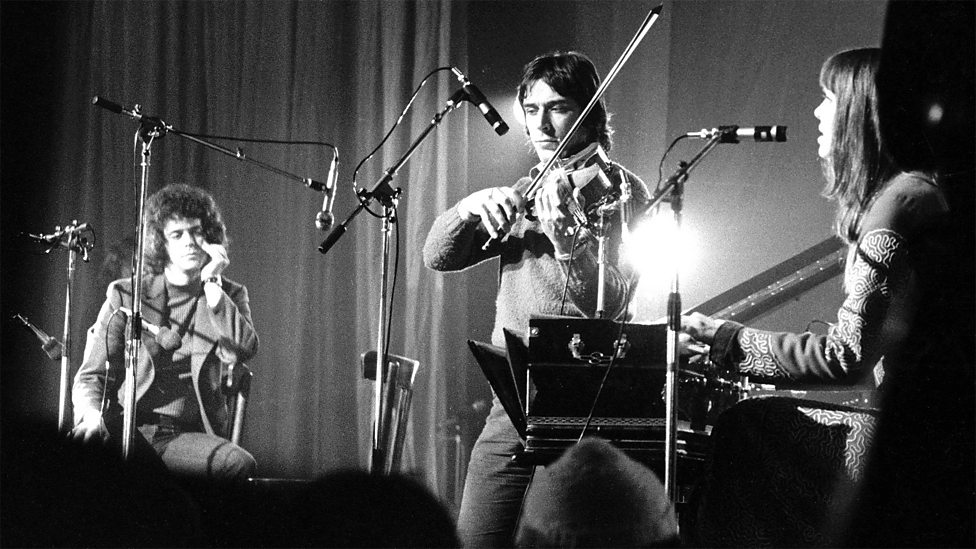
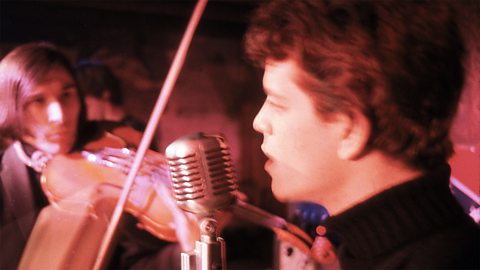
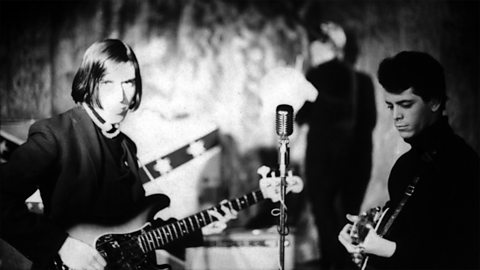
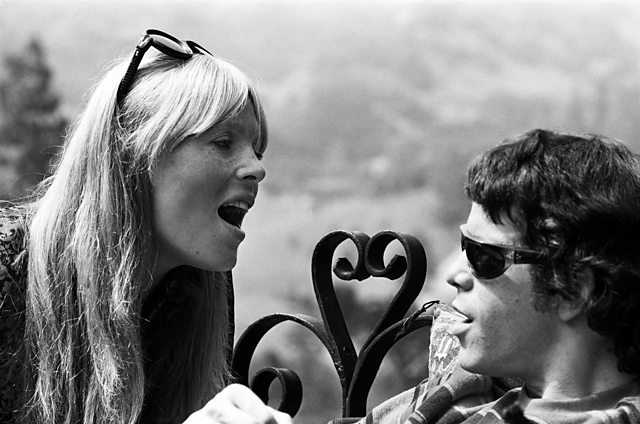
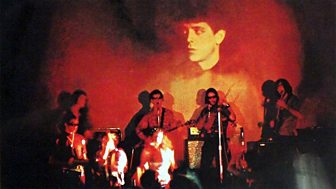
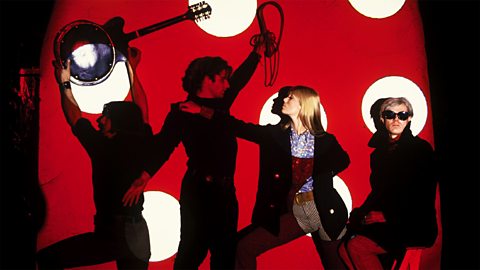
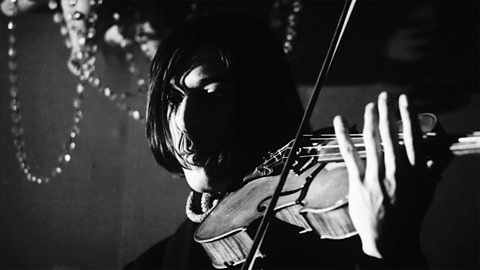
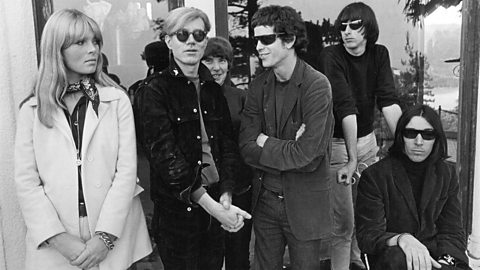
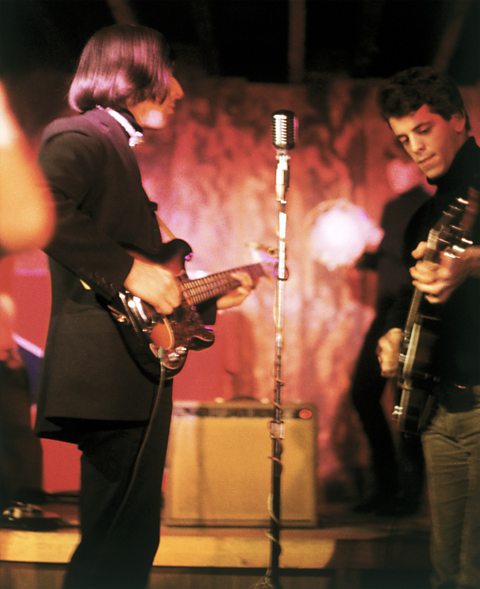
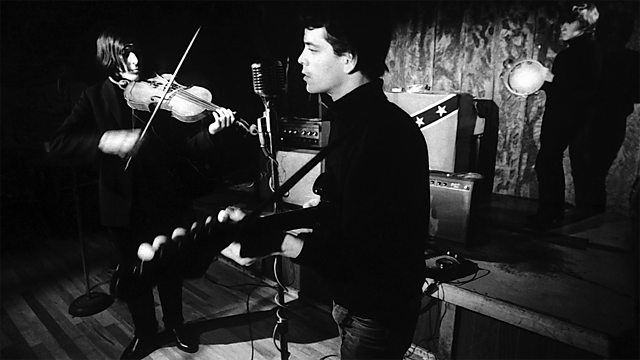
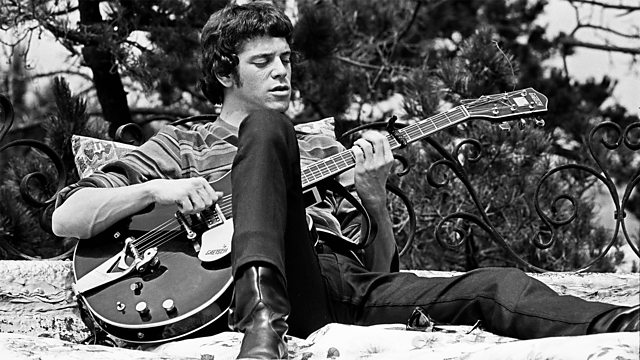
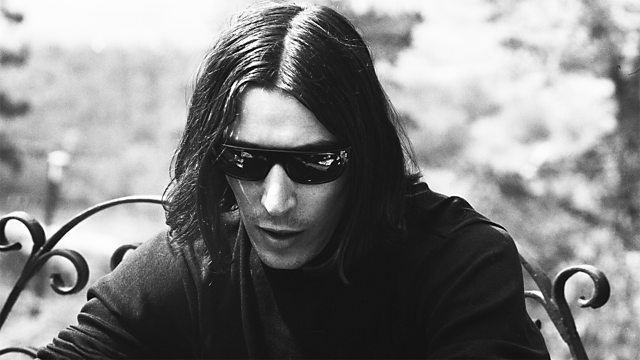
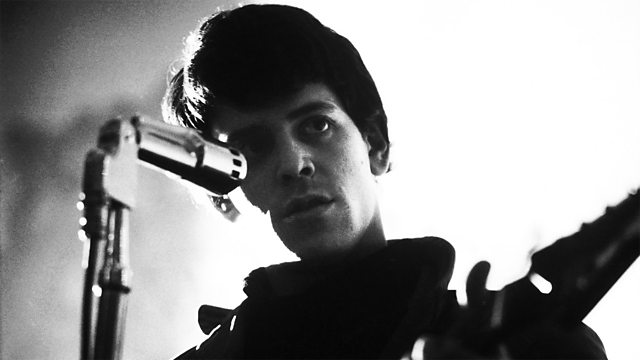
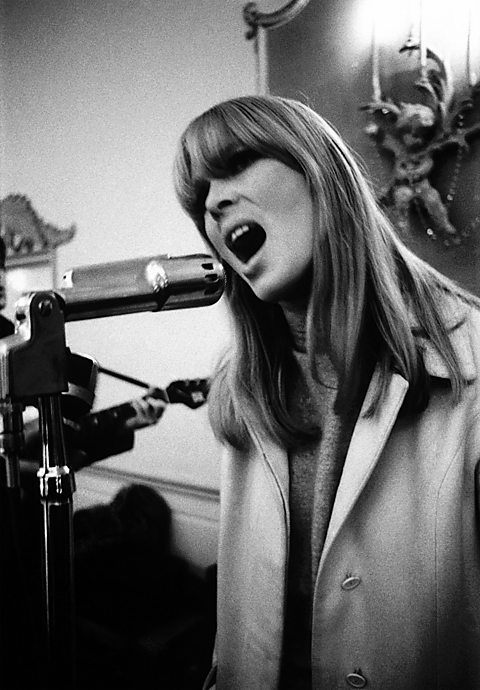
I came across Adam Ritchie when I was researching into the Velvet Underground. Most of the early pictures of the band were taken by him and Lisa Law. It seems strange that there are not more pictures of the band from this time when you consider the number of photos taken at Andy Warhol’s Factory by Billy Name and various others. The quality of Richie’s pictures are brilliant, especially as he had no training as a photographer (mind you, neither did Billy Name who also produced some outstanding prints).
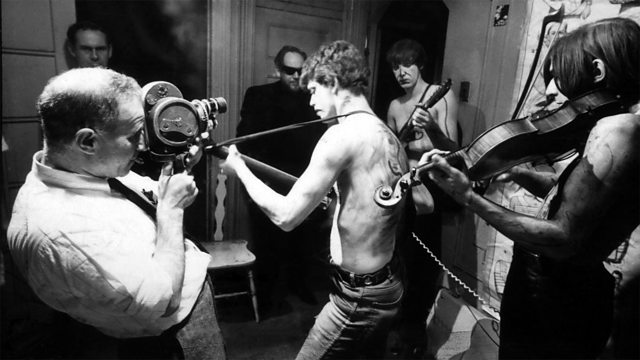
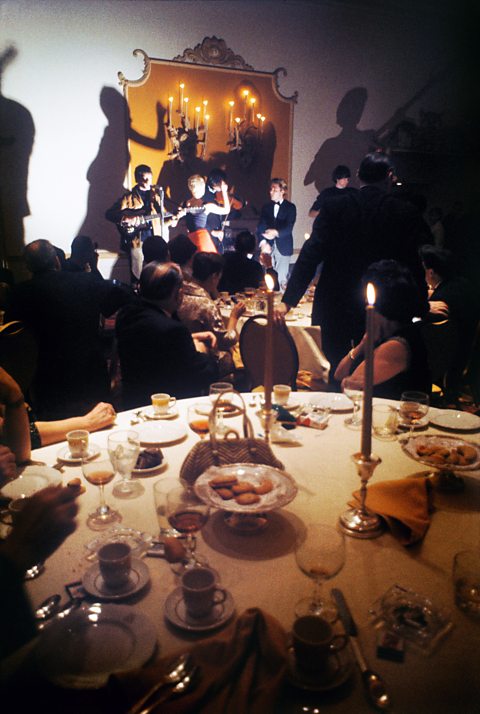
His pictures of the Velvet’s first gigs at Cafe Bizarre in New York are fascinating as are the only pictures I have seen of the New York Society for Clinical Psychiatry annual dinner at the Delmonico Hotel, New York, 13 January 1966. This still seems like one of the oddest events ever staged. What did the guests think whilst Gerard Malanga wielded his whip and the band churned out distortion and feedback at maximum volume? I’d have loved to have been a fly on the wall! The fact that it was a psychiatrist’s convention makes it even more surreal.
His photographs of Pink Floyd and Syd Barrett at the UFO club in London in 1966 also give a real insight into the period. Both the Floyd and Andy Warhol were experimenting with light shows at the time.
This is from his web site:
I went from London to New York in 1962. Found a loft on Bond Street just off the Bowery and got work doing international economic research. I moved to 277 East 10th Street in the East Village. In 1964 I bought a 35mm camera and became a photographer instead. I worked for Conde Nast’s Mademoiselle and Glamour, Esquire, Look, ESP Disk, etc. I was always interested in alternative culture and jazz. Working at night at the Bleeker Street Cinema, I got to know Jonas Mekas, Barbara Rubin, Betsey Johnson Cecil Taylor, Sunny Murray and some of the Fugs.
I disliked Andy Warhol’s celebration of tinsel and superficial glamour until I found myself on the 27th floor of an advertising agency showing my pictures to an art director. One of Andy’s helium filled silver pillows floated very slowly in a straight, even line across the huge window behind him. I was spellbound with amazement. It seemed impossible for steady movement and a lack of gusting outside the window at the 27th floor level. I didn’t say anything about it to the art director but it was clear that Andy’s understanding of the time was profound. Barbara Rubin introduced me to the Velvet Underground before she introduced them to Andy Warhol. I was mad about them because of their music and how they felt serious about what they were doing.
I came back to London in 1966 and immediately went to John ‘Hoppy’ Hopkins and Joe Boyd’s new UFO Club. I took photos of Pink Floyd’s earliest performances at the club and at the Round House. I taught photography at Central School of Art as well until 1973 when I started building houses for people in Wales and later in London until 1995.
While I was building houses, my photo lab closed down suddenly. All my photos and negatives were destroyed without my knowledge. Later I just happened to discover a battered old paper carrier bag with the Velvet Underground and Pink Floyd photos in it. That, apart from a few prints, was all that was left of 10 years professional photography.
I had always kept in touch with Rudy Franchi from the Bleeker Street Cinema. In 1997 he offered me my first exhibition, called “The Lost Photographs” at his gallery in Boston. Since then they have appeared in 40 or more books and hundreds of magazines and newspapers. They have been in exhibitions at the Whitney Museum and Boo-Hooray Gallery in New York, Victoria & Albert Museum, Tate Liverpool, Idea Gallery and Artisan Gallery in London, in Paris, Bologna, Vienna, Tokyo and in Sweden and Australia. There will be many of my photos in a new Velvet Underground show at the Cité de la Musique opening between March and August 2016.
Some of the Velvet Underground photos are also in the Andy Warhol Museum collection.
Since then it has been cabinet making, teaching furniture design, local community organising, then running a furniture company for 8 years and now I’m retired, singing in two choirs, growing delicious fruit and vegetables in allotments, Irish set dancing every week and going to classes.
What follows is an interview with Adam Ritchie from ‘Wombat’ photography and arts blog. He seems to have been equally blessed and ill-fated!

Are you a self-taught photographer?
In 1962/63 I was working doing international economic research for a New York company called Business International and living on the Lower East Side. One day I saw a rat walking calmly along my street, East 10th St, between 1st Avenue and Avenue A. I wanted to photograph what I saw. A friend, Larry Fink, was a professional photographer and he helped me buy a 35mm camera one friday, after work. I took my first photographs on Saturday, developed the film in Larry’s darkroom that evening, spent Sunday printing with his help. I went to work early on monday and covered the wall of my office with 20 prints. Everyone came in and looked at the pictures, pretty amazed that it had all happened since the office closed on friday.
The boss suggested that there was such feeling in the photos, that that is what I should really be doing. I said it was just a new hobby I had taken up that weekend for the first time and underneath it all, I was a serious economist. He kept on at me about it until finally, he fired me with three months salary in advance to force me to try and earn a living from photography. I already had a holiday back to England booked and paid for. I planned a series of photographs of people in London. Mademoiselle Magazine bought and published six pages of them. Following that I got published by Glamour Magazine (also Conde Nast), Esquire, Look and others.So yes, I was self taught.

What is your educational background?
Normal, except that I did my last two years of school at the Lycee Français de Londres and then two years of a degree in Economics at Amherst College in Massachusetts on a scholarship.
Why do I take pictures?
I’ve always being interested in seeing things and how you organize what you see. I was involved in the Underground Avant-garde in London and New York, so I wanted to show people what I saw. I saw John Coltrane, Thelonius Monk, Cecil Taylor and Velvet Underground and others in New York and when I went back to London in summer 1966, I photographed Pink Floyd earliest performances.
I taught photography at Central School of Art in London from 1966 to 1973 and took lots of other photographs, but in 1973 I resigned from teaching, went to Wales and built houses for other people. I learned from books and experience. I built houses there for 4 years and then moved back to London still building for another 8 years. I discovered about then that all my photographs and negatives had been destroyed (except for Velvet Underground and Pink Floyd pictures and a few prints. I spent a couple of years at a furniture college learning cabinet making and furniture design and launched my own studio and also taught furniture design.

Were you friends with the Velvet Underground?
I talked a bit with John Cale while I was photographing the making of the Venus in Furs film but mainly I photographed them because I loved their music. My friend, Barbara Rubin, was playing a nun in the Venus in Furs film and phoned me to say I had to come and listen to this amazing new band. Obviously I took cameras. Piero Heliczer, whose film it was, was very informal, sometimes with a film camera, sometimes blowing an alto sax. There was a CBS News film crew doing a story about The Making of an Underground Film as well so the whole thing was like a happening with everything going on at the same time.

What were your influences?
In the early 1960s, I lived in an apartment in London together with 6-7 men and women. We all read William Burroughs (Naked Lunch). He visited our apartment. We read Genet, Kerouac, Flan O’Brian, Dostoievski, Samuel Becket, etc. We listened to Charlie Parker, Coltrane, Miles Davis Thelonius Monk, Bud Powell every night.
I worked in Better Books, the most avant-garde bookshop in London with all the artists and intellectuals constant visitors. We organized happenings and spontaneous demonstrations.
The truth is I was young, intelligent, very interested in culture and alternative underground culture.
I had lived for three years in New York as a child and had later got a scholarship to attend university in Massachusetts1958-60. I had not enjoyed the university in the States but wanted to try again, so I got a work permit and went to New York in 1962 for four years. Although being an economist for work in the day, the rest of the time I listened to and saw Coltrane, Cecil Taylor, Monk. I went to many art galleries. I also worked as assistant Night Manager at the Bleeker Street Cinema and met Barbara Rubin and Jonas Mekas. I went to happenings and jazz and movies every week. I became a photographer in order to photograph what I saw. Back in London in 1966, I started a campaign in my very poor neighborhood for playgrounds and community facilities. I spent three or four years working for that in my free time and it became the largest community scheme of its sort in Europe. It is 115 000 m2 in west London built underneath an elevated motorway called Westway. Later I built houses for ten years and afterwards became a furniture maker/designer.



 Count Basie,
  Kenny Burrell,
  Kenny Burrell,
  Artie Shaw and His Orchestra,
 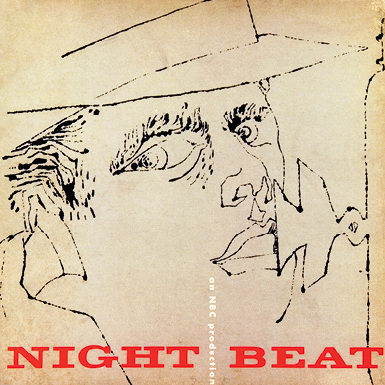 Frank Lovejoy, Night Beat, 1949
 Jay Jay Johnson, Kai Winding, and Bennie Green,
  Moondog,
  The Joe Newman Octet,
  Cool Gabriels,
  Johnny Griffin,
  Various artists, Progressive Piano, 1952


 Kenny Wilson's Blog