Dimitri Kirsanoff, born in Estonia but operating mostly in Paris, was heavily influenced by the theories of Soviet Montage. In his most famous short film, Ménilmontant (1926) – still frightfully obscure in most circles – he adheres to this style strictly, almost obsessively. His preference towards a brisk editing pace carries a unique vitality that is also seen in the work of Soviet masters Eisenstein and Vertov, who pioneered and perfected the technique of montage in the mid-to-late 1920s. But, nevertheless, I don’t think it works quite as well here. The Battleship Potemkin (1925) and The Man with the Movie Camera (1929) – perhaps the two most recognised works of Soviet montage – utilise their chosen editing style to full effect precisely because they place greater emphasis on the collective over the individual, in accordance with traditional Communist ideology. There is deliberately no emotional connection attempted nor made between the viewer and any individual movie character, for that would be contrary to the filmmaker’s intentions (interestingly, however, the montage fell out of preference from the 1930s in favour of Soviet realism).
Ménilmontant falters because it strives to create an emotional connection with the characters (particularly the younger sister, played by Nadia Sibirskaïa), but Kirsanoff’s chosen editing style continually keeps the audience at an arm’s length. The closest he comes to true pathos is with the park-bench sequence, when an old man offers some bread and meat to the famished woman, delicately avoiding eye contact to preserve her dignity. Even in this scene, the montage style intrudes. A director like Chaplin (and I’m a romantic at heart, so he’s naturally one of favourite filmmakers) would have placed the camera at a distance, framing the profiles of both the woman and the old man within the same shot, thus capturing the subtle emotions and inflections of both parties simultaneously. Kirsanoff somewhat confuses the scene, cutting sequentially between the woman, the man and the food in a manner that reduces a simple, poignant act of kindness into a technical exercise in film editing. It works adequately, of course, a precise demonstration of the Kuleshov Effect, but there’s relatively little heart in it. But we’ll cease with my complaints hereafter. I know my own film tastes well enough to recognise that what I disliked about the film – its emotional distance, for example – represents precisely what others love about it. There’s no doubting that the photography (when it’s kept on screen long enough) is breathtakingly spectacular, making accomplished use of lighting, shadows and in-camera optical effects such as dissolves, irises and superimpositions. There are touches of the surreal. Kirsanoff cuts non-discriminately forwards in time, backwards and into his characters’ dreams, fragmenting time and reality into a series of shattered images, their individual meanings obscure until considered sequentially as in the pieces of a puzzle. Most impressive, I thought, was how several shots captured the linear perspective of roads and alleys, watching his characters gradually depart into the distance as though merely following the predetermined pathways of their future. The film ends exactly as it begins – with a bloody and unexplained murder – suggesting the inevitable cycle of human suffering, its causes unknown and forever incomprehensible.
This is a video of my talk at BRLSI in July. It’s not great quality but you get the whole thing! I originally put it on YouTube but it got blocked because of my use of two Bob Dylan songs. This was a bit disappointing but I have decided to upload it here instead. I hope Bob won’t mind too much, he always seemed to understand the true value of copyright theft and plagiarism!
I am doing a talk at The Secular Hall, Humberstone Gate, Leicester on the 6th October 7.00 p.m. Hope you can make it. It should last about an hour including audio and film clips, and there will be an opportunity for questions and comments at the end. Also, in the spirit of the time, it is free.
Counterculture Talk Leicester October 6th at Secular Hall
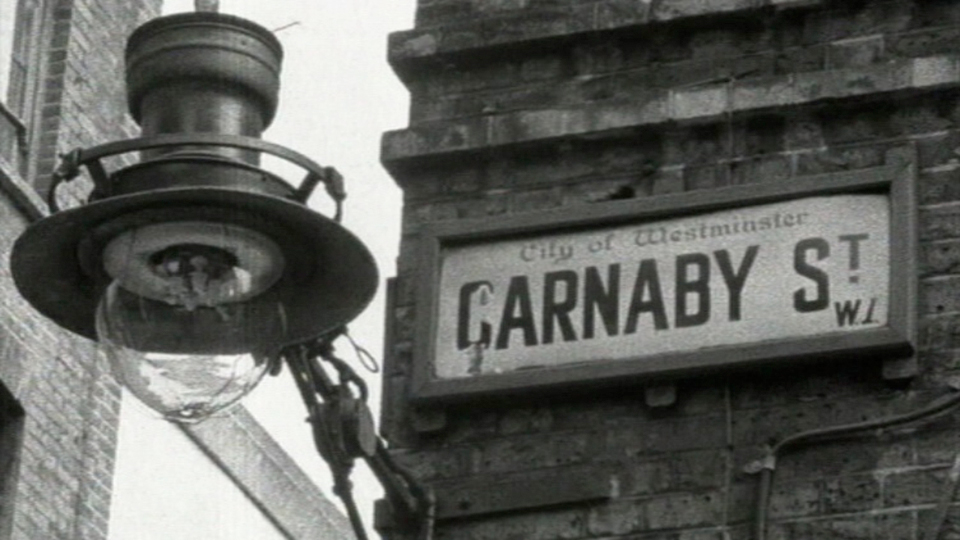
This is an article from the Guardian that cleverly shows how iconic sites in London looked in 1967 and how they look now. With a slider you can blend the two. Very impressive. It is amazing how little they have changed.
Newburgh Street (near Carnaby Street) London 1967
Newburgh Street 2017
Newburgh Street
Running parallel to Carnaby Street, Newburgh Street forms the boundary of what is known as the Newburgh Quarter, where fashionable concept stores and classic tailors sit alongside traditional pubs such as the White Horse.
Now pedestrianised and cobbled, back in 1967 it was a tarmacked road.
John Cale reflects on the 50th anniversary of ‘The Velvet Underground and Nico’ and the chaos that surrounded it. Everett Collection/Alamy
The way John Cale tells it, he had a revelation one day in the mid-Sixties. He’d dedicated the majority of his first two decades to classical and avant-garde music, to such an extent that, he says dryly, “I may have missed out on my puberty.
“I woke up one day and said, ‘Wait a minute, there are people running around singing Beatles songs,'” he recalls. “The Beatles Invasion was going on. All the enjoyment that I’d gotten as a kid out of rock & roll was receding, and I thought, ‘Let’s put something together that blends the two.’ I wanted to cross-pollinate rock with the avant-garde, and then I met Lou Reed, and that was the solution.”
The union of Cale’s musical wanderlust, spurred on by collaborating with minimalist composer La Monte Young, and Reed’s rock-steady songwriting, which he had been exercising as an in-house songwriter at Pickwick Records, became the soul of the Velvet Underground. This weekend will mark the 50th anniversary of their most daring experiment – their debut, The Velvet Underground and Nico – the Andy Warhol–produced LP that found Cale, Reed, guitarist Sterling Morrison and drummer Maureen Tucker fusing gritty garage rock with overdriven viola noise and, on some songs, the lilting, expressionistic vocals of German chanteuse Nico.
The record, whose songs vividly described drug abuse and sexual deviance at a time when the Beatles were dominating the charts with a gentler, more whimsical countercultural vision, was far from a commercial hit, but its influence over the past half century has been undeniable. Artists ranging from David Bowie to Duran Duran have covered its songs, and Brian Eno is fabled to have once said, “The first Velvet Underground album only sold 10,000 copies, but everyone who bought it formed a band.”
Cale, who typically only looks forward to the next project and is currently in the midst of finishing up a new album, is in the process of celebrating the milestone. Last year, he performed the LP – along with songs from its follow-up, White Light/White Heat – with a number of guests, including Pete Doherty, Mark Lanegan and Animal Collective, among others, at a special concert in Paris. He’ll be doing it again, possibly with another set of collaborators, in Liverpool this coming May and will do a third final show in the U.S. this year. He’s invited the only other surviving member of the group from the time, Tucker, to join him but says she’s uncomfortable with flying so it’s up to her if she will participate in future celebrations.
In the meantime, Cale took a moment to look back on the album’s achievement.
What are your most vivid memories of the Velvet Underground and Nico sessions?
I remember how excited we were, and how we really didn’t care about the equipment we had. We had to walk carefully across the floor because the floorboards were up and you didn’t know if it’d make noise. We had no earphones. We just stood there and did it in a broken-down studio. Lou had headphones for doing vocals, but the rest of us were just trying to do what we did [at the rehearsal space] on Ludlow Street. It was a strange, exciting environment. I mean, here we are, “Hey, we’re making a record, guys.”
What did the Ludlow Street apartment look like when you rehearsed there?
I went back there with The Wall Street Journal a few years ago. I really felt like I was intruding on somebody’s house, but the people who live there now were very accommodating.
It’s very different now. It was a little disorienting, looking out at the window. I had a spring mattress over the window to stop burglars from getting in. Tony Conrad put that up. We nailed the mattress up on the window, but you could see through it. It was just a spring, but it was an excellent guard for the window. Back then, when you looked down, you could see the doorway across the street where all the high school kids would do doo-wop in the morning. We were there for about two-and-a-half years.
Andy Warhol is listed as the producer of the album. Did he give much input during the recording sessions?
He didn’t say much but he was there. That’s usual with Andy. He’d say a few things, but they’d be effective at getting things done. Even when he was making his films, he didn’t say much, but without him, they wouldn’t have happened. But we were glad to have Andy because we thought he was somebody would could talk to, and what I mean by that is that we didn’t say very much ourselves. We were pretty terse in our discussions of music. “Just try this. Just try that.” That’s about it.
Do you remember any specific advice Andy gave you in the studio?
Yeah. He told Lou, “Don’t forget to put the swear words in the songs.” We never used swear words. We felt the intellectual strength in what we were trying to do came from not using swear words. And then Lou wrote a few songs that were very different.
I think what happened was Andy gave Lou 14 titles and he said, “Now go away and write these songs,” because we were hanging around the Factory. He probably saw him as indolent and trying to figure out what to do next. And Lou was never happier than, “Hey, here’s a task. I got 14 titles. I can do that.”
It’s hard to imagine creating that way.
Yeah, but Andy’s really unlocking something. It’s very unorthodox and it worked perfectly.
According to legend, you wrote “Sunday Morning” with Lou in a bedroom. Was that on Ludlow Street?
No, we were at a friend’s house on Saturday late night. There was a harmonium in the corner of the room, and we got to it. And it was really Sunday morning by the time we finished. … It was one of those things where you didn’t expect it to happen, but you’re out for a Saturday night and … it shows how comfortable we were being players and musicians. The safety blanket was always the instrument. You’d grab it because you’d need something to hang onto and because you felt you were wasting time and that you had to goals to accomplish and it was a chance to do it, and we can do this with a friend. Wherever we were, if there was an instrument there, we’d zero in on it.
The first song Lou played for you that he’d written was “Heroin,” and you’ve said previously that you felt it fit perfectly with the musical concept you’d come up with. How was that? I just wanted to move out of La Monte [Young]’s sphere. When Lou played me the songs at Pickwick and said, “They won’t let me record these songs,” it kind of pissed me off. I said, “Let’s go and do it ourselves.” And he was so taken aback.” He said, “How are you gonna … ?” and I said, “Let’s just go do it ourselves. Let’s put a band together and go out there and play them.” And that’s where it started.
Then we started rehearsing, and you can tell from the box set how things changed over a year. We really developed all the music that was on the Banana Album. We never spent that amount of time on any of the other material after that. We became a road band, and the thing about a road band is that you put the backbeat in there no matter what and you’re safe. And if you start doing something strange, like “All Tomorrow’s Parties” or “Black Angel’s,” then people stand there with their mouths open. But there was a lot we tried to cover. I thought we could use both of those things [rock and avant-garde music] and make it work. And Lou did too.
So my initial reaction was just anger at the arrogance of a record company, which was boilerplate. But any young artist was always looking for the arrogance of the record company.
You tried many innovative things, including putting guitar strings on your viola, a practice that went back to your La Monte Young days. What was it about that sound that stuck with you?
It was very abrasive. And the pickups we had then were really not terrific. They had a lot of noise. It was a good racket. And we needed it to work with the guitars and bass.
What was it that attracted you to the viola in the first place? Oh, I was the fall guy for the school orchestra in Wales. They’d palmed out all the other instruments; the only one left was a viola, and I took it. And then I learned the material written for viola is really nowhere near as good as the material for violin. It’s disappointing. You end up playing stuff that was written for the violin on the viola.
One of the greatest viola songs on the album is “The Black Angel’s Death Song.” How did that come to be?
It’s taking a drone and creating a landscape. It becomes big because of the drone.
Did you and Lou work with a lot of drones as starting points for songs?
No. He had all the songs written. And then I would come in and put a drone on after it. As it turned out, most of the songs were in D or G, and that works with the viola.
Another standout is the jammy “European Son,” which had so much noise on the original, like glass breaking.
Yeah, that was in the studio. They had these little plates of tin that sounded like glass breaking. It happened to work out.
What were your concerts like back then, like the gigs under the Exploding Plastic Inevitable banner?
Chaotic. They were different wherever we went. We would always end with “European Son,” and everybody put down their instruments and thrashed around with the drums.
One time in San Francisco, Lou was feeding back with his guitar, and we all attacked the drums. I knocked the cymbal off Moe’s upper stand, and Lou was bending down in front of it when I hit it and it came down on his head and cut him.
Bill Graham was the owner of the place, and he had pissed off everybody before [we played], because he threw Sterling out of the club. He was so ornery. We were setting our equipment up, and everybody went out for a coffee or a beer and Sterling was left there. Bill came in and said, “Who the hell’s stuff is that?” Sterling, being his usual diffident self, said, “Yeah, some of that is ours.” And Bill said, “Well, move it over there.” He came back an hour later and said, “You haven’t moved that shit yet? Get out of here. Don’t come back.” We had to tell him, “Hey, he’s in the band.” But when we were done saying, he said, “That’s a short set. Get back onstage.” And he found out Lou had his head sliced and was bleeding and immediately the idea of insurance came down on his head, and he said, “Ahh.” [Laughs] It was shock and horror.
Did the chaos ever dissipate?
No, it wasn’t our style to discuss what we wanted to do. It was totally absurd. The worst kind of band you’d want.
The box set that came out five years ago has some photos of you all playing the New York Society for Clinical Psychiatry. What did they make of you?
They gave us stony glances. They didn’t like us very much. They told us we all needed some help and we would have agreed with them absolutely. Give us these pills and those pills and those pills and we’ll be fine.
Were you disappointed by the initial lack of success for the album?
No, I was used to that with avant-garde music anyway. You never got any kinds of accolades for that. It was a small coterie of people. And with La Monte, the coterie kept getting smaller and smaller. I was ready for that. It was the rest against us. And we had a point to make: “We weren’t there to fuck around. We’re doing this song about this subject and that subject. Have you ever heard a song about this subject?” We had a point to what we were doing, and we refused to be treated like the trash we were treated as.
You went in with a point, and then your next album, White Light/White Heat, was harder and heavier than the first one.
Yeah, we were becoming a road band. Everything on the Banana Album was rehearsed and rejiggered and rearranged, and on White Light/White Heat, it was whatever we threw together in the studio. “Lady Godiva’s Operation,” I mean, [producer] Tom Wilson did his best with what was available. He did very well on “Lady Godiva,” but it was all very spontaneous and in the studio. We had a rough idea of what were doing on the road, but we could barely rehearse on the road. The songs were improvised on the road or written in the studio. We’d do a lot of improvisational work, and it went on for hours.
Do you feel the improvisations were the best of what the Velvet Underground did?
Sometimes, yeah. I’ve heard some improvisations on bootlegs that had some interesting noises in it. It wasn’t as if everybody was drunk out of their minds and not paying attention. Everybody was trying really hard. Incessantly sometimes.
How was it having Nico on the road at those times?
Oh, just special. She had her own thing going. She arrived whenever she felt like it and left whenever [laughs]. It was all drifting from place to place. The people that really made sure they were at every gig was the Frank Zappa band, because [manager] Herbie Cohen wanted to make sure Frank got as much publicity as we did from all the stuff Andy would generate. He’d just make sure he’d get there when the TV crews showed up.
You’re typically not one to look back at your career. Why did you decide to mark the album’s 50th anniversary?
There was no way to avoid it; it was going to be asked of me. This venue in Paris popped up and it seemed like the best situation for us to do it. And it had an exhibit with it that was really good. I’ve seen a bunch of exhibits about the V.U., but this one was very good. It had stuff I’d never seen before. It was intriguing to look at.
What piqued your interest?
There were films. We invited Jonas Mekas and a bunch of people from New York who showed their films. There was a film of Lou, one of me, one of Sterling, one of Moe, and it was all these things – footage, photography, writing – I’d never seen before. It was the best exhibit I’d ever seen about the V.U. and the Exploding Plastic Inevitable. It had everything from the cinema tech and the cultural revolution. I’m not sure yet if I’ll be able to bring it to the other shows. I hope so.
You recently relistened to the album as you’ve been planning the 50th-anniversary shows. What strikes you about it when you hear it now?
It’s exciting to figure out who can do what songs. Some people, for instance, can’t sing “Heroin.” And others can’t sing “Black Angel’s [Death Song].” There are so many new ways to do these songs and give them props.
Did rearranging the songs come together easily for the Paris show?
Well, with that one I just used what was there and got some wild and crazy guys to come in and play, Pete Doherty and a lot of others. “Heroin” was really difficult, but it worked. I don’t know how far astray I want to go in the arrangements. When you come to a 50th-anniversary show, you expect to hear exactly what you heard before, or you at least hope it’s just as intense as it was before. I’m still reviewing who I’m interested in approaching for the Liverpool concert.
Will the song arrangements in Liverpool be like the ones in Paris?
I don’t know yet. We’ll look at the artists we end up with and see which ones can handle a new arrangement. I don’t want to offend people who are coming to see us. I want to be careful with how outlandish I want to be.
There have been many covers of these songs, and the ones that have been covered make me think, “I want to do ’em another way.” There’s plenty of scope with electronica and everything else to change the arrangement and the emphasis of the songs. But I want people to be able to recognize the songs, so I try to hold it together.
Well, the very nature of the Velvets was to experiment.
Yeah. I’m torn between that and really providing people with what they know. I love doing new things anyway. It can go on forever.
When you did the Paris show, and you worked on finding the intensity of the songs, did you glean anything new from them? It was great with Pete Doherty onstage, and seeing the shambles of the music come to life. That was very familiar to me. It was so much fun watching people trip over each other onstage. It was a great concert, but we also had a lot of fun up there.
Did you feel like you came close to the feeling of the Velvet Underground shows at your Paris gig?
Yeah. It sounded a lot better. It had all the energy that I remember. You just cut loose.
Actually, I did know most of this, but not Warhol’s idea of putting a crack on the record to make the phrase ‘I’ll Be Your Mirror’ repeat over and over again. Inspirational, and an idea later used by the Beatles at the end of Sgt. Pepper but not in quite as radical a way. I also didn’t know about the drums breaking down in ‘Heroin’ or Sterling Morrison’s hatred of Frank Zappa. Although I did know about Lou Reed’s hatred of Frank Zappa and also Frank Zappa’s hatred of not only the VU but also The Beatles and The Doors, and pop and rock music in general!
A half-century on, The Velvet Underground and Nico remains the quintessential emblem of a certain brand of countercultural cool. Not the Haight-Ashbury or Sgt. Pepper kind but an eerier, artier, more NYC-rooted strain. Released on March 12th, 1967, the Velvet Underground‘s debut was an album that brought with it an awareness of the new, the possible and the darker edge of humanity. Bolstered by the patronage of Andy Warhol and the exotic vocal contributions of Nico, Lou Reed, John Cale, Sterling Morrison and Maureen Tucker declared their independence from Top 40 decorum with a gritty, innovative and unapologetically self-possessed work. In many ways, The Velvet Underground and Nico was the first rock album that truly seemed to invite the designation alternative.
Fifty years after its release, the LP still soundsstunningly original, providing inspiration and a blueprint for everything from lo-fi punk rock to highbrow avant-garde – and so much in between. Read on for 10 fascinating facts about the album’s creation.
1. Lou Reed first united with John Cale to play a knockoff of “The Twist.” Reed’s professional music career took root in 1964 when he was hired as a staff songwriter at Pickwick Records, an NYC-based budget label specializing in soundalikes of contemporary chart-toppers. “We just churned out songs; that’s all,” Reed remembered in 1972. “Never a hit song. What we were doing was churning out these rip-off albums.”
When ostrich feathers became the hot trend in women’s fashion magazines, Reed was moved to write a parody of the increasingly ridiculous dance songs sweeping the airwaves. “The Twist” had nothing on “The Ostrich,” a hilariously oddball number featuring the unforgettable opening lines: “Put your head on the floor and have somebody step on it!” While composing the song, Reed took the unique approach of tuning all six of his guitar strings to the same note, creating the effect of a vaguely Middle Eastern drone. “This guy at Pickwick had this idea that I appropriated,” he told Mojo in 2005. “It sounded fantastic. And I was kidding around and I wrote a song doing that.”
Reed recorded the song with a group of studio players, releasing the song under the name the Primitives. Despite the unorthodox modes, Pickwick heard potential in “The Ostrich” and released it as a single. It sold in respectable quantities, convincing the label to assemble musicians to pose as the phony band and promote the song at live gigs. Reed began hunting for potential members, valuing attitude as much as musical aptitude. He found both in John Cale.
The pair crossed paths at a house party on Manhattan’s Lower East Side, where Reed was drawn to Cale’s Beatle-y long hair. A classically trained prodigy, the young Welshman had moved to the city months earlier to pursue his musical studies and play viola with avant-garde composer La Monte Young’s Theater of Eternal Music. Intrigued by his pedigree, Reed invited him to join the Primitives. Sensing the opportunity for easy money and some laughs, Cale agreed.
Gathering to rehearse the song, Cale was astonished to discover that the “Ostrich tuning” produced essentially the same drone he was accustomed to playing with Young. Clearly on the same musical wavelength, they connected on a personal level afterwards. “More than anything it was meeting Lou in the coffee shop,” Cale says in a 1998 American Masters documentary. “He made me nice cup of coffee out of the hot water tap, and sat me down and started quizzing me as to what I was really doing in New York. There was a certain meeting of the minds there.”
2. “The Black Angel’s Death Song” got the band fired from their residency. Sterling Morrison became involved with the duo after a chance meeting with Reed, his classmate at Syracuse University, on the subway. Together they formed a loose band with Cale’s roommate Angus MacLise, a fellow member of the Theater of Eternal Music collective. Lacking a consistent name – they morphed from the Primitives to the Warlocks, and then the Falling Spikes before taking their soon-to-be-iconic final moniker from a pulp paperback exposé – the quartet rehearsed and recorded demos in Cale’s apartment throughout the summer of 1965.
The fledgling Velvet Underground were befriended by pioneering rock journalist Al Aronowitz, who managed to book them a gig at a New Jersey high school that November. This irritated the bohemian MacLise, who resented having to show up anywhere at a specific time. When informed that they would be receiving money for the performance, he quit on the spot, grumbling that the group had sold out. Desperate to fill his spot on the drums, they asked Morrison’s friend Jim Tucker if his sister Maureen (known as “Moe”) was available. She was, and the classic lineup was in place.
School gymnasiums were not the ideal venue for the band. “We were so loud and horrifying to the high school audience that the majority of them – teachers, students and parents – fled screaming,” Cale says in American Masters. Instead, Aronowitz found them a residency in a Greenwich Village club, the Café Bizarre. Its name was something of a misnomer, as neither the owners nor the handful of customers appreciated the way-out sounds. In a half-hearted attempt at assimilation, the group added some rock standards to their repertoire. “We got six nights a week at the Café Bizarre, some ungodly number of sets, 40 minutes on and 20 minutes off,” Morrison described in a 1990 interview. “We played some covers – ‘Little Queenie,’ ‘Bright Lights Big City’ … the black R&B songs Lou and I liked – and as many of our own songs as we had.”
Three weeks in, the tedium became too much bear. “One night we played ‘The Black Angel’s Death Song’ and the owner came up and said, ‘If you play that song one more time you’re fired!’ So we started the next set with it,” Morrison told Sluggo! of their ignoble end as a bar band in a tourist trap. The self-sabotage had the desired effect and they were relieved of their post – but not before they caught the attention of Andy Warhol.
3. The album’s co-producer refused to accept cash payment, asking for a Warhol painting instead. Already a prolific painter, sculptor and filmmaker, by the mid-Sixties Warhol sought to expand his famous Factory empire into rock & roll. On the advice of confidant Paul Morrissey, the 37-year-old art star dropped in on the Velvet Underground’s set at the Café Bizarre and impulsively extended an offer to act as their manager. The title would have rather loose connotations, though he did make one significant alteration to their sound. Fearing that the group lacked the requisite glamour to become stars, he suggested the addition of a striking German model known as Nico. The proposal was not met with complete enthusiasm – Reed was particularly displeased – but she was tentatively accepted into the ranks as a featured vocalist.
Now billed as the Velvet Underground with Nico, Warhol incorporated the band into a series of multimedia performances dubbed the Exploding Plastic Inevitable: a marriage of underground music, film, dance and lights. Also assisting was 27-year-old Norman Dolph, an account representative at Columbia Records who moonlit as a DJ and soundman. “I operated a mobile discotheque – if not the first then at least the second one in New York,” he later told author Joe Harvard. “I was an art buff, and my thing was I’d provide the music at art galleries, for shows and openings, but I’d ask for a piece of art as payment instead of cash. That’s how I met Andy Warhol.”
By the spring of 1966, Warhol decided it was time to take his charges into the recording studio. Knowing little about such matters, he sought out Dolph for advice. “When Warhol told me he wanted to make a record with those guys, I said, ‘Oh, I can take care of that, no problem. I’ll do it in exchange for a picture,'” he said in Sound on Sound. “I could have said I’d do it in exchange for some kind of finder’s fee, but I asked for some artwork, [and] he was agreeable to that.”
Dolph was tasked with booking a studio, covering a portion of the costs himself, producing and leaning on colleagues at Columbia to ultimately release the product. For his trouble he was given one of Warhol’s silver “Death and Disaster Series” canvases. “A beautiful painting, really. Regrettably, I sold it around ’75, when I was going through a divorce, for $17,000. I remember thinking at the time, ‘Geez, I bet Lou Reed hasn’t made $17,000 from this album yet.’ If I had it today, it would be worth around $2 million.”
4. It was recorded in the same building that later housed Studio 54. Dolph’s day job at Columbia’s custom labels division saw him working with smaller imprints that lacked their own pressing plants. One of his clients was Scepter Records, best known for releasing singles by the Shirelles and Dionne Warwick. Their modest offices on 254 West 54th Street in midtown Manhattan were noteworthy for having their own self-contained recording facility.
Though the Velvet Underground were studio novices, it didn’t take an engineer to know that the room had seen better days. Reed, in the liner notes to the Peel Slowly and See boxed set, describes it as “somewhere between reconstruction and demolition … the walls were falling over, there were gaping holes in the floor, and carpentry equipment littered the place.” Cale recalls being similarly underwhelmed in his 1999 autobiography. “The building was on the verge of being condemned. We went in there and found that the floorboards were torn up, the walls were out, there was only four mics working.”
It wasn’t glamorous, and at times it was barely functional, but for four days in mid-April 1966 (the exact dates remain disputed), the Specter Records studios would play host to the bulk of the Velvet Underground and Nico recording sessions. Though Warhol played only a distant role in proceedings, he would return to 254 West 54th Street a great deal in the following decade, when the ground floor housed the infamous Studio 54 nightclub.
5. Warhol wanted to put a built-in crack in all copies of the record to disrupt “I’ll Be Your Mirror.” Andy Warhol is nominally the producer of The Velvet Underground and Nico, but in reality his role was more akin to producer of a film; one who finds the project, raises the capital and hires a crew to bring it to life. On the rare occasions he did attend the sessions, Reed recalls him “sitting behind the board gazing with rapt fascination at all the blinking lights …Of course he didn’t know anything about record production. He just sat there and said, ‘Oooh that’s fantastic.'”
Warhol’s lack of involvement was arguably his greatest gift to the Velvet Underground. “The advantage of having Andy Warhol as a producer was that, because it was Andy Warhol, [engineers] would leave everything in its pure state,” Reed reflected in a 1986 episode of TheSouth Bank Show. “They’d say, ‘Is that alright, Mr. Warhol?’ And he’d say, ‘Oh … yeah!’ So right at the very beginning we experienced what it was like to be in the studio and record things our way and have essentially total freedom.”
Although he didn’t try to specifically shape the band in his own image, Warhol did make some suggestions. One of his more eccentric ideas for the track “I’ll Be Your Mirror,” Reed’s delicate ballad inspired by his simmering romantic feelings towards Nico, never came to fruition. “We would have the record fixed with a built-in crack so it would go, ‘I’ll be your mirror, I’ll be your mirror, I’ll be your mirror,’ so that it would never reject,” Reed explained in Victor Bockris’ Uptight: The Velvet Underground Story. “It would just play and play until you came over and took the arm off.”
6. “There She Goes Again” borrows a riff from a Marvin Gaye song.
Reed’s time at Pickwick instilled in him a fundamental fluency in the language of pop music. Often overshadowed by his innovative instrumental arrangements and taboo lyrical subjects, his ear for an instantly hummable tune is apparent with catchy confections like “Sunday Morning,” the album’s opening track. Bright and breezy, with Reed’s androgynous tone replacing Nico’s planned lead, the song’s introductory bass slide is an intentional nod to the Mamas and the Papas’ “Monday, Monday,” which topped the charts when it was first recorded in April 1966.
“There She Goes Again” also draws from the Top 40 well, borrowing a guitar part from one of Motown’s finest. “The riff is a soul thing, Marvin Gaye’s ‘Hitch Hike,’ with a nod to the Impressions,” Cale admitted to Uncut in 2012. “That was the easiest song of all, which came from Lou’s days writing pop at Pickwick.”
It would earn the distinction of becoming one of the first Velvet Underground tracks to ever be covered – half a world away in Vietnam. A group of U.S. servicemen, performing under the name the Electrical Banana during their off hours, were sent a copy of The Velvet Underground and Nico by a friend who thought they would appreciate the fruit on the cover. They appreciated the music as well, and resolved to record a version of “There She Goes Again.” Unwilling to wait until they returned to the States, they built a makeshift studio in the middle of the jungle by tossing down wooden pallets, pitching a tent, fashioning mic stands from bamboo branches and plugging their amps into a gas generator.
7. The drums break down during the climax of “Heroin.” The most infamous track on the album is also one of the oldest, dating back to Reed’s days as a student at Syracuse University, where he performed with early folk and rock groups and sampled illicit substances. Drawing from skills honed through his journalism studies, not to mention a healthy affinity for William S. Burroughs’ Naked Lunch, Reed penned a verse that depicted the experience of shooting up with stunning clarity and eerie detachment.
Amazingly, Reed had attempted to record the song during his days on the pop assembly line at Pickwick Records. “They’d lock me in a room and they’d say, ‘Write 10 surfing songs,'” Reed told WLIR in 1972. “And I wrote ‘Heroin,’ and I said, ‘Hey I got something for ya!’ They said, ‘Never gonna happen, never gonna happen.'” But the band had no such constraints while being bankrolled by Andy Warhol.
Working in the still-unfamiliar setting of a studio proved to be a challenge for the band at some points, particularly during the breakneck outro of “Heroin.” Maureen Tucker eventually became lost in the cacophony and simply put down her sticks. “No one ever even notices this, but right in the middle the drums stop,” she says in the 2006 documentary The Velvet Underground: Under Review. “No one ever thinks about the drummer, they’re all worried about the guitar sound and stuff, and nobody’s thinking about the drummer. Well, as soon as it got loud and fast I couldn’t hear anything. I couldn’t hear anybody. So I stopped, assuming, ‘Oh, they’ll stop too and say, ‘What’s the matter, Moe?’ And nobody stopped! So I came back in.”
8. Lou Reed dedicated “European Son” to his college mentor who loathed rock music. One of Reed’s formative influences was Delmore Schwartz, a poet and author who served as his professor and friend while a student at Syracuse University. With a cynical and often bitter wit, he instilled in Reed an innate sense of belief in his own writing. “Delmore Schwartz was the unhappiest man I ever met in my life, and the smartest … until I met Andy Warhol,” Reed told writer Bruce Pollock in 1973. “Once, drunk in a Syracuse bar, he said, ‘If you sell out, Lou, I’m gonna get ya.’ I hadn’t thought about doing anything, let alone selling out.”
Rock & roll counted as selling out in Schwartz’s mind. He apparently loathed the music – particularly the lyrics – but Reed couldn’t pass up a chance to salute his mentor on his first major artistic statement. He chose to dedicate the song “European Son” to Schwartz, simply because it’s the track that least resembled anything in the rock canon. After just 10 lines of lyrics, it descends into a chaotic avant-garde soundscape.
Schwartz almost certainly never heard the piece. Crippled by alcoholism and mental illness, he spent his final days as a recluse in a low-rent midtown Manhattan hotel. He died there of a heart attack on July 11, 1966, three months after the Velvet Underground recorded “European Son.” Isolated even in death, it took two days for his body to be identified at the morgue.
9. The back cover resulted in a lawsuit that delayed the album’s release. Being managed by Andy Warhol came with certain perks, and one was the guarantee of a killer album cover. While the artist’s involvement in the music was spotty, the visual art was to be his purview. Bored by mere static images, he devised a peel-away sticker of a pop art banana illustration, under which would be a peeled pink (and slightly phallic) banana. Aside from fine print above the sticker helpfully urging buyers to “peel slowly and see,” the only text on the stark white cover was Warhol’s own name, gracing the lower right corner in stately Coronet Bold – adding his official signature to the Velvet Underground project.
The promise of what was essentially an original Warhol print on the front of each album was a major selling point to Verve, the MGM subsidiary that had purchased the distribution rights to the tapes, and they shelled out big bucks to obtain a special machine capable of manufacturing the artist’s vision. Ironically, it was the comparatively traditional back cover, a photo of the band in the midst of an Exploding Plastic Inevitable performance at Norfolk, Virginia’s Chrysler Art Museum, that would cause the most headaches. A slide montage was projected onto the stage and the upside-down image of actor and Factory associate Eric Emerson from Warhol’s Chelsea Girls film could be seen. Emerson, who had recently been busted for drug possession and was badly in need of money, threatened to sue the label for the unauthorized use of his image.
Rather than pay Emerson his claim – reportedly $500,000 – MGM halted production that spring while they grappled with how to remove the offending image. Copies of the album were recalled in June, all but dooming its commercial prospects. “The whole Eric business was a tragic fiasco for us, and proves what idiots they were at MGM,” Morrison told Bockris. “They responded by pulling the album off the shelves immediately and kept it off for a couple of months while they fooled around with stickers over Eric’s picture, and then finally the airbrush. The album thus vanished form the charts almost immediately in June, just when it was about to enter the Top 100. It never returned to the charts.”
10. The release delay sparked Sterling Morrison’s intense, and often hilarious, hatred of Frank Zappa. The tracks for the album were largely complete by May 1966, but a combination of production logistics – including the tricky stickers on the cover – and promotional concerns delayed the release for nearly a year. The exact circumstances remain hazy, but instead of holding the record execs responsible, or Warhol in his capacity as their manager, the Velvet Underground blamed an unlikely target: their MGM/Verve labelmate Frank Zappa.
The band believed that Zappa used his clout to hold back their release in favor of his own album with the Mothers of Invention, Freak Out. “The problem [was] Frank Zappa and his manager, Herb Cohen,” said Morrison. “They sabotaged us in a number of ways, because they wanted to be the first with a freak release. And we were totally naive. We didn’t have a manager who would go to the record company every day and just drag the whole thing through production.” Cale claimed that the band’s wealthy patron affected the label’s judgment. “Verve’s promotional department [took] the attitude, ‘Zero bucks for VU, because they’ve got Andy Warhol; let’s give all the bucks to Zappa,'” he wrote in his memoir.
Whatever the truth may be, Sterling Morrison held a serious grudge against Zappa for the rest of his life, making no effort to hide his contempt in interviews. “Zappa is incapable of writing lyrics. He is shielding his musical deficiencies by proselytizing all these sundry groups that he appeals to,” he told Fusion in 1970. “He just throws enough dribble into those songs. I don’t know, I don’t like their music. … I think that album Freak Out was such a shuck.” He was even more blunt a decade later when speaking to Sluggo! magazine. “Oh, I hate Frank Zappa. He’s really horrible, but he’s a good guitar player. … If you told Frank Zappa to eat shit in public, he’d do it if it sold records.”
Reed also had some choice words for Zappa over the years. In Nigel Trevena’s 1973 biography booklet of the band, he refers to Zappa as “probably the single most untalented person I’ve heard in my life. He’s two-bit, pretentious, academic, and he can’t play his way out of anything. He can’t play rock & roll, because he’s a loser. … He’s not happy with himself and I think he’s right.” The pair must have buried the hatchet in later years – after Zappa died of prostate cancer in 1993, Reed posthumously inducted him into the Rock and Roll Hall of Fame.






 Kenny Wilson's Blog