As he looks forward to the A Love Supreme festival, Ivan Hewett looks back at the day in 1960 that jazz fans went on the rampage at the third Beaulieu Jazz Festival
Outdoor jazz festivals have an air of wholesome, clean fun. It’s hard to be cutting-edge when there are infants pottering about and midges biting. The ambience is best suited to trad jazz played by chaps of a certain age, dressed in ties and with bald pates reddening gently in the sun.
Next week something more ambitious and up-market takes place in rolling meadows in Sussex. This is the second instalment of Britain’s only green-field jazz festival, A Love Supreme, which is set against “the gorgeous backdrop of Glynde Place,” an Elizabethan Manor House. Top-flight acts including Gregory Porter, De La Soul, Laura Mvula and Dave Holland will be there. You can bring a tent, or go for a superior ‘Glamping’ experience complete with hot showers, Pamper Parlour and 24-hour security.
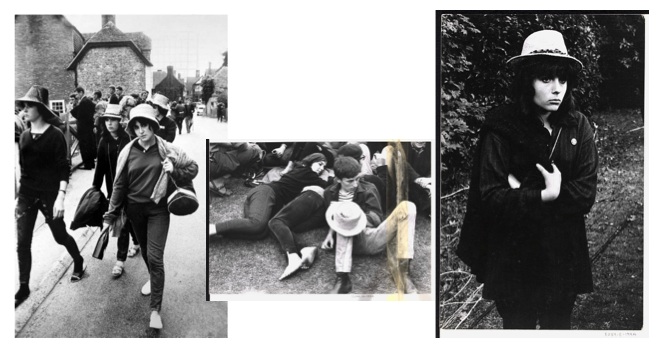
For those with very long memories, this might remind them of a somewhat less upmarket event more than 50 years ago, when some jazz fans went on the rampage in front of a similarly “gorgeous backdrop”. The year was 1960, the occasion was the third Beaulieu Jazz Festival, which took place at Lord Montagu’s estate at Beaulieu near the New Forest. Lord Montagu was something of a jazz fan, and thought this was a risk-free way to indulge his enthusiasm.
Unfortunately it all went wrong, when specimens of a new and puzzling sort of human being – the teenager – invaded the stage. Stuart Nicholson, now the distinguished columnist of Jazzwise magazine, remembers that as the lighting gantry collapsed “someone grabbed a microphone and demanded ‘free beer for the working man’.” A lone figure made it to the top of the stage, a converted merry-go-round complete with fairground horses, and once the crowd realised he was on television, a mass climb began to join him.” There’s some tantalisingly brief footage on this Pathé newsreel.
How wonderfully British. It wasn’t an end to bourgeois hegemony the young rioter was fighting for, or even more power for the unions. It was just some free beer. However the invader wasn’t some lone eccentric. Jazz at that time was a hotbed of competing styles, with deep antagonisms between different sets of fans. These were driven by class differences as much as musical tastes. The jazz historian Duncan Heinen has uncovered these simmering tensions in his fascinating history of jazz in the Sixties and Seventies, entitled Trad Dads, Dirty Boppers, and Free FusionG
The book shows that the 1960 Beaulieu festival was really more a tail-piece to the Fifties, that edgy decade of beatniks, CND marches, Angry Young Men, pop art, and race riots (it’s only because the Sixties have been so mythologised that people automatically think of the Fifites as drab). Jazz was in the thick of it, though witnesses of the period never seem to agree whether a fondness for drainpipe trousers meant you were anti-nuclear power and for modern jazz, or despised Dizzy Gillespie and preferred skiffle.
The jazz festival’s stage was a converted merry-go-round. Pic: GETTY IMAGES
Some say it was a working class thing to like modern jazz, and that middle-class rebelliousness came out in ‘jiving’ to trad. One indubitable fact is that the rock and roll, R&B and jazz scenes were closely interlinked, and players such as Ginger Baker could migrate from one to another. Look closely at this film clip of the 3rd Beaulieu jazz festival and you’ll catch a glimpse of a very young Rod “the Mod” Stewart among the eager crowds.
So with competing styles of jazz on the platform, plenty of beer on tap, and the provocative backdrop of a stately home, the stage was a set for a classic British class confrontation. One imagines some of the youth were just itching to feel aggrieved, like the character in Colin MacInnes’s novel Absolute Beginners, who describes the Beaulieu festivals as “garden party’s (sic) for the ooblies and Hooray Henries.” (According to the poet Jeff Nuttall, “ooblies” was Humphrey Lyttleton’s term for devotees of the “original purist trad subculture”. George Melly preferred the term “moron”).
Finding out what really happened that day at Beaulieu is like asking what really happened at the riotous premiere of the Rite of Spring. Some say it was the bearded trad fans versus the modern jazzers. Other say it was nothing to do with music at all. One witness insists it was Teddy Boys shouting “We want Acker!” (meaning trad jazz clarinettist and singer Acker Bilk), while the correspondent for Melody Maker sniffed about working-class “mobsters” coming from Portsmouth and Southampton. Once the stage had been invaded, chaos quickly ensued. A building was set on fire, 39 people were injured, and the BBC pulled its outside broadcast feed off the air six minutes early. “Things are getting quite out of hand,” said the announcer primly.
That wasn’t quite the end of the Beaulieu jazz festival. Lord Montagu was game enough to try again the following year, but the cost of the increased security meant the event was no longer financially viable. And that was it, for “green-field” jazz festivals in the UK – until Love Supreme came on the scene. More than 50 years on, will this stir the same passions? Will someone grab a microphone after Gregory Porter’s set and demand “free champagne for the working man”? Somehow I just can’t see it.
This is a video of my talk at BRLSI in July. It’s not great quality but you get the whole thing! I originally put it on YouTube but it got blocked because of my use of two Bob Dylan songs. This was a bit disappointing but I have decided to upload it here instead. I hope Bob won’t mind too much, he always seemed to understand the true value of copyright theft and plagiarism!
I am doing a talk at The Secular Hall, Humberstone Gate, Leicester on the 6th October 7.00 p.m. Hope you can make it. It should last about an hour including audio and film clips, and there will be an opportunity for questions and comments at the end. Also, in the spirit of the time, it is free.
Counterculture Talk Leicester October 6th at Secular Hall
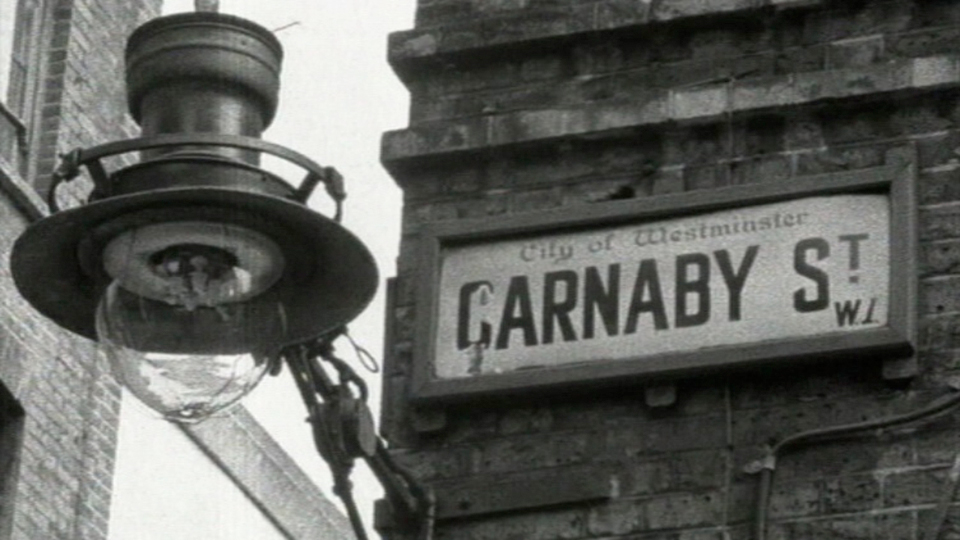
This is an article from the Guardian that cleverly shows how iconic sites in London looked in 1967 and how they look now. With a slider you can blend the two. Very impressive. It is amazing how little they have changed.
Newburgh Street (near Carnaby Street) London 1967
Newburgh Street 2017
Newburgh Street
Running parallel to Carnaby Street, Newburgh Street forms the boundary of what is known as the Newburgh Quarter, where fashionable concept stores and classic tailors sit alongside traditional pubs such as the White Horse.
Now pedestrianised and cobbled, back in 1967 it was a tarmacked road.
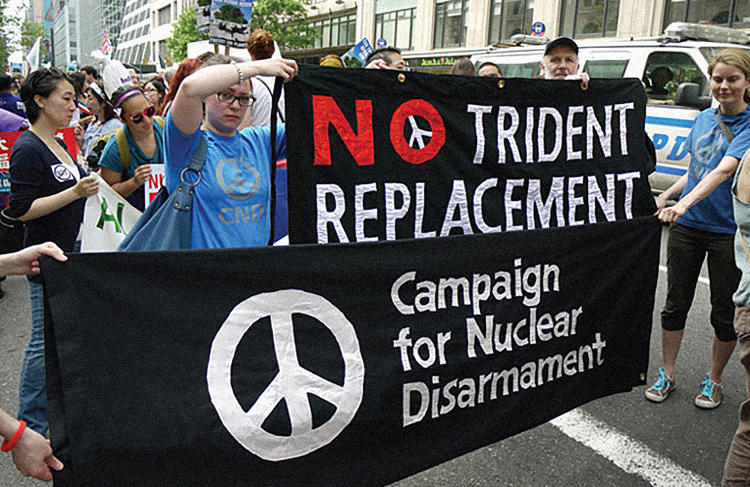
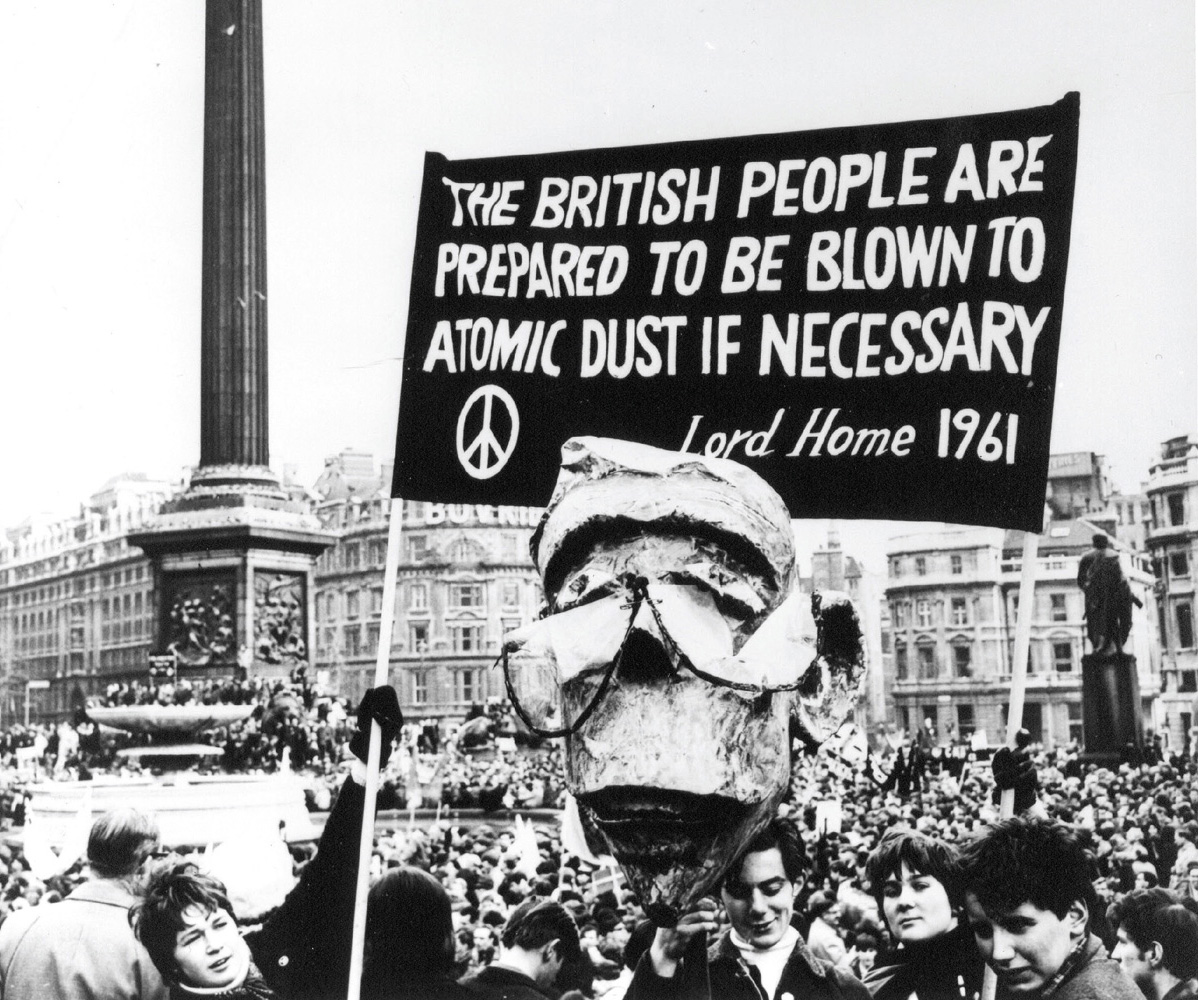
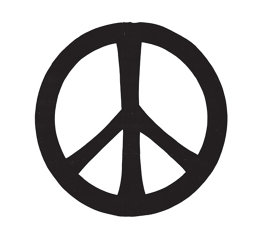
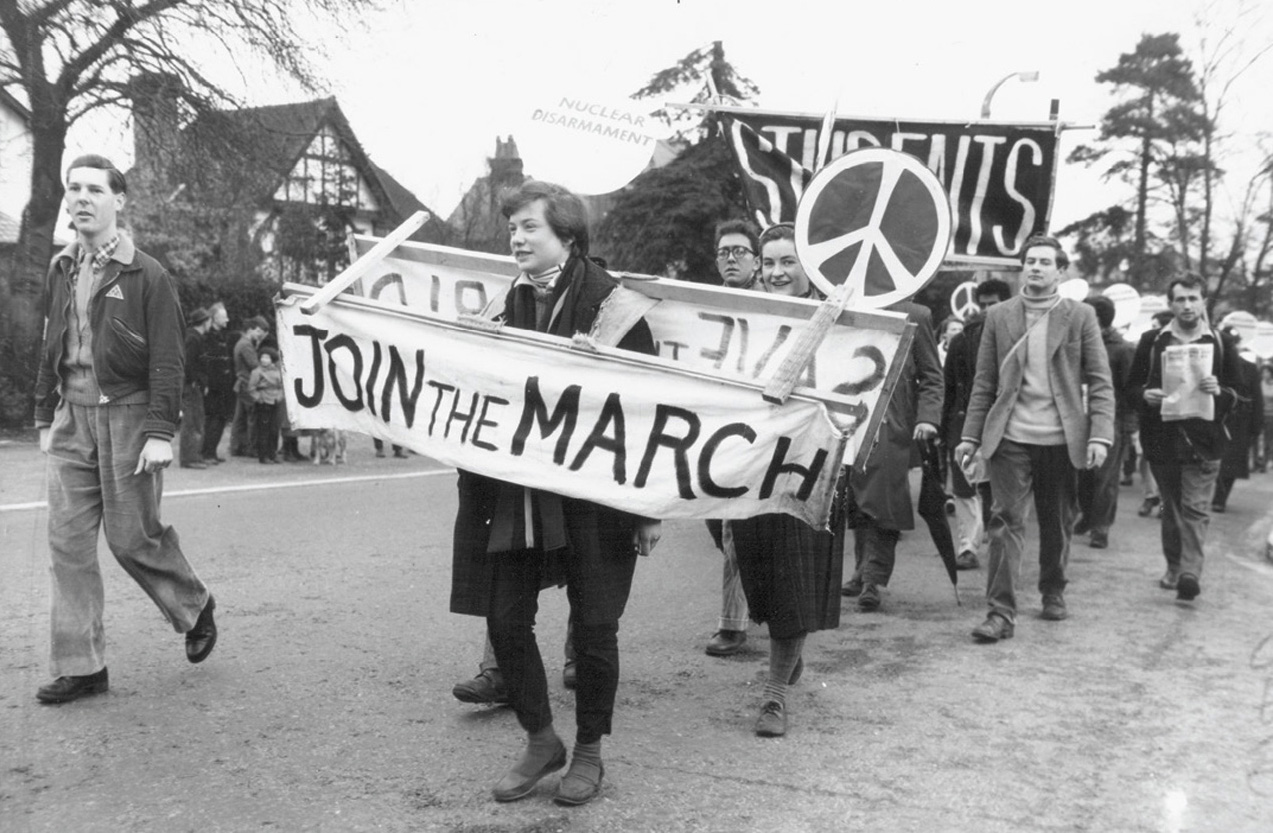
The symbol that would become synonymous with the Campaign for Nuclear Disarmament (CND) was first brought to wide public attention on the Easter weekend of 1958 during a march from London to Aldermaston in Berkshire, the site of the Atomic Weapons Research Establishment. The demonstration—the first large-scale anti-nuclear march of its kind—was organized by the Direct Action Committee Against Nuclear War (DAC), one of several smaller groups in the U.K. that would go on to form CND. Some 500 symbols were held aloft by protesters as they walked the 52 miles from Trafalgar Square, which suggests that the organizers were aware of the need for both political and visual impact. The fact that, in the form of Gerald Holtom, they already had a professional designer and graduate of the Royal College of Art on board perhaps explains why the symbol achieved immediate success, as well as the swiftness with which it was officially adopted by CND a few months after the march. Holtom was a conscientious objector (during World War II he had worked on a Norfolk farm), and also an established designer. He had created designs as diverse as fabrics based on west African patterns from the late 1930s and a range incorporating photographs of plankton for the Festival of Britain in 1951.
According to Professor Andrew Rigby, writing in Peace News in 2002, Holtom was responsible for designing the banners and placards that were to be carried on the Aldermaston march. “He was convinced that it should have a symbol associated with it that would leave in the public mind a visual image signifying nuclear disarmament,” writes Rigby, “and which would also convey the theme that it was the responsibility of each and every individual to work to remove the threat of nuclear war.”
In a sense, Holtom’s design did represent an individual in pursuit of the cause, albeit in an abstract way. The symbol showed the semaphore for the letters N (both flags held down and angled out from the body) and D (one flag pointing up, the other pointing down), standing for Nuclear Disarmament. But some years later in 1973, when Holtom wrote to Hugh Brock, editor of Peace News at the time of the formation of the DAC, the designer gave a different explanation of how he had created the symbol.
“At first he toyed with the idea of using the Christian cross as the dominant motif,” Rigby explains in his article, “but realized that ‘in Eastern eyes the Christian Cross was synonymous with crusading tyranny culminating in Belsen and Hiroshima and the manufacture and testing of the H-bomb.’ He rejected the image of the dove, as it had been appropriated by “the Stalin regime…to bless and legitimize their H-bomb manufacture.'”
Holtom in fact decided to go for a much more personal approach, as he admitted to Brock. “I was in despair. Deep despair,” he wrote. “I drew myself: the representative of an individual in despair, with hands palm outstretched outwards and downwards in the manner of Goya’s peasant before the firing squad. I formalized the drawing into a line and put a circle round it. It was ridiculous at first and such a puny thing.”
In Holtom’s personal notes, reproduced by peace symbol historian Ken Kolsbun, the designer recalls then turning the design into a badge. “I made a drawing of it on a small piece of paper the size of a sixpence and pinned it on to the lapel of my jacket and forgot it,” he wrote. “In the evening I went to the post office. The girl behind the counter looked at me and said, ‘What is that badge you are wearing?’ I looked down in some surprise and saw the ND symbol pinned on my lapel. I felt rather strange and uneasy wearing a badge. ‘Oh, that is the new peace symbol,’ I said. ‘How interesting, are there many of them?’ ‘No, only one, but I expect there will be quite a lot before long.'”
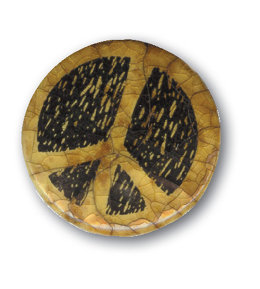
In fact, the first official series of badges made by Eric Austin of the Kensington CND branch were made of white clay with the symbol formed from black paint. According to CND, these were in themselves a symbolic gesture as they were distributed “with a note explaining that in the event of a nuclear war, these fired pottery badges would be among the few human artifacts to survive the nuclear inferno.”
The symbol itself became more formalized as its usage became more widespread. The earliest pictures of Holtom’s design reproduce the submissive “individual in despair” more clearly: the symbol is constructed of lines that widen out as they meet the circle, where a head, feet and outstretched arms might be. But by the early 1960s the lines had thickened and straightened out and designers such as Ken Garland, who worked on CND material from 1962 to 1968, were able to use a bolder incarnation of the symbol in their work. Garland built on the graphic nature of the symbol to create a play of black-and-white shapes for a series of striking posters. He also used a photograph of his daughter Ruth in the design for a leaflet on which the symbol was used in place of the O in “SAY NO.”
In the U.K. the symbol has remained the logo of CND since the late 1950s, but internationally it has taken on a broader message signifying peace. For Holtom this perhaps came as a bonus since, according to Rigby, he had been frustrated with his original design, which depicted the struggle inherent in the pursuit of unilateral action. Shortly before the Aldermaston march Holtom experienced what he termed a “revolution of thought.” He realized, Rigby writes, that if he inverted the symbol “then it could be seen as representing the tree of life, the tree on which Christ had been crucified and which, for Christians like Gerald Holtom, was a symbol of hope and resurrection. Furthermore, that inverted image of a figure with arms stretched upwards and outwards also represented the semaphore signal for U—Unilateral.”
This last quirk of a symbol that had its message so neatly encapsulated in its design meant it could echo both the frustrations of the anti-nuclear campaigner in the face of political change and the sense of optimism that the task at hand would bring. This was another example of the thinking Holtom would bring to the first march to Aldermaston, which has since become an annual event. Of the lollipop signs he designed for the event, half displayed the symbol in black on white, the other half white on green. “Just as the church’s liturgical colors change over Easter,” CND explain, “so the colors were to change, ‘from Winter to Spring, from Death to Life.’ Black and white would be displayed on Good Friday and Saturday, green and white on Easter Sunday and Monday.”
From the beginning, Holtom’s aim had been to help instigate positive change, to bring about a transformation from winter to spring. Today CND continues to pursue this mission, just as the peace movement does internationally.
This was excerpted with permission from TM: The Untold Stories Behind 29 Classic Logos (Lawrence King). Buy a copy here for $27.
In the past few weeks I have been reading widely about the 1960s Counterculture both here and in America. This interest was inspired by two things. Writing an account of My Life in Music, which included my experience of the Counterculture in Leicester, and visiting an exhibition of sculptures by Francis Upritchard at Nottingham Contemporary and seeing James Riley’s talk about the perceived end of the Counterculture into “bad craziness” in the early 1970s.
My original piece was just based on memory with no reference to any other sources but I was struck by how close my experience was to the sequence of events described by James Riley. I was also intrigued by Francis Upritchard’s description of hippies in New Zealand when she says that “all the things that hippies hoped would happen, or felt might happen, didn’t.” In one sense her exhibition is about the failure of the 1960s and 70s counter-culture that is still celebrated at festivals – and its gaudy, individualistic “alternative” aftermath.
At this point it might be worthwhile to describe what I think the Counterculture is (or was). The Counterculture appeared in the 1960s both in the UK and America and became influential throughout the Western World and also in Eastern Europe. It’s protaganists were mainly young but there were significant influences from older artists and intellectuals. It’s not really clear why or how it came about but it epitomised what became known as the Generation Gap. This could be described as the difference between people who became adults before World War 2 and those who were adults after it.
Jeff Nuttall in his seminal book Bomb Culture(1968) thinks that alternative attitudes in the UK grew out of the shadow and fear of the H Bomb. As the Cold War developed there was a constant reminder with the proliferation of nuclear weapons that the World could end any minute. This lead to massive demonstrations in the UK organised by CND (The Aldermaston Marches). Although these were attended by many thousands of people it became clear by the early sixties that the government had no intention of disarming or stopping the arms race. This lead to disillusionment and a feeling of alienation. Many young people began to reject the growing Affluent Societyand started creating their own culture much to the bewilderment of the older generation who, as Prime Minister Harold Macmillan said at the time, had “never had it so good”. A youth subculture emerged called The Beatniks by the press. They grew their hair, played trad jazz and folk music, frequented coffee bars and hitchhiked around the country, influenced by American beat writers like Jack Kerouac. In the UK this is where the Counterculture had it’s roots. Here is an unintentionally hilarious TV report about Beatniks in Cornwall in 1960:
Of note in this film is the playing and singing of Whiz Jones. You may think he is influenced by Bob Dylan but you’d be wrong. It was two years before Dylan’s first album was released, he hadn’t even arrived in New York by then. The guitar and singing style was undoubtedly learnt from American folk singer Ramblin’ Jack Elliot who was in England at the time and influenced a whole generation of British guitarists including Donovan (he was also a big influence on Bob Dylan!).
The roots of the American Counterculture are slightly different. Although there was the same fear of nuclear annihilation especially with the Cuban Missile Crisisof 1962 when the Soviet Union based nuclear missiles in Cuba within easy reach of the USA. Another factor was the Civil Rights Movement that was working to end racial segregation in the South and also the Vietnam War especially when conscription was accelerated from 1964. Out of this milieu a counterculture was created that eventually became what are known asHippies. This movement had a profound effect both in America and the rest of the World during the 1960s and it’s legacy has continued until now as I hope to demonstrate.
The UK and American countercultures influenced each other. Initially, the British counterculture imitated the Americans especially in the areas of poetry and the creation of Underground newspapers and magazines. As time progressed the British started influencing the Americans especially in the areas of art, fashion and music. The Beatles became the most popular and influential group in the World and embraced many countercultural ideas like drugs, mysticism and experimentalism. Paul McCartney was closely linked to the English Underground and was a main financier of the International Times, an important countercultural paper that had a wide distribution. Pink Floydemerged out of the British Underground with their take on psychedelic rock and, again, eventually became one of the most popular groups in the World.
The name Underground started to be increasingly used for the Counterculture although, really, this was a misnomer. The main players and self styled leaders were media savvy and natural experts in self promotion. (This was especially true of American Yippies Abbie Hoffman and Jerry Rubin. They achieved international fame at the Chicago Conspiracy Trial where the American justice system managed to appear both brutal and ridiculous. In a rare display of humour a member of the conventional left described their antics as Groucho Marxism!) It never really became underground until the 1970s when the mainstream media and press began to lose interest in it.
The Underground did not have a coherent political agenda. Although there was much talk of Revolution it was not clear what this really meant. This was true both in Britain and America. It definitely did not mean the same thing as what the old left referred to . The Communist states were seen as no better than the Capitalist ones and probably worse. Even Cuba, apart from the love for Che Guevara (who in the spirit of rock n roll died young and left a good looking corpse. He became the poster boy of the Revolution with his long hair and revolutionary beret!) was treated with suspicion. There was no strict ideology but general beliefs in the use of drugs (particularly marijuana and LSD), rejection of alcohol, free love, anti-war, anti-materialism, anti-consumerism, individualism, creativity, opposition to alienating work, rejection of television and advertising, caring for and living with the natural environment etc. The list could get very long and forms a general philosophy which is hard to formally categorise. The Revolution consisted of all these things. Slogans appeared that would have done justice to the best copywriters of Madison Avenue like “make love not war”, “turn on, tune in, drop out” and “do your own thing”.
So, why did the Revolution fail and where did it go wrong? Conventional wisdom would say that three events in 1969 caused a massive shift in attitudes. The infamous Charles Manson murders, The Woodstock Festival and the killing of a member of the audience by Hell’s Angels at Altamont Free Festival. The death of 60s idealism and the lost innocence of rock n roll is the theme of Don McLean’s song American Pie.
Charles Manson and his Family inverted the ideas of a hippy commune and went on a killing spree based on a psychotic interpretation of the Beatles White Album.
Woodstock is widely seen as the epitome and apotheosis of the Love Generation but can also be seen as the start of a megalithic, bloated and commercial music industry involving large scale festivals and stadium gigs. In order to attract popular acts large amounts of money were paid. Jimi Hendrix is reputed to have received $50,000, an incredible amount at the time equivalent to more than half a million now. Joan Baez virtually destroyed her credibility by accepting $10,000 even though she was using much of her own money to support radical causes. The festival made a colossal loss although that was recouped by subsequent sales of the film rights and DVD. A very interesting book about the making of this festival is Barefoot in Babylon by Robert Stephen Fitz. Rather than the music being an expression of the Counterculture a new commercial aristocracy was formed. The divorce between the music and the Counterculture was perhaps most symbolically shown when Pete Townshend of the Who knocked Abbie Hoffman off thestage with his guitar when Hoffman invaded the stage and tried to make an impromptu speech. It affected both people for years afterwards and effectively ended Hoffman’s political career. The clown prince of politics had been made to appear ridiculous and ineffective! Pete Townshend showed he wasn’t too enamoured with peace and love as this audio clip shows.
To deflect criticism of the cost of tickets on their 1969 tour of America the Rolling Stones gave a free concert at Altamont Speedway in California. This remarkably badly organised festival has become immortalised in the film Gimme Shelter (No, the Revolution wasn’t televised but it was often caught on film, which provided a good source of income from “Free” Festivals. The Stones had already done this with the Hyde Park Free Festival). The general air of chaos and violence is palpable with at least three deaths and a murder.
However, I don’t subscribe to conventional wisdom. Nor do I think that the Counterculture ended in 1969. As James Riley has said these events could just be coincidence and don’t signify anything. Personally, I think that after 1972 the Counterculture actually did go Underground. It was no longer really visible and it also became separated from the Music Industry which had become a large and profitable globalised industry. The press and media also lost interest until it gained notoriety again in the 1980s as the Peace Convoyand the New Age Travellers. This culminated in the savagery and brutality of mainstream culture under Thatcherism at the Battle of the Beanfield. This is an Observer article about this event twenty years later:
“* Tony Thompson, crime correspondent * The Observer, Sunday 12 June 2005
It looked just like a carnival – at first. The weather was sunny and music played as the 140 vehicles set off towards Stonehenge. The 600 or so Travellers were on their way to attend the annual free festival on squatted land beside the ancient stones.
A few hours later the convoy had been ambushed by more than 1,300 police officers; dozens of Travellers were injured, all but a handful were arrested, and every one of their vehicles was destroyed.
This month marks the 20th anniversary of what has become known as the Battle of the Beanfield. Despite four months’ planning, the police operation to stop the convoy was a shambles. Faulty police intelligence suggested the Travellers were armed with chainsaws, hammers, petrol bombs and even firearms. All this information was false.
Plans to stop the convoy near the A303 collapsed when a convoy outrider spotted the roadblock and directed the travellers down a side road, where they encountered a second roadblock. After a first wave of violent assaults by the police, in which windscreens were smashed and the occupants dragged out screaming, most of the vehicles broke into a neighbouring field, derailing the police plan further.
For the next four hours there was a standoff, while Assistant Chief Constable Lionel Grundy, the officer in charge, insisted all Travellers had to be arrested.
The final assault began at 7pm, by which time all the officers had changed into riot gear. Pregnant women were clubbed with truncheons, as were those holding babies. The journalist Nick Davies, then working for The Observer, saw the violence. ‘They were like flies around rotten meat,’ he wrote, ‘and there was no question of trying to make a lawful arrest. They crawled all over, truncheons flailing, hitting anybody they could reach. It was extremely violent and very sickening.’
When some of those remaining tried to get away, driving their vehicles through the beanfield, the police threw anything they could lay their hands on – fire extinguishers, stones, shields and truncheons – at them in order to bring them to a halt. The empty vehicles were then systematically smashed to pieces and several were set on fire. Seven healthy dogs belonging to the Travellers were put down by officers from the RSPCA. In total, 537 people were arrested – the most arrests to take place on any single day since the Second World War.
All those arrested were charged with obstruction of the police and the highway, but most of the charges were dismissed in the courts. The Travellers’ unexpected saviour was the Earl of Cardigan, whose family owned the forest where the convoy had stayed the night before. Cardigan had tagged along out of interest, and his descriptions of the violence prevented what might otherwise have become a major miscarriage of justice.
Cardigan recalled that in many cases ‘the smashing up of the vehicles and the instructions to ‘Get Out! Get Out! Get Out!’ and hand over your keys were given simultaneously and therefore there was no chance to understand what was being shouted at you, and to comply before your vehicle started disintegrating around you with your windscreen broken in and your side panels beaten by truncheons and so on.’
It remains a mystery why the police felt compelled to use such violence. With evidence that radio logs of conversations between officers on the day have been altered, the full story may never be known.
‘The Battle of the Beanfield remains a black day for British justice and civil liberties,’ says Andy Worthington, whose book on the event is published this week. ‘From the anti-Traveller legislation of the 1986 Public Order Act and the 1994 Criminal Justice Act to the current hysteria surrounding Gypsy and traveller settlements, the repercussions are still being felt.‘”
The 1986 Public Order Act caused many New Age Travellers to leave England to more tolerant places like Spain and New Zealand. Interestingly, the hippies that Francis Upritchard came across may have been refugees from this time.
Margaret Thatcher was an enigma. Behind the authoritarian Iron Lady facade she wasn’t even really a Tory. She is considered to be the first of what are called conviction politicians. She appeared motivated by a mission and set of beliefs. Tony Blair and David Cameron have also used this approach and in some ways are seen as her successors. Thatcher’s beliefs had more to do with 19th Century Economic Liberalism than traditional Tory concerns. Her mission was to restore the British nation to it’s former glory and roll back the tide of National Debt, Trade Unions holding the country to ransom and encourage Free Trade and Private Enterprise. She famously hated the sixties and virtually saw that period as the main cause of the country’s woes with it’s strong Trade Unions, Nationalised industries and Social Liberal values.
Margaret Thatcher was ruthlessly effective and she chose her battles well. By defeating the Miner’s Strike and legislating against the Closed Shopshe seriously reduced the power of the Trade Unions. At the same time she closed down most of the old heavy industries like steel, ship building and coal mines. By deregulating the banks, Privatising Nationalised businesses like energy and telecommunications and giving council house tenants the Right to Buy she effectively created a new capitalist society which boomed on the back of investments, services and rising house prices. It seemed to work so well that with the fall of the Berlin Wall in 1989and the end of the Cold War political economist Francis Fukuyama declared “What we may be witnessing is not just the end of the Cold War, or the passing of a particular period of postwar history, but the end of history as such…. That is, the end point of mankind’s ideological evolution and the universalization of Western liberal democracy as the final form of human government.” Mind you, considering events that happened in 2008, this was probably a bit premature!
But, I would still contend that the ideas of the 60s Counterculture permeated this period. As I have already said, Hippie ideals were resurrected with the Peace Convoy which was attracting many people to it, especially the legion of unemployed created by Thatcher’s early policies. But the ideas had also influenced the mainstream. The new bankers and brokers of the “Greed is Good” years were not the conservative bowler hatted bores of yesteryear but cocaine sniffing, champagne swilling hedonists who roared round London in new Porsches. They were into conspicuous consumption and, dare I say, a rock n roll life style. Also, the type of entrepreneurs that Thatcher was trying to encourage already existed in businesses started in the 60s. Although not British, clothing store chain The Gap, started as a “head shop” in San Francisco. Global business Time Out started when Tony Elliot took over the listings page from International Times because no one else could be bothered to do it! It became an immensely profitable business. Perhaps the most well known business with counterculture roots was Richard Branson with his Virgin brand. This started off as a mail order record company in the late 60s. All of these businesses brought a more relaxed, casual style and in the case of Branson a kind of celebrity status that would never have happened in the past. Basically, countercultural ideas had been assimilated by the mainstream.
However, the real Underground continued both in the Peace Convoy, the Greenham Common Women’s Peace Camp and more recently with the Occupy Movement which has become a global phenomenon. I will say more about this later!





 was treated with suspicion. There was no strict ideology but general beliefs in the use of drugs (particularly marijuana and LSD), rejection of alcohol, free love, anti-war, anti-materialism, anti-consumerism, individualism, creativity, opposition to alienating work, rejection of television and advertising, caring for and living with the natural environment etc. The list could get very long and forms a general philosophy which is hard to formally categorise. The Revolution consisted of all these things. Slogans appeared that would have done justice to the best copywriters of Madison Avenue like “make love not war”, “turn on, tune in, drop out” and “do your own thing”.
 Kenny Wilson's Blog