Golden daze: 50 years on from the Summer of Love | Culture | The Guardian

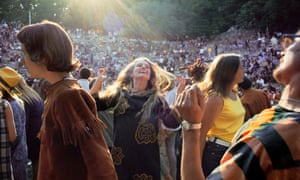
High times: dancing during the Summer of Love, San Francisco, 1967.

San Francisco 1967

It’s the 50th anniversary of San Francisco’s Summer of Love. Here five people who were at the heart of the counter-culture movement tell Aaron Millar how flowers, LSD, music and radical ideas changed youth consciousness forever

Source: Golden daze: 50 years on from the Summer of Love | Culture | The Guardian

Camille Paglia on the Iconic Cover of Patti Smith’s Horses | Literary Hub

Source: Camille Paglia on the Iconic Cover of Patti Smith’s Horses | Literary Hub

“THE MAPPLETHORPE PHOTO SYNTHESIZES MY PASSIONS AND WORLD-VIEW”

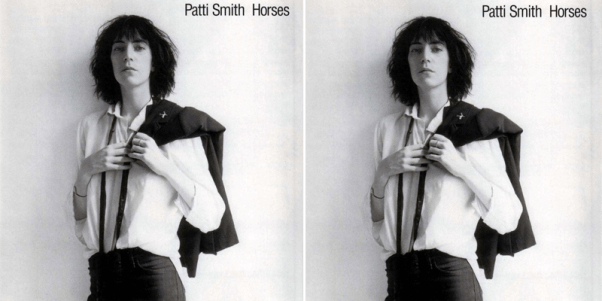
In 1975, Arista Records released Horses, the first rock album by New York bohemian poet Patti Smith. The stark cover photo, taken by someone named Robert Mapplethorpe, was devastatingly original. It was the most electrifying image I had ever seen of a woman of my generation. Now, two decades later, I think that it ranks in art history among a half-dozen supreme images of modern woman since the French Revolution.

I was then teaching at my first job in Vermont and turning my Yale doctoral dissertation, Sexual Personae, into a book. The Horses album cover immediately went up on my living-room wall, as if it were a holy icon. Mapplethorpe’s portrait of Patti Smith symbolized for me not only women’s new liberation but the fusion of high art and popular culture that I was searching for in my own work.

From its rebirth in the late 1960s, the organized women’s movement had been overwhelmingly hostile to rock music, which it called sexist. Patti Smith’s sudden national debut galvanized me with the hope (later proved futile) that hard rock, the revolutionary voice of the counterculture, would also be endorsed by feminism.

Smith herself emerged not from the women’s movement but from the artistic avant-garde as well as the decadent sexual underground, into which her friend and lover Mapplethorpe would plunge ever more deeply after their breakup.

Unlike many feminists, the bisexual Smith did not base her rebellion on a wholesale rejection of men. As an artist, she paid due homage to major male progenitors; she wasn’t interested in neglected foremothers or a second-rate female canon. In Mapplethorpe’s half-transvestite picture, she invokes her primary influences, from Charles Baudelaire and Frank Sinatra to Bob Dylan and Keith Richards, the tormented genius of the Rolling Stones who was her idol and mine.

Before Patti Smith, women in rock had presented themselves in conventional formulas of folk singer, blues shouter, or motorcycle chick. As this photo shows, Smith’s persona was brand new. She was the first to claim both vision and authority, in the dangerously Dionysian style of another poet, Jim Morrison, lead singer of the Doors. Furthermore, in the competitive field of album-cover design inaugurated in 1964 with Meet the Beatles(the musicians’ dramatically shaded faces are recalled here), no female rocker had ever dominated an image in this aggressive, uncompromising way.

The Mapplethorpe photo synthesizes my passions and world-view. Shot in steely high contrast against an icy white wall, it unites austere European art films with the glamorous, ever-maligned high-fashion magazines. Rumpled, tattered, unkempt, hirsute, Smith defies the rules of femininity. Soulful, haggard and emaciated yet raffish, swaggering and seductive, she is mad saint, ephebe, dandy and troubadour, a complex woman alone and outward bound for culture war.

‘The Velvet Underground and Nico’: 10 Things You Didn’t Know – Rolling Stone

Source: ‘The Velvet Underground and Nico’: 10 Things You Didn’t Know – Rolling Stone

Actually, I did know most of this, but not Warhol’s idea of putting a crack on the record to make the phrase ‘I’ll Be Your Mirror’ repeat over and over again. Inspirational, and an idea later used by the Beatles at the end of Sgt. Pepper but not in quite as radical a way. I also didn’t know about the drums breaking down in ‘Heroin’ or Sterling Morrison’s hatred of Frank Zappa. Although I did know about Lou Reed’s hatred of Frank Zappa and also Frank Zappa’s hatred of not only the VU but also The Beatles and The Doors, and pop and rock music in general!

A half-century on, The Velvet Underground and Nico remains the quintessential emblem of a certain brand of countercultural cool. Not the Haight-Ashbury or Sgt. Pepper kind but an eerier, artier, more NYC-rooted strain. Released on March 12th, 1967, the Velvet Underground‘s debut was an album that brought with it an awareness of the new, the possible and the darker edge of humanity. Bolstered by the patronage of Andy Warhol and the exotic vocal contributions of Nico, Lou Reed, John Cale, Sterling Morrison and Maureen Tucker declared their independence from Top 40 decorum with a gritty, innovative and unapologetically self-possessed work. In many ways, The Velvet Underground and Nico was the first rock album that truly seemed to invite the designation alternative.

Fifty years after its release, the LP still sounds stunningly original, providing inspiration and a blueprint for everything from lo-fi punk rock to highbrow avant-garde – and so much in between. Read on for 10 fascinating facts about the album’s creation.

1. Lou Reed first united with John Cale to play a knockoff of “The Twist.”
Reed’s professional music career took root in 1964 when he was hired as a staff songwriter at Pickwick Records, an NYC-based budget label specializing in soundalikes of contemporary chart-toppers. “We just churned out songs; that’s all,” Reed remembered in 1972. “Never a hit song. What we were doing was churning out these rip-off albums.”

When ostrich feathers became the hot trend in women’s fashion magazines, Reed was moved to write a parody of the increasingly ridiculous dance songs sweeping the airwaves. “The Twist” had nothing on “The Ostrich,” a hilariously oddball number featuring the unforgettable opening lines: “Put your head on the floor and have somebody step on it!” While composing the song, Reed took the unique approach of tuning all six of his guitar strings to the same note, creating the effect of a vaguely Middle Eastern drone. “This guy at Pickwick had this idea that I appropriated,” he told Mojo in 2005. “It sounded fantastic. And I was kidding around and I wrote a song doing that.”

Reed recorded the song with a group of studio players, releasing the song under the name the Primitives. Despite the unorthodox modes, Pickwick heard potential in “The Ostrich” and released it as a single. It sold in respectable quantities, convincing the label to assemble musicians to pose as the phony band and promote the song at live gigs. Reed began hunting for potential members, valuing attitude as much as musical aptitude. He found both in John Cale.

The pair crossed paths at a house party on Manhattan’s Lower East Side, where Reed was drawn to Cale’s Beatle-y long hair. A classically trained prodigy, the young Welshman had moved to the city months earlier to pursue his musical studies and play viola with avant-garde composer La Monte Young’s Theater of Eternal Music. Intrigued by his pedigree, Reed invited him to join the Primitives. Sensing the opportunity for easy money and some laughs, Cale agreed.

Gathering to rehearse the song, Cale was astonished to discover that the “Ostrich tuning” produced essentially the same drone he was accustomed to playing with Young. Clearly on the same musical wavelength, they connected on a personal level afterwards. “More than anything it was meeting Lou in the coffee shop,” Cale says in a 1998 American Masters documentary. “He made me nice cup of coffee out of the hot water tap, and sat me down and started quizzing me as to what I was really doing in New York. There was a certain meeting of the minds there.”

2. “The Black Angel’s Death Song” got the band fired from their residency.
Sterling Morrison became involved with the duo after a chance meeting with Reed, his classmate at Syracuse University, on the subway. Together they formed a loose band with Cale’s roommate Angus MacLise, a fellow member of the Theater of Eternal Music collective. Lacking a consistent name – they morphed from the Primitives to the Warlocks, and then the Falling Spikes before taking their soon-to-be-iconic final moniker from a pulp paperback exposé – the quartet rehearsed and recorded demos in Cale’s apartment throughout the summer of 1965.

John Cale, Lou Reed

The fledgling Velvet Underground were befriended by pioneering rock journalist Al Aronowitz, who managed to book them a gig at a New Jersey high school that November. This irritated the bohemian MacLise, who resented having to show up anywhere at a specific time. When informed that they would be receiving money for the performance, he quit on the spot, grumbling that the group had sold out. Desperate to fill his spot on the drums, they asked Morrison’s friend Jim Tucker if his sister Maureen (known as “Moe”) was available. She was, and the classic lineup was in place.

School gymnasiums were not the ideal venue for the band. “We were so loud and horrifying to the high school audience that the majority of them – teachers, students and parents – fled screaming,” Cale says in American Masters. Instead, Aronowitz found them a residency in a Greenwich Village club, the Café Bizarre. Its name was something of a misnomer, as neither the owners nor the handful of customers appreciated the way-out sounds. In a half-hearted attempt at assimilation, the group added some rock standards to their repertoire. “We got six nights a week at the Café Bizarre, some ungodly number of sets, 40 minutes on and 20 minutes off,” Morrison described in a 1990 interview. “We played some covers – ‘Little Queenie,’ ‘Bright Lights Big City’ … the black R&B songs Lou and I liked – and as many of our own songs as we had.”

Three weeks in, the tedium became too much bear. “One night we played ‘The Black Angel’s Death Song’ and the owner came up and said, ‘If you play that song one more time you’re fired!’ So we started the next set with it,” Morrison told Sluggo! of their ignoble end as a bar band in a tourist trap. The self-sabotage had the desired effect and they were relieved of their post – but not before they caught the attention of Andy Warhol.

3. The album’s co-producer refused to accept cash payment, asking for a Warhol painting instead.
Already a prolific painter, sculptor and filmmaker, by the mid-Sixties Warhol sought to expand his famous Factory empire into rock & roll. On the advice of confidant Paul Morrissey, the 37-year-old art star dropped in on the Velvet Underground’s set at the Café Bizarre and impulsively extended an offer to act as their manager. The title would have rather loose connotations, though he did make one significant alteration to their sound. Fearing that the group lacked the requisite glamour to become stars, he suggested the addition of a striking German model known as Nico. The proposal was not met with complete enthusiasm – Reed was particularly displeased – but she was tentatively accepted into the ranks as a featured vocalist.

Now billed as the Velvet Underground with Nico, Warhol incorporated the band into a series of multimedia performances dubbed the Exploding Plastic Inevitable: a marriage of underground music, film, dance and lights. Also assisting was 27-year-old Norman Dolph, an account representative at Columbia Records who moonlit as a DJ and soundman. “I operated a mobile discotheque – if not the first then at least the second one in New York,” he later told author Joe Harvard. “I was an art buff, and my thing was I’d provide the music at art galleries, for shows and openings, but I’d ask for a piece of art as payment instead of cash. That’s how I met Andy Warhol.”

By the spring of 1966, Warhol decided it was time to take his charges into the recording studio. Knowing little about such matters, he sought out Dolph for advice. “When Warhol told me he wanted to make a record with those guys, I said, ‘Oh, I can take care of that, no problem. I’ll do it in exchange for a picture,'” he said in Sound on Sound. “I could have said I’d do it in exchange for some kind of finder’s fee, but I asked for some artwork, [and] he was agreeable to that.”

Dolph was tasked with booking a studio, covering a portion of the costs himself, producing and leaning on colleagues at Columbia to ultimately release the product. For his trouble he was given one of Warhol’s silver “Death and Disaster Series” canvases. “A beautiful painting, really. Regrettably, I sold it around ’75, when I was going through a divorce, for $17,000. I remember thinking at the time, ‘Geez, I bet Lou Reed hasn’t made $17,000 from this album yet.’ If I had it today, it would be worth around $2 million.”

4. It was recorded in the same building that later housed Studio 54.
Dolph’s day job at Columbia’s custom labels division saw him working with smaller imprints that lacked their own pressing plants. One of his clients was Scepter Records, best known for releasing singles by the Shirelles and Dionne Warwick. Their modest offices on 254 West 54th Street in midtown Manhattan were noteworthy for having their own self-contained recording facility.

Though the Velvet Underground were studio novices, it didn’t take an engineer to know that the room had seen better days. Reed, in the liner notes to the Peel Slowly and See boxed set, describes it as “somewhere between reconstruction and demolition … the walls were falling over, there were gaping holes in the floor, and carpentry equipment littered the place.” Cale recalls being similarly underwhelmed in his 1999 autobiography. “The building was on the verge of being condemned. We went in there and found that the floorboards were torn up, the walls were out, there was only four mics working.”

It wasn’t glamorous, and at times it was barely functional, but for four days in mid-April 1966 (the exact dates remain disputed), the Specter Records studios would play host to the bulk of the Velvet Underground and Nico recording sessions. Though Warhol played only a distant role in proceedings, he would return to 254 West 54th Street a great deal in the following decade, when the ground floor housed the infamous Studio 54 nightclub.

5. Warhol wanted to put a built-in crack in all copies of the record to disrupt “I’ll Be Your Mirror.”
Andy Warhol is nominally the producer of The Velvet Underground and Nico, but in reality his role was more akin to producer of a film; one who finds the project, raises the capital and hires a crew to bring it to life. On the rare occasions he did attend the sessions, Reed recalls him “sitting behind the board gazing with rapt fascination at all the blinking lights … Of course he didn’t know anything about record production. He just sat there and said, ‘Oooh that’s fantastic.'”

Warhol’s lack of involvement was arguably his greatest gift to the Velvet Underground. “The advantage of having Andy Warhol as a producer was that, because it was Andy Warhol, [engineers] would leave everything in its pure state,” Reed reflected in a 1986 episode of The South Bank Show. “They’d say, ‘Is that alright, Mr. Warhol?’ And he’d say, ‘Oh … yeah!’ So right at the very beginning we experienced what it was like to be in the studio and record things our way and have essentially total freedom.”

Although he didn’t try to specifically shape the band in his own image, Warhol did make some suggestions. One of his more eccentric ideas for the track “I’ll Be Your Mirror,” Reed’s delicate ballad inspired by his simmering romantic feelings towards Nico, never came to fruition. “We would have the record fixed with a built-in crack so it would go, ‘I’ll be your mirror, I’ll be your mirror, I’ll be your mirror,’ so that it would never reject,” Reed explained in Victor Bockris’ Uptight: The Velvet Underground Story. “It would just play and play until you came over and took the arm off.”

6. “There She Goes Again” borrows a riff from a Marvin Gaye song.

https://youtu.be/y3E5YIP-DvU

Reed’s time at Pickwick instilled in him a fundamental fluency in the language of pop music. Often overshadowed by his innovative instrumental arrangements and taboo lyrical subjects, his ear for an instantly hummable tune is apparent with catchy confections like “Sunday Morning,” the album’s opening track. Bright and breezy, with Reed’s androgynous tone replacing Nico’s planned lead, the song’s introductory bass slide is an intentional nod to the Mamas and the Papas’ “Monday, Monday,” which topped the charts when it was first recorded in April 1966.

“There She Goes Again” also draws from the Top 40 well, borrowing a guitar part from one of Motown’s finest. “The riff is a soul thing, Marvin Gaye’s ‘Hitch Hike,’ with a nod to the Impressions,” Cale admitted to Uncut in 2012. “That was the easiest song of all, which came from Lou’s days writing pop at Pickwick.”

It would earn the distinction of becoming one of the first Velvet Underground tracks to ever be covered – half a world away in Vietnam. A group of U.S. servicemen, performing under the name the Electrical Banana during their off hours, were sent a copy of The Velvet Underground and Nico by a friend who thought they would appreciate the fruit on the cover. They appreciated the music as well, and resolved to record a version of “There She Goes Again.” Unwilling to wait until they returned to the States, they built a makeshift studio in the middle of the jungle by tossing down wooden pallets, pitching a tent, fashioning mic stands from bamboo branches and plugging their amps into a gas generator.

7. The drums break down during the climax of “Heroin.”
The most infamous track on the album is also one of the oldest, dating back to Reed’s days as a student at Syracuse University, where he performed with early folk and rock groups and sampled illicit substances. Drawing from skills honed through his journalism studies, not to mention a healthy affinity for William S. Burroughs’ Naked Lunch, Reed penned a verse that depicted the experience of shooting up with stunning clarity and eerie detachment.

Amazingly, Reed had attempted to record the song during his days on the pop assembly line at Pickwick Records. “They’d lock me in a room and they’d say, ‘Write 10 surfing songs,'” Reed told WLIR in 1972. “And I wrote ‘Heroin,’ and I said, ‘Hey I got something for ya!’ They said, ‘Never gonna happen, never gonna happen.'” But the band had no such constraints while being bankrolled by Andy Warhol.

Working in the still-unfamiliar setting of a studio proved to be a challenge for the band at some points, particularly during the breakneck outro of “Heroin.” Maureen Tucker eventually became lost in the cacophony and simply put down her sticks. “No one ever even notices this, but right in the middle the drums stop,” she says in the 2006 documentary The Velvet Underground: Under Review. “No one ever thinks about the drummer, they’re all worried about the guitar sound and stuff, and nobody’s thinking about the drummer. Well, as soon as it got loud and fast I couldn’t hear anything. I couldn’t hear anybody. So I stopped, assuming, ‘Oh, they’ll stop too and say, ‘What’s the matter, Moe?’ And nobody stopped! So I came back in.”

8. Lou Reed dedicated “European Son” to his college mentor who loathed rock music.
One of Reed’s formative influences was Delmore Schwartz, a poet and author who served as his professor and friend while a student at Syracuse University. With a cynical and often bitter wit, he instilled in Reed an innate sense of belief in his own writing. “Delmore Schwartz was the unhappiest man I ever met in my life, and the smartest … until I met Andy Warhol,” Reed told writer Bruce Pollock in 1973. “Once, drunk in a Syracuse bar, he said, ‘If you sell out, Lou, I’m gonna get ya.’ I hadn’t thought about doing anything, let alone selling out.”

Rock & roll counted as selling out in Schwartz’s mind. He apparently loathed the music – particularly the lyrics – but Reed couldn’t pass up a chance to salute his mentor on his first major artistic statement. He chose to dedicate the song “European Son” to Schwartz, simply because it’s the track that least resembled anything in the rock canon. After just 10 lines of lyrics, it descends into a chaotic avant-garde soundscape.

Schwartz almost certainly never heard the piece. Crippled by alcoholism and mental illness, he spent his final days as a recluse in a low-rent midtown Manhattan hotel. He died there of a heart attack on July 11, 1966, three months after the Velvet Underground recorded “European Son.” Isolated even in death, it took two days for his body to be identified at the morgue.

9. The back cover resulted in a lawsuit that delayed the album’s release.
Being managed by Andy Warhol came with certain perks, and one was the guarantee of a killer album cover. While the artist’s involvement in the music was spotty, the visual art was to be his purview. Bored by mere static images, he devised a peel-away sticker of a pop art banana illustration, under which would be a peeled pink (and slightly phallic) banana. Aside from fine print above the sticker helpfully urging buyers to “peel slowly and see,” the only text on the stark white cover was Warhol’s own name, gracing the lower right corner in stately Coronet Bold – adding his official signature to the Velvet Underground project.

The promise of what was essentially an original Warhol print on the front of each album was a major selling point to Verve, the MGM subsidiary that had purchased the distribution rights to the tapes, and they shelled out big bucks to obtain a special machine capable of manufacturing the artist’s vision. Ironically, it was the comparatively traditional back cover, a photo of the band in the midst of an Exploding Plastic Inevitable performance at Norfolk, Virginia’s Chrysler Art Museum, that would cause the most headaches. A slide montage was projected onto the stage and the upside-down image of actor and Factory associate Eric Emerson from Warhol’s Chelsea Girls film could be seen. Emerson, who had recently been busted for drug possession and was badly in need of money, threatened to sue the label for the unauthorized use of his image.

Rather than pay Emerson his claim – reportedly $500,000 – MGM halted production that spring while they grappled with how to remove the offending image. Copies of the album were recalled in June, all but dooming its commercial prospects. “The whole Eric business was a tragic fiasco for us, and proves what idiots they were at MGM,” Morrison told Bockris. “They responded by pulling the album off the shelves immediately and kept it off for a couple of months while they fooled around with stickers over Eric’s picture, and then finally the airbrush. The album thus vanished form the charts almost immediately in June, just when it was about to enter the Top 100. It never returned to the charts.”

10. The release delay sparked Sterling Morrison’s intense, and often hilarious, hatred of Frank Zappa.
The tracks for the album were largely complete by May 1966, but a combination of production logistics – including the tricky stickers on the cover – and promotional concerns delayed the release for nearly a year. The exact circumstances remain hazy, but instead of holding the record execs responsible, or Warhol in his capacity as their manager, the Velvet Underground blamed an unlikely target: their MGM/Verve labelmate Frank Zappa.

The band believed that Zappa used his clout to hold back their release in favor of his own album with the Mothers of Invention, Freak Out. “The problem [was] Frank Zappa and his manager, Herb Cohen,” said Morrison. “They sabotaged us in a number of ways, because they wanted to be the first with a freak release. And we were totally naive. We didn’t have a manager who would go to the record company every day and just drag the whole thing through production.” Cale claimed that the band’s wealthy patron affected the label’s judgment. “Verve’s promotional department [took] the attitude, ‘Zero bucks for VU, because they’ve got Andy Warhol; let’s give all the bucks to Zappa,'” he wrote in his memoir.

Whatever the truth may be, Sterling Morrison held a serious grudge against Zappa for the rest of his life, making no effort to hide his contempt in interviews. “Zappa is incapable of writing lyrics. He is shielding his musical deficiencies by proselytizing all these sundry groups that he appeals to,” he told Fusion in 1970. “He just throws enough dribble into those songs. I don’t know, I don’t like their music. … I think that album Freak Out was such a shuck.” He was even more blunt a decade later when speaking to Sluggo! magazine. “Oh, I hate Frank Zappa. He’s really horrible, but he’s a good guitar player. … If you told Frank Zappa to eat shit in public, he’d do it if it sold records.”

Reed also had some choice words for Zappa over the years. In Nigel Trevena’s 1973 biography booklet of the band, he refers to Zappa as “probably the single most untalented person I’ve heard in my life. He’s two-bit, pretentious, academic, and he can’t play his way out of anything. He can’t play rock & roll, because he’s a loser. … He’s not happy with himself and I think he’s right.” The pair must have buried the hatchet in later years – after Zappa died of prostate cancer in 1993, Reed posthumously inducted him into the Rock and Roll Hall of Fame.

Poster for my lecture at the Bath Royal Literary & Scientific Institution 12th July

The early jazz album covers of Andy Warhol

Image result for warhol 50s jazz cover art


monk-foster

Before he became just about the most important person in the world in the 1960s, Andy Warhol made a living as a graphic designer. He did a whole slew of album covers and, as is well known, a good many book jackets as well. Often he enlisted his mother to write the scrawled text, as we saw in this delightful mock cookbook from 1959, her handwriting was his secret weapon until he made the silk screen his signature medium of choice.

For most of these albums, he was responsible for the drawing if not necessarily the layout. In the case of the Monk album above, we know it’s his mother’s handwriting and he may not have done the layout, so it’s unclear exactly how much credit he should get, but then again, that was more or less his method at The Factory!

Image result for warhol 50s jazz cover artCount Basie, s/t, 1955

Andy Warhol's illustrated Jazz Album Covers - Kenny Burrell / Blue Note: Kenny Burrell, Volume 2, 1956

Kenny Burrell, Blue Note 1596, Andy Warhol: Kenny Burrell, Blue Lights, 1958

Image result for warhol 50s jazz cover artArtie Shaw and His Orchestra, Both Feet in the Groove, 1956

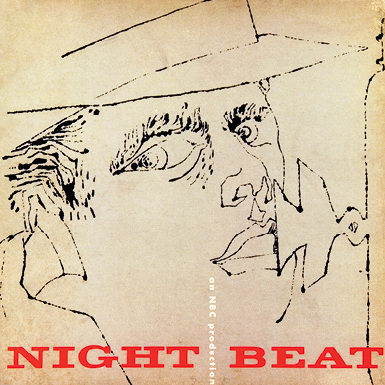
Image result for warhol 50s jazz cover artFrank Lovejoy, Night Beat, 1949

Jay Jay Johnson, Kai Winding, and Bennie Green, Trombone by Three, 1956

Image result for warhol 50s jazz cover art moondogMoondog, The Story of Moondog, 1957

Image result for warhol 50s jazz cover artThe Joe Newman Octet, I’m Still Swinging, 1956

Image result for warhol 50s jazz cover artCool Gabriels, s/t, 1956

Johnny Griffin "The Congregation," on Blue Note #design & #illustration: Andy Warhol! #jazz #art #50s: Johnny Griffin, The Congregation, 1957

Image result for warhol 50s jazz cover artVarious artists, Progressive Piano, 1952

For an exhaustive look at Warhol’s cover art go to this site http://rateyourmusic.com/list/rockdoc/andy_warhols_record_cover_art/1/


Classical Statues Dressed as Hipsters!

Dressed like this these statues become familiar and contemporary.

1brassiere-def1-rvb def_statue_01_def def_statue_02_def def_statue_03_def homme_avec_mouton-def1-rvb rock-def1-rvb tutu_rose-def1-rvb

Photos by photographer Léo Caillard and photo retoucher Alexis Persani.

This is Léo Caillard web site: http://www.leocaillard.com/

‘Yellowism’ Explained!

I found this blog when looking for images of Duchamp and decided to copy and post it here. It links to my ‘Vandalising Rothko’ piece and at the time I had no idea what Yellowism was! I found it very interesting so I reposted it in full. It is clear that Vladimir Umanets was very influenced by Duchamp. I want to make it clear that I do not necessarily agree with what’s written here, I’m not sure I can even understand it! However, I believe that Umanets was motivated by a strong force and the question “What Is Art For?” is still a valid pursuit. He showed courage and commitment to do what he did but I’m not convinced by his philosophy at this stage.

Here’s an interesting post from Interdome about the treatment of Umanets i.e. giving him a two year prison sentence for defacing the Rothko:

As a case study, let’s look at Ai’s Dropping a Han Dynasty Urn.

On the surface level, the photo set appears to mock artistic fetishism: Ai looks like he could not possibly give a fuck as he lets the valuable artifact shatter on the ground. There’s a sublime disregard in the pictures; it’s art against art like Kruger’s sentences are ads against ads. But as an artist, Ai can’t destroy art, he can only make more. From one urn, he gets three pictures. If I went into the Hirshhorn, grabbed one of the photos off the wall, and let it fall to ground like I didn’t give a fuck, I would be arrested and taken to jail. It’s only freedom of expression if you break something you own, otherwise it’s vandalism.

One true vandal learned this lesson (or taught it) very publicly when Vladimir Umanets was sentenced to two years in prison for writing “a potential work of yellowism” on a Mark Rothko painting in London’s Tate Modern. Yellowism is the idea that if anything can become art regardless of its use value, then we could imagine a third category of stuff past art, in light of which the art/non-art distinction dissolves. Both are equally potential works of yellowism, just like a soup can and a urinal are equally art objects. Umanets writing “a potential work of yellowism” on a Rothko is the same as Duchamp Sharpie-ing “a potential work of art” on a toilet while he takes a piss. Except Umanets isn’t an artist. We know he’s not an artist because he’s in jail in England, and England, Ai would remind us, has freedom of expression.

Umanets wasn’t looking for freedom of expression, but freedom from expression, out from under the artistic injunction to replace what you destroy. He wanted to break without buying, but that’s not in liberalism’s deal. And no one cries for a vandal.

Because Umanets is a vandal and not an artist, there won’t be any complaints from the U.S. State Department. Because this is England and not Russia, there won’t be a Human Rights Watch report, as there was for the band Pussy Riot when they were arrested for trespassing. Even anti-capitalist arts writers called for his head on a platter.

Anonymous asked: FUCK OFF PLEASE

x

29 Mar 2013 / 0 notes

►► The Authors of the Death
by Marcin Lodyga

When looking from art perspective, one can say that yellowism is a dead territory where the richness of meanings and interpretations is reduced to one – to yellow. But one needs to remember that yellowists don’t announce the death of art. Art is and will be alive forever. They rather say that yellowism is dead, inert, homogeneous mass without creativity. Authors of the manifesto and definition of yellowism are the authors of the death – yellowists are the authors of a single interpretation. This death is positioned outside of art, like mirror.

Roland Barthes in “The Death of the Author” says: “To give a text an Author” and assign a single, corresponding interpretation to it “is to impose a limit on that text.” Barthes argues against the method of reading that relies on aspects of the author’s identity — their political views, historical context, religion, ethnicity, psychology, or other biographical or personal attributes — to distill meaning from the author’s work. Yellowists want to impose a limit on the text, on art, and on ordinary reality too, but not by giving a “text” an author. Paraphrasing Barthes I say: To give a “text” a YELLOW and assign a single, corresponding interpretation to it is to impose a limit on the text. Barthes demands the death of the author (author disappears) because the author’s identity limits the text, the reading. In yellowism case author also disappears and yellow – the necessary “limitation” appears instead of the author.

Inside yellowism the artistic kingdom of meanings and interpretations is erased together with the author. It doesn’t matter WHO made a piece of yellowism because all pieces were, are and will be about yellow only. Yellowism is permanent, boring, inert, homogeneous flat, ‘dead’ mass. Always was and always will be. Like in the forest where all the trees (meanings) ‘look’ the same – wherever you go you are in the same place anyway. A thousand kilometers left, two meters right or backwards – you are always in the same place. In yellowism the nature of the authors has “the identity of the indistinguishable forest”.

Barthes conclusion: “the birth of the reader must be ransomed by the death of the Author.” Yellowism conclusion: the death of meanings and the death of the author must be ransomed by the birth of single meaning – yellow.

image

image

image

Marcin Lodyga
“Sounds from the chamber”
piece of yellowism
for public audition in yellowistic chambers only
CD / audio recording of a walk through Miroslaw Balka exhibition Gravity made in the gallery space
executed in 2013

Anonymous asked: please can you explain the relevance of all the tits and bums on this site to yellowism. Is yellowism tits and bums? is that the context everything is reduced to?

x

5 Mar 2013 / 1 note

image

Anonymous asked: At least Marinetti was funny..

x

4 Mar 2013 / 1 note

image

►► Luncheon on the grass
(on the grass: Arthur Danto, Roy Turner, Joseph Kosuth, Marcin Lodyga)

What makes the difference between a Brillo box and a work of art consisting of a Brillo box is a certain theory of art. It is the theory that takes it up into the world of art, and keeps it from collapsing into the real object which it is. – Arthur Danto. But to expose the irrelevance of this idea when attributed to the tradition, we have only to ask what “real object”, “Le déjeuner sur l’herbe” by Manet collapses into when the implicit theory which supported it is refuted. – ask another thinker Roy Turner (Philosophy Now magazine)

Marcin Lodyga starts: If “Le déjeuner sur l’herbe” by Manet was placed in the context of yellowism, inside a yellowistic chamber, then it would stop to be a work of art and it would become a piece of yellowism – a pure expression of yellow color in the form of Manet painting. Inside yellowism the painting by Manet is not a work of art. We have only to ask what piece of yellowism “Le déjeuner sur l’herbe” by Manet collapses into when the implicit context of yellowism which supported it is refuted. The answer: it collapses into a work of art, it becomes a work of art again, it gains its previous status.

Painting is a kind of art. If you make paintings you are already accepting (not questioning ) the nature of art. One is then accepting the nature of art to be the European tradition of a painting-sculpture dichotomy. – nervously said Joseph Kosuth (“Art After Philosophy”). Dear Joseph – Marcin replies – in the context of yellowism – which is NOT a kind of total, huge conceptual art work, as you would consider it probably, painting is not a work of art. You said: “Art is the definition of art”, I say: yellowism is the definition of yellowism.

text by Marcin Lodyga
27/02/13

The Flaneur art blog- Should Umanets really be jailed for 2 years for defacing a Rothko? #yellowism –

flaneurphotos:

New Post has been published onhttp://flaneur.me.uk/12/should-umanets-really-be-jailed-for-2-years-for-defacing-a-rothko-yellowism/

Should Umanets really be jailed for 2 years for defacing a Rothko? #yellowism

image

26 Feb 2013 / Reblogged from flaneurphotos with 5 notes / yellowism

Interdome: As a case study, let’s look at Ai’s Dropping a Han Dynasty Urn. On the…

interdome:

As a case study, let’s look at Ai’s Dropping a Han Dynasty Urn.

On the surface level, the photo set appears to mock artistic fetishism: Ai looks like he could not possibly give a fuck as he lets the valuable artifact shatter on the ground. There’s a sublime disregard in the pictures;…

26 Feb 2013 / Reblogged from interdome with 4 notes / yellowism


fixedgearbikesyeah asked: NO ONE CARES

x

9 Feb 2013 / 1 note

justiceismine asked: Yellowism is neither art, nor anti-art but a cause. Some might ask if Yellowism is needed or say it’s pathetic/stupid but I say it deserves it’s place as did Jackson Pollock for example, which he did not get at his time.

x

6 Feb 2013 / 3 notes

spacecowboysparklefingers asked: No one is going to drink your yellow kool-aid. Your totalitarian snake oil ideology has been ineffectual and irrelevant since De Stijl/Neoplasticism tried it. There is no dialogue here, you won’t even respond to this with anything more than an “X”. Please don’t write on anymore Rothko’s (or any other pieces of art for that matter), they are not yours to write on, and some people really enjoy them. No one wants you here yellowism, go home.

x

6 Feb 2013 / 1 note

image

image

Marcin Lodyga
“You can start painting again, in yellowism”
yellowistic draft
signed and dated on the front
poster printed for the occasion of Duchamp season in Barbican, London
150 x 100 cm
executed in 2013

image

►► Rome outside of art
by Marcin Lodyga

Yellowism is not dadaism or neo-dadaism. If you think that yellowism is dadaism then actually you are a dadaist, because you try to devalue yellowism and make it meaningless. Dadaists were nihilists and they “promoted” nonsense. The fact that in yellowism everything means yellow leads to the wrong conclusion that everything means nothing and therefore yellowism is perceived as nihilism /dadaism. This is the big misunderstanding. The real consequence of yellowism existence is the philosophy of ONE and the vision of many different isms (existing outside of art) which can be reduced to (one) yellow-ism anyway. Although yellowism clones exist under different names – they are yellowism. In the future: many one-perspective “worlds”. Not only one “world” full of perspectives (meanings), many various subjective interpretations – like in postmodernism, especially postmodern art, but also many separate “worlds” (greenism, blueism, chairism) with one perspective each, concentrated on one meaning only. Yellowism, divided into many isms, will be positioned away from the forever developing, “organic” realm of art.

The total flattening announced by yellowists is more humanitarian than dadaism because it doesn’t leave people with nothing – inside the desert of meanings where you can watch only the wrecks and corpses of culture. Yellowists save one meaning (yellow) for everything and also they let you live in the “yellowistic totalitarian illusion of many”- you can exist in autonomous groups called greenism, blueism, chairism or skyism etc. but you will be a yellowist anyway. All roads lead to Rome. The universal Rome – the absolute truth will be always outside of art.

Dadaists are nihilists, they do not offer anything, they don’t show a new perspective, new possibilities, they replace everything with nothing. » Dada (…) wants nothing, absolutely nothing, and what it does is to make the public say ” We understand nothing, nothing, nothing “. “The Dadaists are nothing, nothing, nothing and they will surely succeed in nothing, nothing, nothing.” « 391, No. 12, Paris, March 1920 Francis Picabia who knows nothing, nothing, nothing.

Nihilists say that without absolute, universal, and transcendent values, there can be no real values at all. Friedrich Nietzsche, however, argues that the lack of such absolute values does not imply the absence of any values at all. Nietzsche “permits” the values of many different and even mutually exclusive perspectives. This is called “perspectivism” – all ideations take place from particular perspectives. This means that there are many possible conceptual schemes, or perspectives in which judgment of truth or value can be made. This leads (me) to postmodernism. Postmodernism is the consequence of Nietzsche’s perspectivism but is nihilistic. The proliferation of alternative perspectives, beliefs and values makes that postmodern society is foundationless.

This what we see in the galleries is the result of postmodernism or post-post modernism, or postpostpostmodernism, whatever. Many perspectives, many points of view, not one grand and universal but many interpretations closed inside the circle called “art”. In the future artists will resign from art, will abandon this circle. Art full of many perspectives will still exist but will be surrounded by – isms. Some artists will never leave the territory of art but there will be yellowists, greenists, chairists looking at them from outside – located in one perspective circles.

All the other isms are actually yellow-ism because, they have the same architecture, logic. Finally they can be reduced to yellowism, flattened to yellow-ism. However, people will need this totalitarian illusion of many isms, they will construct their own contexts, for example greenism,redism, chairism or godism, and they will be happy inside the isms but all the new one-meaning worlds can be always considered as yellowism.

Yellowism doesn’t replace (like dadaism) all the values with nothing, yellowism gives one sense instead of nonsense. Yellowism presents the vision of many autonomous territories around multiperspective art. Yellowism saves the ONE – whatever it is: blue, green, chair and offers the new grand philosophy of ONE.

Marcin Lodyga
18.01.2013
London

mysar: yellow posterby rasym aka. mysar

mysar:

yellow posterby rasym aka. mysar

19 Jan 2013 / Reblogged from mysar with 3 notes

image

image

Marcin Lodyga, Khadija Davies
Portrait of Members of Art & Language with Caps, in the Style of Jackson Pollock
yellowistic draft
signed and dated 18/01/13 on the front
magazine cover, pink ink
22.4 x 28.6 cm
Executed in 2013

The authors of manifesto and definition of yellowism Marcin Łodyga and Vladimir Umanets at The British Museum in London (January 2012).
© Sylwester Kolton.

►► Discipline and punish.The birth of the black hole

Yellowists see the whole domain of reality and the whole domain of art as gigantic readymades which can be transported into the context of yellowism. Yellowism is a specific prison, a ghetto in which you are free from freedom, in which the freedom of interpretation doesn’t exist. Every content placed in this territory defines yellow color. It requires a noetic discipline. You have to respect the internal yellowism law. Yellowism is a bit like a black hole – most of the information about the matter that went into forming the black hole is lost. In the end yellowism only remembers the total mass, charge, and angular momentum. The physical form of objects and beings transported from art and reality is preserved, but all the forms carry only one, always and forever the same, identical message. You can observe that something is moving inside, you can watch pieces of yellowism free from the past and future; there is a movement but there is actually no time.

Yellowists don’t punish art, they don’t take a revenge on art or reality. Manifesto of yellowism is not a death sentence for art. Yellowists don’t destroy and don’t create. Yellowism is not vandalism and it’s not a form of creation. There is no postmodern, Derrida’s deconstruction, any destruction or creative construction inside yellowism. There is something else: flatstruction. Everything is flattened to yellow, all interpretations are ironed to one flat surface, to one meaning. The total flattening (flatstruction) is a state of permanent homogeneity. Yellowists don’t create and they don’t destroy, they make everything flat therefore, inside yellowism, deconstruction, creativity, vandalism, surrealism or fascism or anything else is flattened to one, to the expression of yellow.

Artists push the boundaries of art and are imprisoned in their seeming freedom. Yellowists are free outside of art. They resigned from art, they overstepped the boundary and the fact that everything can be about yellow gives them the almost cosmic freedom.

text by Marcin Lodyga

►► A dead animal

Today you can overstep the border, you can be a bit like Alice through the looking glass, you don’t have to, together with other artists, push the boundaries of art further anymore, now it’s time to cross it and discover the another, still unknown for many, space called yellowism. Of course, you can stay where you are and run your artistic life in harmony with the motion of postmodernism. Yellowists don’t announce the end of art; they say in manifesto: art is a forever developing whole. They don’t promote a slogan: “art is dead”, they rather say that yellowism is dead and always was dead and always will be dead. Therefore they don’t want to replace art with yellowism. They just introduce a new autonomous territory, specific environment which is parallel to the context of art. They give you a vision of time in culture when the resignation from art will be a trend. Yellowists show you the possibility of alternative existence in which the fact that you abandon art is considered as the most creative decision. It doesn’t matter what the condition of art will be after twenty or hundred years – yellowism will be still the same. Any changes and any progress around yellowism are and will be, metaphorically speaking, like a tank of formaldehyde for a dead animal.

text by Marcin Lodyga

‘Thought-tormented Music’: David Bowie’s Low and T.S. Eliot

Fragmented language, Nietzschean elitism, and disillusionment with art: could Bowie’s Thin White Duke era have been inspired by The Waste Land?

-Kathryn Bromwich
comparison2

Submitted for MA in English: Issues in Modern Culture, University College London, 2009. 

Shorter, snappier version here.

T.S. Eliot’s early work, particularly The Love Song of J. Alfred Prufrock (1917) and The Waste Land(1922), and David Bowie’s Low (1977), are considered to be ground-breaking in their respective genres of poetry and music. Both antagonise the reader or listener with fragmented language and obscure references, and are united by a similarity in tone: disillusionment with art and distrust of language. Through a discussion of the influence of Eliot on Bowie, this essay will examine the motivation behind the aesthetic choices in both artists, and the ways in which they strive to bring about ‘newness’. The trend in 1970’s rock towards experimentation and intellectualism is well exemplified by Bowie’s interest in literature in 1977; the link between him and Eliot appears to be considerable, and can be seen as a symptomatic example for a wider movement of innovation in music. The focus will be on Low, in relation to Eliot’s early poetry and the critical writings of Eliot and Ezra Pound, in order to illustrate the ways in which Modernist ideas, themselves incorporating musical aspects, function when applied to the field of music.

The disciples of Eliot are numerous, but one who is not often discussed is David Bowie. Passing through William Burroughs, it is possible to establish an indirect influence of Eliot on Bowie. Hugo Wilcken, in his extended analysis of Low, states that Bowie’s lyrics were often composed in a ‘cut-up writing style, derived from William S. Burroughs,’[1] who in turn referred to The Waste Land as ‘the first great cut-up collage’[2] and ‘terrifically important […] I often find myself sort of quoting it or using it in my work in one way or other.’[3] However, there is also a more concrete link to Eliot. Three years before Low was released, Burroughs interviewed Bowie and remarked:

Burroughs: I read this ‘Eight Line Poem’ of yours and it is very reminiscent of T.S. Eliot.

Bowie: Never read him.

Burroughs: (Laughs) It is very reminiscent of ‘The Waste Land.’[4]

Given that Bowie considered Burroughs to be ‘the John the Baptist of postmodernism,’[5] it appears likely that this encounter would have encouraged Bowie to read Eliot.

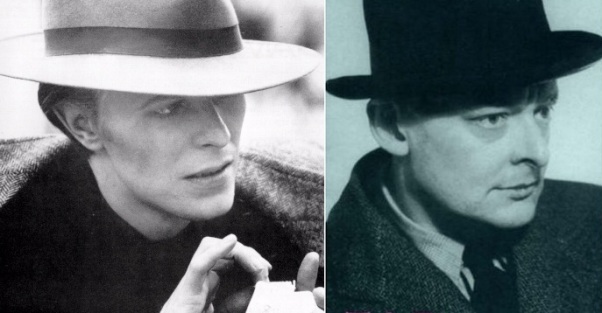
Momentarily leaving aside musical and poetic aesthetics, it is worth noting the similarities between Bowie and Eliot from a biographical point of view. Bowie constructs different ‘characters’ in relation to the music he is creating, and during the recording of Low assumed a persona that bore striking similarities to Eliot’s early characteristics: the ‘Thin White Duke.’ Bowie’s new character, much like Eliot, was interested in mysticism and the occult, and both entertained a certain amount of quasi-Nietzschean intellectual elitism, coupled with conservative views. Eliot’s biographer Peter Ackroyd relates that the reactionary poet, in his early years, ‘despised democracy’[6]; similarly, in 1976 Bowie claimed to ‘believe very strongly in Fascism […] a right-wing, totally dictatorial tyranny.’[7] Nervous and eccentric behaviour is another point in common: Eliot is known to have occasionally worn green face powder and to have demanded to be called ‘Captain,’[8] and there are rumours that Bowie preserved his urine in the fridge to avoid being cloned by aliens.[9] The Thin White Duke’s fashion sense also seems to be modelled on Eliot’s dandyish appearance: pale, thin, with slicked-back hair, austere black and white clothes, a fedora hat and black overcoat (see photos). It is impossible to say what came first – whether a longing for newness, or the interest in Eliot – but both Eliot and Bowie showed similar signs of frustration with contemporary poetry and music.

Both The Waste Land and Low were composed in volatile political times. In the chaotic aftermath of World War One, it has been argued that experience was fractured by factors such as shell-shock, loss of faith in progress, fear, grief and apathy. In poetic circles there was an increasing distrust of language: in his essay ‘The Perfect Critic,’ Eliot laments the ‘tendency of words to become indefinite emotions,’[10] and symbolist poet Stéphane Mallarmé criticises language’s ‘”pedestrian clarity” full of “plagiarism” and “platitudes.”‘[11] Paul Fussell argues that there was also a gap between a reality that had been wrecked by modern technologies and a language that had been ‘used for over a century to celebrate the idea of progress.’[12] At this time, poetry was mainly discursive, in traditional verse forms, and reliant on a clear understanding of its semantic meaning. Given the fragmentation of post-war consciousness, this traditional form of poetry was felt to be unsatisfactory for commenting on the new world.

In the late 1970’s, Bowie was in Berlin, perhaps the place in which the escalating tension and anxiety of the Cold War were felt most keenly. Due to the concrete separation of East and West comprised in the Berlin Wall, the city was considered ‘a microcosm of the Cold War.’[13] The atmosphere was austere: Bowie described West Berlin as ‘a city cut off from its world, art and culture, dying with no hope of retribution,’[14] and Tony Visconti said that ‘you could have been on the set of The Prisoner.’[15] The dominant form of music was largely guitar-based narrative rock, and Bowie, claiming that he was ‘intolerably bored’[16] with narration, says that his objective for Low was ‘to discover new forms of writing. To evolve, in fact, a new musical language.’[17] However, after the ‘classic’ era of Elvis and early Beatles, the music scene had already undergone several movements towards experimentation in the late ’60s. There were concept albums such as Pink Floyd’s The Dark Side of the Moon (1973) and The Who’s Tommy (1969), the prog-rock movement emerged, there was an interest in virtuoso performances such as Hendrix, and in Germany the electronic movement was gaining momentum. Bowie, at a stage in music when everything seemed to have been done before, felt that ‘rock ‘n’ roll is dead… It’s a toothless old woman.’[18] His endeavour to achieve novelty, therefore, seems to operate simultaneously with a fear that nothing new can be done.

In addition to the problematical outside world, Eliot’s and Bowie’s psychological conditions were far from stable. Eliot was diagnosed with ‘some kind of nervous disorder’[19] and composed The Waste Land ‘in a state of extreme anxiety.’[20] Wilcken argues that Bowie was suffering from paranoia[21]and borderline schizophrenia.[22] Both outer and inner worlds became increasingly difficult to express through language: this posed the problem of conveying ‘non-verbal awareness by verbal means.’[23]One of Bowie’s and Eliot’s main preoccupations is a distrust of semiotics, lamenting the impossibility of precise utterance. In Prufrock, the speaker attempts to talk, although ‘it is impossible to say just what I mean,’ and what comes out is ‘not it at all, that’s not what I meant at all.’ The ‘overwhelming question’ that Prufrock cannot articulate, becomes in Bowie a need to say something that seems inexpressible: ‘What you gonna say to the real me, / Ahhhh, ahhhh, ahhhh, ahhhh, ahhh’  in ‘What in the World.’ What is said, if indeed something is, is never revealed. If art were to express the fragmented idiom of shell-shock and war, and of drug-induced, nervous consciousness, music and poetry needed a new ‘language’.

In order to avoid semantic imprecision, both Eliot and Bowie’s work becomes increasingly non-linguistic. The focus is brought towards aspects other than the words. Eliot juxtaposed obscure references and worked through association, making his words deliberately obfuscating:

Son of man,

You cannot say, or guess, for you know only

A heap of broken images (The Waste Land Part I, 20-22)

There is a move away from blank verse and iambic pentameter towards free verse, and Eliot concentrated on the poem’s visual and spatial elements, bringing attention to the form of the poem. Lines and stanzas are of different lengths, unevenly spaced and sometimes indented; different sections are divided by lengthy ellipses (the ‘…..’ in Prufrock) and visually alarming capital letters are used, for example ‘HURRY UP PLEASE ITS TIME’ (II, 141). Similarly, Bowie attempts to eschew words: his collaborator Brian Eno claims that one of the aims of Low was ‘to get rid of the language element.’[24] The music in Low is mainly instrumental, with occasional chanting, and the few lyricsare fragmented and enigmatic. The opening song ‘Speed of Life’ was Bowie’s first instrumental track, and ‘Side B’ is almost wordless. ‘Warszawa’ is in a made-up language, using voice as texture rather than as a vehicle for meaning: ‘He-li venco de-ho/ Che-li venco de-ho/ Malio.’ This recalls Eliot’s ‘Weialala leia / Wallala leialala,’ (III, 290-291) which in turn returns to Dadaist sound poetry. Bowie also foregrounds the artificial procedure of studio intervention: Low relies on synthesisers and distortion of traditional instruments with the Harmonizer, an electronic pitch-shifting device. The relevance of the songs’ linguistic meaning is minimised, while attention is drawn to the process of creating art: the form, indeed, becomes the content.

Bowie and Eliot also draw attention to style by subverting expectations, making us aware of clichéd artistic formulae. In Prufrock, Eliot leads us to expect a romantic poem, but the Laforguean mood change is abrupt:

Let us go then, you and I,

When the evening is spread out against the sky

Like a patient etherised upon a table

Many of the songs on Low also defy convention: in Wilcken’s words, they ‘fade out just as the riff is starting to sink in. Just at the moment you think it might be leading somewhere, it’s gone’ (78). ‘Sound and Vision’ starts off in a loop, suggesting another instrumental song like ‘Speed of Life’: however, Bowie’s vocals appear halfway through, change pitch and intonation between lines, and refuse to develop into a structured refrain. The lines ‘drifting into my solitude/ over my head’ are sung in a crescendo, intimating a chorus or climax; on the contrary, the song fades out and ends, creating a sense of unfulfilled frustration. Form begins to merge with content, echoing Eliot’s statement that in poetry ‘we cannot say at what point “technique” begins or where it ends.’[25]

In The Waste Land, the empty spaces on the page suggest an implied score, a harmony that could perhaps unify the inchoate fragments of the poem: it seems to be yearning for a unifying key, perhaps music. The poem moves away from an emphasis on clear semantic denotation, and the form itself creates its meaning. In this respect, Eliot’s poetry can be said to approach ‘pure form’ and therefore, in Walter Pater’s words, ‘aspire towards the condition of music.’[26] Bowie also removes the non-musical elements of lyrics and narrative from his work, instead conveying his meaning through the tone and structure of his instrumental songs, thereby approaching a purer form of music. Given Eliot’s and Bowie’s distrust of language, music is an appropriate form to turn to.

The dialogue and mutual influence between music and poetry is an ongoing one, and has given rise to numerous disputes as to whether music can ever portray emotion exactly. Brad Bucknell points out that there has traditionally been a ‘romantic belief in the expressive potential of music’ (2) notably in Arthur Schopenhauer’s dictum that it is ‘a direct image of the Will itself.’[27] Pound stated that ‘poets who will not study music are defective,’[28] and that they can achieve ‘an “absolute rhythm” […] which corresponds exactly to the emotion or shade of emotion to be expressed’[29] by incorporating musical elements in poetry, thus communicating at a pre-verbal level. Eliot believed that, though technical musical knowledge was not necessary, ‘a poet may gain much from the study of music’[30] in terms of rhythm and structure. Musical technique can be used to convey meaning through melody, rhythm, tone, tempo and through what Roland Barthes would term ‘the signifying opposition of the piano and the forte.’[31] However, the signification of a polysemic medium such as music is intrinsically imprecise. The more recent critical consensus tends to be that music is important due to its ability for open signification: Mallarmé valued it precisely for ‘its imprecise, evocative effects.’[32] Eliot’s and Pound’s poetry most resembles music in its calculated ambiguity and its emphasis on impressions: their poetry could be seen, in Kevin Barry’s words, as an ‘activity of response as opposed to notions of description or specific naming.’[33] Eliot, Pound and Bowie approach the form of ‘pure music’ in their move towards polysemy, adopting music’s resistance to state anything as ‘truth’.

comparison1

Instead of attempting to offer a single, clear message and being misunderstood due to the imprecision of language, the works are imbued with multiple unfixed meanings. Several denotations are condensed into single words: Winn states that the poet ‘alters the meaning of a word by multiplying its secondary associations in order to drown out the dictionary definition’ (332). There is an emphasis on polysemy and logopoeia, taking into account secondary meanings and word connotations. Eliot stated that ‘in The Waste Land, I wasn’t even bothering whether I understood what I was saying’[34]: Ackroyd praises it for providing ‘a scaffold on which others might erect their own theories’ (120). The preface to The Waste Land suggests that there is a message hidden in the poem’s fragments, like the Sybil of Cumae’s riddles. Eliot underlines the importance of ambiguity: ‘poets in our civilisation, as it exists at present, must be difficult […] the poet must become […] more allusive, more indirect, in order to force, to dislocate if necessary, language into his meaning.’[35] Similarly, Bowie’s often-abstract lyrics are held together by association and alliteration:

Don’t you wonder sometimes
‘Bout sound and vision
Blue, blue, electric blue
That’s the colour of my room

Bowie’s collaborator Brian Eno stated that ‘the interesting place is not chaos, and it’s not total coherence. It’s somewhere on the cusp of those two.’[36] Paradoxically, the mimetic method can be seen as more accurate for describing a chaotic modern consciousness than a diegetic one. In order to convey thought processes, Eliot wrote ‘What the Thunder Said’ ‘at one sitting in a kind of delirium, rather like automatic writing, aiming to replicate a free-associational structure.’[37] Bucknell argues that ‘the text’s very disruptions are meant to be the sign of continuity with our mode of perception. They are intended to be mimetic of our process of knowing the world’ (109). The works’ deliberate ambiguity, and their reluctance to offer a final truth, reflects the uncertainties of perception and thought processes in real life.

Defying the notion of a single message, Bowie and Eliot also challenge the idea of a single, fixed identity. Eliot maintains a ‘tension between performer and performed,’[38] echoing poet Arthur Rimbaud’s paradoxical ‘Je est un autre’. Both Bowie and Eliot hide their own personality by giving a voice to numerous different characters. In Prufrock, Eliot writes that ‘there will be time/ to prepare a face to meet the faces that you meet,’ suggesting a deliberate creation of identity. The Waste Land, originally entitled ‘He Do the Police In Different Voices,’ provided an outlet to the thoughts and speech of ”characters’ which seemed to exist within the personality of Eliot.’[39] These include men, women, and a synthesis of the two: Tiresias, ‘old man with wrinkled dugs’ (III, 228). A voice is given to both the aristocracy and the working classes, ‘O is there, she said. Something o’ that, I said’ (II, 150). Bowie, known for his ‘chameleonic character,’[40] has impersonated alter-egos such as Ziggy Stardust, Aladdin Sane and the Thin White Duke. In the guise of the Thin White Duke, he splits into further additional characters on Low: ‘Be My Wife’ is sung in a theatrical cockney accent, ‘Warszawa’ suggests someone from Eastern Europe, and ‘Breaking Glass’ is performed in a terse, unemotional voice. It is difficult to gauge the artist’s true intention, or which character voices the views closest to his own.

Often, attribution of speech to any one character is problematic: Eliot’s speakers and the characters they refer to are not clearly differentiated. In passages such as ‘when we came back […] / your arms full, and your hair wet, I could not / speak’ (I, 36-9) it is up to the reader to decide who ‘we’, ‘you’ and ‘I’ are. In Bowie, lines like ‘you’re such a wonderful person, but you’ve got problems,’ and ‘deep in your room, you never leave your room’ could be spoken both by and about his paranoid persona. It is often difficult to assess whether Eliot and Bowie are to be taken seriously or in jest. In The Waste Land, Eliot’s verses ‘veer close to parody or pastiche,’[41] occasionally indicating his lifelong fondness for the music-hall.[42] In Bowie, the passage ‘please be mine/ Share my life/ Stay with me/ Be my wife,’ could be a parody of traditional pop songs, yet Bowie has stated that ‘it was genuinely anguished, I think[43] (emphasis mine), further reinforcing the sense of ambiguity. The polyphonic juxtaposition of speakers undermines the idea of one central voice or of one ‘correct’ meaning: we are never sure who the ‘real’ Bowie or Eliot is.

In The Waste Land and Low there is a move away from a portrayal of the self or of the poet’s own thoughts: their feelings are projected onto their surroundings and other minds. Eliot states that ‘the progress of art is a continual self-sacrifice, a continual extinction of personality.’[44] This is demonstrated in his endeavour to depict the ‘Unreal City’ (I, 60) that was post-War London: Eliot ‘agonised over the fate of Europe represented archetypally in the image of London.’[45] Robert Schwartz has seen this as Eliot ‘transmut[ing] personal experience into something of greater dimension while obscuring its autobiographical origins’ (46). The songs on ‘Side B’ of Low are, on the surface, about places: Warsaw, West Berlin, the Berlin Wall, and East Berlin. The tone becomes bleaker, reaching its darkest moment in the final song ‘Subterraneans,’ in which ordinary language creates inscrutable sentences: ‘Care-line driving me/ Shirley, Shirley, Shirley own/ Share bride failing star,’ defamiliarising normal English words and generating a sense of unease. The beginning is slow, juxtaposing violins and synthesisers, and later a lone saxophone is set against a background of muted electonica; the feeling is one of isolation, appropriate for the living conditions in East Berlin. However, according to Wilcken Bowie saw the outside as ‘a reflection of the self, until you lose sight of where the self stops and the world begins’ (77). On the album cover, Bowie’s hair blends into the orange background, ‘underlining the solipsistic notion of place reflecting person.’[46] The self is effaced with the intention of making art that is universal rather than personal; however, the distinction between outside and inside is not as clear as it first appears.

comparison

The interest in place rather than the individual is especially relevant in the light of Eliot’s and Bowie’s locations. They were both on self-imposed exiles: Eliot emigrated from America to England, and Bowie moved to Germany after a few years in Los Angeles. This move towards Europe involved an increase in erudition to culturally distance themselves from America, where according to Eliot ‘the [intellectual] desert extended à perte de vue, without the least prospect of even desert vegetables.’[47] Eliot rejected the increasingly democratised American art scene of Wallace Stevens and William Carlos Williams, whose poetry was ‘in plain American which cats and dogs can read.’[48] Eliot’s poetry is laden with literary allusions, often foreign: at the end of The Waste Land, Eliot references Dante, Kyd, Gérard de Nerval, the Pergivilium Veneris and the Upanishad. Bowie left Los Angeles, moving away from the euphoric escapism of the glam, punk and disco, and embraced Europe’s avant-garde music scene. His years in Berlin were a time of intense intellectual study: he ‘amassed a library of 5000 books and threw himself into reading them […] it became something of an obsession.’[49] Infamously, the feeling of intellectual achievement gave rise to elitism and Nietzschean delusions in the young Eliot and the Berlin-era Bowie. Ackroyd relates that Eliot ‘divided human beings into ‘supermen,’ ‘termites’ and ‘fireworms’ […] there is no doubt that he felt a certain intellectual superiority’ (96). In 1978 Bowie dubbed himself and Eno the ‘School of Pretention.’[50] This sense of self-importance resulted in a propensity to showcase their erudition through extensive referencing.

In their reading, Eliot and Bowie both encountered occult rituals, oriental religion and Eastern philosophy. While writing The Waste Land, Eliot contemplated ‘withdrawal into the hermitage of a Buddhist monastery;’[51] and ”psychic’ phenomena held a certain fascination for him.’[52] The methods of the occult are related structurally to the open-ended meanings of The Waste Land: Madame Sosostris gives out knowledge in fragments out of which we hope to construct meaning, but there are things which she, too, is ‘forbidden to see’ (I, 54). The poem ends by referencing the Upanishad: ‘Datta. Dayadhvam. Damyata. / Shantih shantih shantih’ (V, 433-4). The Modernist interest in mysticism filtered through to ’60s and ’70s musicians, famously the Rolling Stones and the Beatles, and features prominently in Bowie. He had an ‘interest in Buddhism,’[53] a fascination with Aleister Crowley,[54] and his work abounds in allusions ‘to Gnosticism, black magic and the kabbala.’[55] The cryptic lyric ‘don’t look at the carpet, I drew something awful on it’ in ‘Breaking Glass’ is a reference to the Tree of Life. Although the interest in Eastern culture and occult rituals is not exclusive to Eliot and Bowie, it underlines their sense that conveying certain thoughts and feelings in standard English was impossible. In their work, they therefore incorporate different perspectives on the world, drawing inspiration from external sources.

One of the most striking similarities between Eliot and Bowie is the abundance and openness of their references to old, foreign, and ‘low’ sources. Another, possibly more conventional way of bringing about change, would be to embrace the new entirely and make a clean break with the past: Frank Kermode states that ‘the urge to be radically new is itself part of an ongoing history.’[56] The manifesto of Futurism in the 1910s was to reject classical art and ‘demolish museums and libraries’[57]; the American Modernist poetry of Stevens and Williams in the 1930s concentrated on ‘the local.’ The ‘robot rhythms’ of Krautrock in the mid-1970s ‘were in the process of eliminating the human altogether from the beat.’[58] Conversely, and perhaps counterintuitively, Eliot and Bowie both allude to traditional forms of their particular art in their attempt to modernise themselves. Eliot argued for a need of the timeless in addition to the temporal, stating that the artist cannot be valued alone but ‘must inevitably be judged by the standards of the past.’[59] Perhaps motivated by a disillusionment with the modern, Eliot and Bowie turn towards their predecessors.

Eliot frequently references classical literature in his work. The Waste Land starts with a reference to spring weather, recalling Chaucer’s ‘Aprille with his shoures sote.’[60] In ‘so many, / I had not thought death had undone so many’ (I, 62-3), Eliot translates Dante almost word-for-word: ‘io non averei mai creduto / che morte tanta n’avesse disfatta.’[61] Direct quotes are included as well, from Shakespeare (‘those are pearls that were his eyes’ I, 48) to Baudelaire (‘hypocrite lecteur! – mon semblable, – mon frère!’ I, 76). Myth was also important: in his essay ‘Ulysses, Order and Myth’ Eliot states that Joyce’s use of the Odyssey ‘has the importance of a scientific discovery […] instead of narrative method, we may now use the mythical method.’[62] Along these lines, The Waste Land is often said to be based on the quest for the Holy Grail.[63] Bowie, in turn, alludes to old, traditional and foreign music in Low.These include chanting in ‘Warszawa,’ a harmonica in ‘A New Career in a New Town’, a ragtime riff in ‘Be My Wife’, and a saxophone in ‘Subterraneans’. In ‘The Weeping Wall’, xylophones that Philip Glass compared to Japanese bells[64] are used to create ‘the flavour of Javanese gamelan (traditional Indonesian orchestras).’[65]
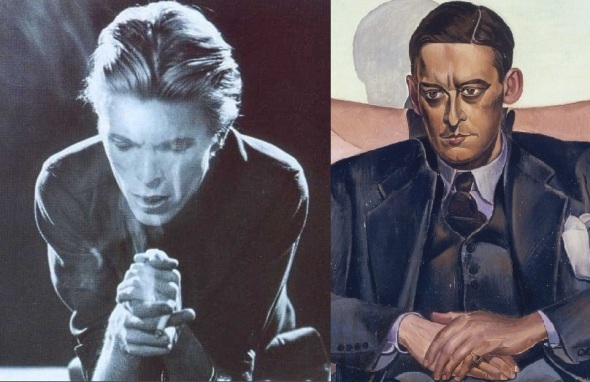
comparison3

The allusions to older forms of poetry and music, however, are set against innovative techniques. Eliot’s untraditional versification is at odds with the classical poets he references, and Bowie’s synthesiser sounds especially futuristic when contrasted to ragtime piano jingles. In returning to the past rather than rejecting it completely, Bowie and Eliot seem to question the concept of innovation itself. The method of referencing old and foreign sources differs from other methods of modernisation in its admission that it does not function in a cultural vacuum, and that is not – and cannot be – original. Experimental music combining old and new genres had been done before Bowie, notably in Sgt Pepper’s Lonely Hearts Club Band (1967); however, Bowie is set apart from their intentional experimentation by his attitude of disillusionment with art and originality. His creation of personas and unremitting self-reinvention distances him from his music; his embracing of commodified, commercial pop in the 80’s with hits such as ‘Under Pressure’ and ‘Let’s Dance,’ could be seen as indicating a sense of ironic detachment.

The assertion that originality is a myth is a constant source of frustration in both works, and, in itself, becomes a central subject. Eliot believes that he has nothing new or momentous to say: he talks of ‘Nothing again nothing. / Do / You know nothing? Do you see nothing? […] Is there nothing in your head?’ (II, 120-126) and Bowie laments that there is ‘nothing to do, nothing to say’ in ‘Sound and Vision.’ Ackroyd posits that Eliot ‘was immensely susceptible to [the ideas] of others – the act of creation was for him the act of synthesis’ (106). Brian Eno suggests a similar idea: ‘some people say Bowie is all surface style and second-hand ideas, but that sounds like a definition of pop to me.’[66] In Barthes’ terms, rather than projecting themselves as ‘authors’, entirely original lone geniuses, they are ‘scriptors’, in whose work ‘a variety of writings, none of them original, blend and clash.’[67] They place themselves in the context of past artwork, with no pretence of ‘pure originality.’

The apparently unrelated fragments, however, cohere: the fragments are arranged according to meaningful associative links, even if these are left unclear. Eliot said of Saint-John Perse’s poem Anabasis that ‘any obscurity of the poem, on first readings, is due to the suppression of links in the chain, of explanatory and connecting matter, and not to incoherence’[68]: as Schwartz points out, this description is also appropriate for The Waste Land. No matter how innovative the method, Eliot believes that ‘to conform merely [to any one method] would not be new, and would therefore not be a work of art.’[69] Eliot and Bowie therefore bring together ‘particles which can unite to form a new compound’[70]: a synthesis of old and new. Both works, bringing to light the impossibility of originality, are characterised not by an intrinsic ‘newness’, but by a Modernist yearning for the new.

In conclusion, it seems likely that Bowie had first-hand contact with the works of T. S. Eliot. The music inspired by Low could therefore be seen as obliquely descending from literary Modernism. When applied to music, Eliot’s aesthetics result in a disjointed, evocative, largely instrumental effect: a new musical language. Both works are marked by disillusionment with language and a move towards ‘pure form,’ aiming to minimise their dependence on semantic meaning or narrative. They work through associative and mimetic techniques: the content is made ambiguous, giving priority to the form. Different views are expressed through a polyphonic variety of voices, signalling a move away from any single meaning and encouraging a subjective interpretation of their work. The use of old and foreign sources reminds us that art must be considered in its context, drawing our attention to the inspirations that allow it to come into being: the myth of ‘originality’ in art is dispelled. The eclectic fragments in both The Waste Land and Low, then, are held together by a desire for newness, which is nevertheless tempered by a belief that originality is impossible.


[1] Hugo Wilcken. Low. (NY and London: Continuum, 2005), 82.

[2] William Burroughs. The Third Mind. (London: John Calder, 1979), 3

[3] John May, ‘Meeting with Burroughs at the Chelsea’ (2005) <http://hqinfo.blogspot.com/2005/06/meeting-with-burroughs-at-chelsea.html> [accessed 03-01-2009]

[4] Craig Copetas, ‘Beat Godfather meets Glitter Mainman,’ from Rolling Stone (February 1974) <http://www.teenagewildlife.com/Appearances/Press/1974/0228/rsinterview> [accessed 03-01-2009]

[5] David Bowie, ‘David Bowie Remembers Glam,’ The Guardian (02-04-2001) <http://www.guardian.co.uk/culture/2001/apr/02/artsfeatures.davidbowie> [accessed 03-01-2009]

[6] Peter Ackroyd. T. S. Eliot. (London: Abacus, 1984), 109

[7]Sarfraz Manzoor, ‘1978,’ The Guardian 20-04-2008, quoting Bowie in Playboy (September 1976) <http://www.guardian.co.uk/music/2008/apr/20/popandrock.race> [accessed 03-01-2009]

[8] Ackroyd, 136

[9] Wilcken, 11

[10] TS Eliot. The Sacred Wood. (London: Faber, 1997), 8

[11] In Brad Bucknell. Literary Modernism and Musical Aesthetics. (Cambridge: Cambridge University Press, 2001), 31

[12] Paul Fussell. The Great War and Modern Memory. (Oxford: Oxford University Press, 2000), 169

[13] Wilcken, 58

[14] In Wilcken, 119

[15] Ibid. 112

[16] In Thomas Jerome Seabrook. Bowie in Berlin. (London: Jawbone Press, 2008), 112

[17] In Wilcken, 14

[18] In Seabrook, 35

[19] Ackroyd, 113

[20] Robert L. Schwartz. Broken Images. (Lewisburg: Bucknell University Press, 1988), 34

[21] Wilcken, 52

[22] Wilcken, 82

[23] Aaronson in Bucknell, 2

[24] In Seabrook, 114

[25] Eliot 1997, xi

[26] Walter Pater. The Renaissance. (Oxford: Oxford World’s Classics, 1998), 86

[27] In Bucknell, 22

[28] Ezra Pound. The Literary essays. (London: Faber and Faber, 1954), 437

[29] Ibid. 9

[30] TS Eliot. On Poetry and Poets. (London: Faber, 1957), 38

[31] Roland Barthes. Image Music Text. (London: Fontana Press, 1977), 151

[32] In James Anderson Winn. Unsuspected Eloquence. (New Haven, London: Yale University Press, 1981), 326

[33] Kevin Barry. Language, Music and the Sign. (Cambridge: Cambridge University Press, 1987), 2

[34] In Schwartz, 32

[35] Eliot 1921

[36] In Wilcken, 68

[37] Schwartz, 32

[38] Keith Alldritt. Eliot’s ‘Four Quartets.’ (London: Woburn Press, 1978), 38

[39] Ackroyd, 118

[40] Seabrook, 22

[41] Ackroyd, 117

[42] Ibid. 105

[43] In Wilcken, 97

[44] Eliot 1997, 44

[45] Schwartz, 24

[46] Wilcken, 127

[47] Eliot in James Miller. TS Eliot. (Pennsylvania: Penn State Press, 2005), 139

[48] Marianne Moore, ‘England’

[49] Wilcken, 38-39

[50] Bowie 2001

[51] Schwartz, 241

[52] Ackroyd, 113

[53] Wilcken, 80

[54] Seabrook, 36

[55] Wilcken, 7

[56] In Bucknell, 14

[57] Stanley Payne. The History of Fascism. (Madison, WI: University of Wisconsin Press, 1996), 64

[58] Wilcken, 33

[59] Eliot 1997, 42

[60] The Canterbury Tales <http://www.gutenberg.org/files/22120/22120-8.txt> [accessed 03-01-2009]

[61] Inferno III, 56-57

[62] Eliot in The Dial, LXXV (November 1923), 482

[63] Schwartz, 14

[64] In Wilcken, 19

[65] Wilcken, 124

[66] In Wilcken, 101

[67] Roland Barthes. ‘The Death of the Author’ in the Norton Anthology of Theory and Criticism. (NY and London: Norton, 2001), 1468

[68] In Schwartz, 37

[69] Eliot 1997, 42

[70] Eliot 1997, 45


Bibliography

Ackroyd, Peter. T. S. Eliot. London: Abacus, 1984.

Alldritt, Keith. Eliot’s ‘Four Quartets’: Poetry as Chamber Music. London: Woburn Press, 1978.

Barry, Kevin. Language, Music and the Sign : a study in aesthetics, poetics and poetic practice from Collins to Coleridge. Cambridge: Cambridge University Press, 1987.

Barthes, Roland. Image Music Text. London: Fontana Press, 1977.

― ‘The Death of the Author,’ in The Norton Anthology of Theory and Criticism, 7th edition. Edited by Vincent B. Leitch. New York and London: Norton, 2001.

Bowie, David. Low. London: EMI, 1977.

― ‘David Bowie Remembers Glam,’ in The Guardian, Monday 2 April 2001. Accessed at http://www.guardian.co.uk/culture/2001/apr/02/artsfeatures.davidbowie on 03-01-2009.

Bucknell, Brad. Literary Modernism and Musical Aesthetics : Pater, Pound, Joyce, and Stein. Cambridge: Cambridge University Press, 2001.

Burroughs, William S. and Brion Gysin. The Third Mind. London: John Calder (Publishers) Ltd, 1979.

Chaucer, Geoffrey. The Canterbury Tales. Accessed at

http://www.gutenberg.org/files/22120/22120-8.txt on 03-01-2009.

Copetas, Craig. ‘Beat Godfather meets Glitter Mainman: Bowie meets Burroughs,’ originally printed in Rolling Stone, February 28, 1974. Accessed at

http://www.teenagewildlife.com/Appearances/Press/1974/0228/rsinterview on 03-01-2009.

Eliot, Thomas Stearns. ‘The Metaphysical Poets,’ in the Times Literary Supplement, October 20, 1921.

― On Poetry and Poets. London: Faber, 1957.

― ‘Ulysses, Order and Myth,’ The Dial, LXXV (November 1923), 481-3

― Collected Poems, 1909-1962. London: Faber and Faber Ltd, 1974.

― The Sacred Wood: Essays on Poetry and Criticism. London: Faber, 1997.

Fussell, Paul. The Great War and Modern Memory. New York; Oxford: Oxford University Press, 2000.

Kermode, Frank. ‘Bearing Eliot’s Reality,’ in The Guardian, Thursday 27 September 1984. Accessed at http://www.guardian.co.uk/books/1984/sep/27/biography.peterackroyd on 03-01-2009.

May, John. ‘Meeting with Burroughs at the Chelsea’, accessed at

http://hqinfo.blogspot.com/2005/06/meeting-with-burroughs-at-chelsea.html on 03-01-2009.

Manzoor, Sarfraz. ‘1978, the Year Rock Found the Power to Unite,’ in The Guardian, Sunday 20 April 2008, quoting Bowie from Playboy, September 1976. Accessed at http://www.guardian.co.uk/music/2008/apr/20/popandrock.race on 03-01-2009.

Miller, James Edwin. T. S. Eliot. Pennsylvania: Penn State Press, 2005.

Pater, Walter. The Renaissance. Adam Phillips, ed. Oxford: Oxford World’s Classics, 1998.

Payne, Stanley G. The History of Fascism. Madison, WI: University of Wisconsin Press, 1996.

Pound, Ezra. The Literary essays of Ezra Pound, T.S. Eliot ed. London: Faber and Faber, 1954.

Seabrook, Thomas Jerome. Bowie in Berlin: A New Career In a New Town. London: Jawbone Press, 2008.

Schwartz, Robert L. Broken Images: A Study of the Waste Land. Lewisburg: Bucknell University Press; London: Associated University Presses, 1988.

Wickeln, Hugo. Low. New York and London: The Continuum International Publishing Group Inc, 2005.

Winn, James Anderson. Unsuspected Eloquence: a history of the relations between poetry and music. New Haven, London: Yale University Press, 1981.


‘Thought-tormented Music’: David Bowie’s Low and T.S. Eliot.