Reflections on Coventry Cathedral: a poem by Kenny Wilson

The ruins of Coventry Cathedral

The ruins of Coventry Cathedral

childhood memories of times gone by
sitting outside the ruins
gazing in
looking at the destruction
and then the phoenix rising
the coloured glass the broken stones
the tower still standing like
some kind of miracle growth

how did that happen?

we learnt more that day than i ever realised
sitting on the grass with our packed lunches
and someone was laughing
but i couldn’t see who it was
lost in some reverie about lady godiva
burning in the courtyard

the mist descending
covering the darkness
no light in this history of gloom
the droning engines
and bombs dropping

no escape now
no more meaning
in this world of flame and heartbreak
and unreasoning death

let me rise in the phoenix light
until there is no tomorrow
and nothing left to cry about
and then there will be peace
then i will be able to live again

2013-03-08 16.40.12

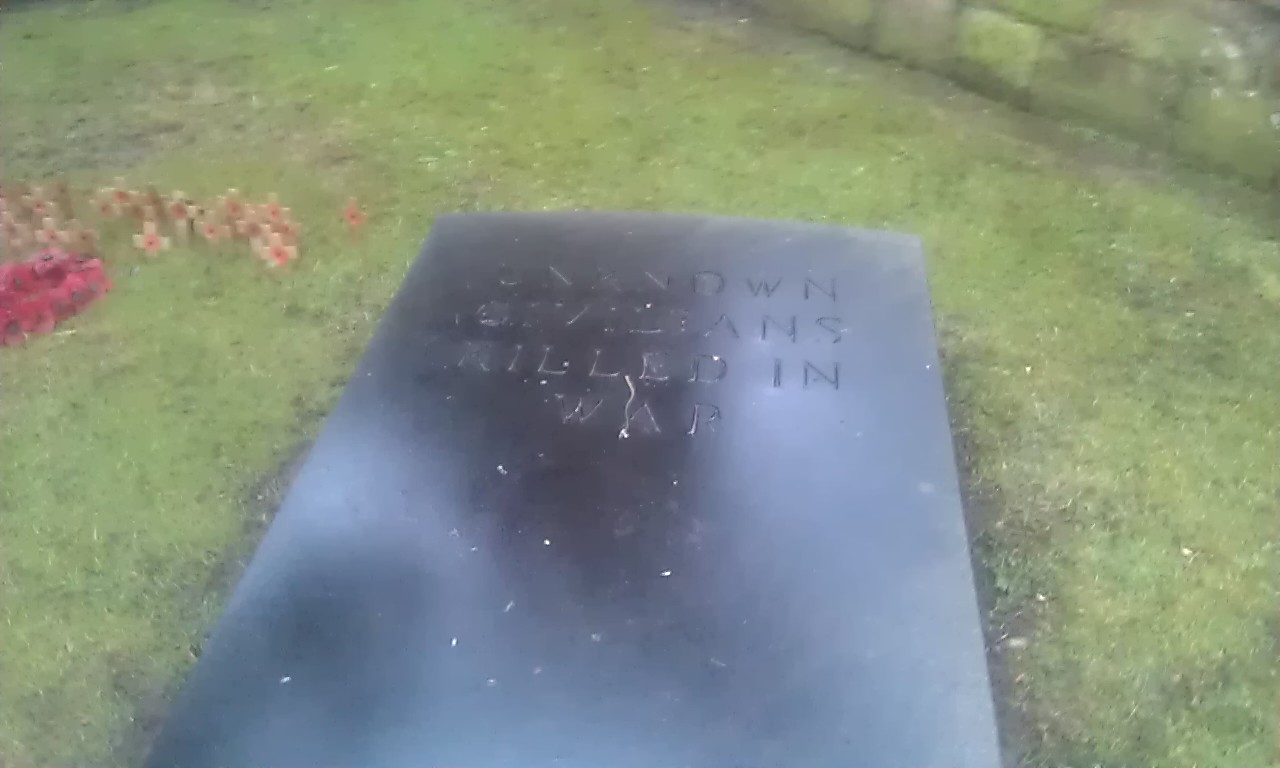
Unknown civilians killed in war

Diagram of an Artist: Roy Lichtenstein

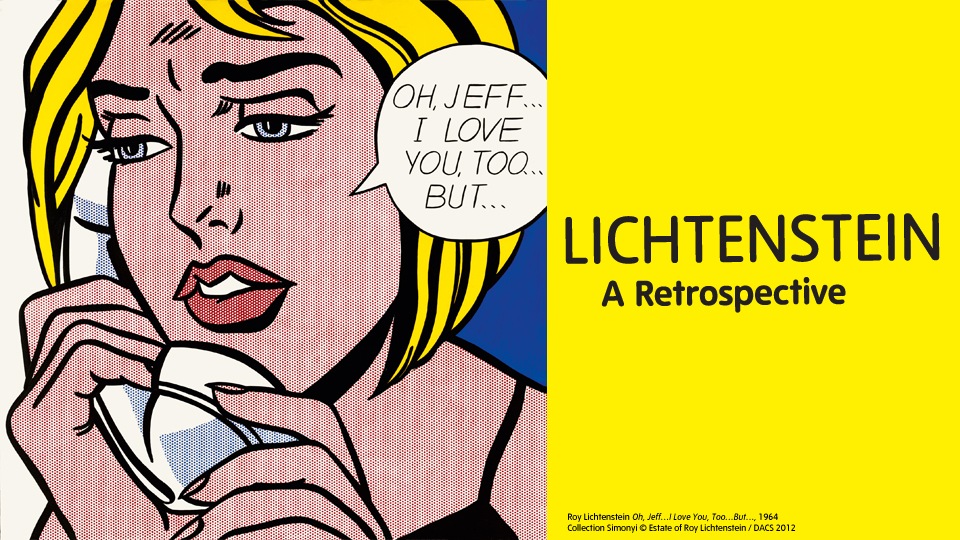
Lichtenstein A Retrospective at Tate Modern

lichtenstein_web-banner

I visited this exhibition last week and was very impressed. The paintings are incredibly familiar ( at least, the 60s pop art pictures) but to see them full size in a gallery is a monumental experience. They are huge. This is what gives them their power.

Lichtenstein has been accused of being shallow and only concerned with surface but there is a suprising depth in much of the work in this exhibition. The Late Nudes and Chinese Landscapes are particularly affecting. The landscapes enhance and yet subvert the Japanese originals by their sheer size  but the use of dots is incredibly subtle and project a calm atmosphere.

This is what the program notes say about the nudes:

Unlike many artists, Lichtenstein did not use live models for his depictions of the female body; instead he returned to his archive of comic clippings to select female characters as subjects – and then literally undressed them, by imagining their bare bodies under their clothes before painting them as nude.

The paintings Nudes with Beach Ball 1994 and Blue Nude 1995 are examples of his late approach to the nude, brought together at a huge scale in original compositions of single, double and group portraits. The result is a disturbing violation of conventions. The noble nude has been rendered as erotic graphic pulp; the paintings propose her large schematic bland body as an object of desire, yet she experiences desire as well, often captured in a state of reverie or bliss. Like Picasso and Matisse before him, Lichtenstein’s fascination with the painter/model relationship reaches a new level of intimacy and sensuality, meshed with the formal concerns of his painting.

Blue Nude

Blue Nude

Henri Matisse, Blue Nude II, 1952, gouache déc...

Henri Matisse, Blue Nude II, 1952, gouache découpée, Pompidou Centre, Paris (Photo credit: Wikipedia)

His reimagining of works by other artists also display a greater depth than some people might have thought. He covers many different periods and brings more than just parody to the work. In fact, he shows just  how effective the use of lines and dots can be.

Still, my favourite of his is his first pop art picture “Look Mickey” to prove to his son he could paint pictures as good as in the comics. Now that is real genius! The rest, as we know, is history!

a000014d

Otto Gross — A Charming Anarchist

A rather good article about Otto Gross!

Eric Koch's avatarSketches

Otto Gross: minor character in David Cronenberg’s New Film, A Dangerous Method – major character in Eric Koch’s 2008 novel, Premonitions.

If you have seen the film, you will remember Otto Gross, a handsome character, played by Vincent Cassel, who gave the advice never to repress any sexual urges.

In Eric Koch’s novel – written without any reference to Jung’s love affair with Sabina Spielrein – he gives the same advice. Freud first welcomed him as an unusually gifted disciple, then rejected him because Gross turned out to be too radical for him, and too unethical.

Here are some extracts from the introduction:

“He was the nearest approach to the romantic idea of genius I have ever met, and he also illustrated the supposed resemblance of genius to madness.” Ernest Jones, Free Association, Memoirs of a Psychoanalyst, page 173.

“He is a man known to very few by name…

View original post 1,407 more words

Albert Camus Quote

“In the depth of winter, I finally learned that within me there lay an invincible summer.” ― Albert Camus

Albert Camus

Albert Camus


Overcoming the Cultural Crisis by Otto Gross (1913)

Front cover of the German "Die Aktion&quo...

Front cover of the German “Die Aktion” from 1914. Illustration of Charles Péguy’s on the occasion of his death made by Egon Schiele (Photo credit: Wikipedia)

The psychology of the unconscious is the philosophy of revolution: i.e., this is what it is destined to become because it ferments insurrection within the psyche, and liberates individuality from the bonds of its own unconscious. It is destined to make us inwardly capable of freedom, destined to prepare the ground for the revolution.

The incomparable revaluation of all values, with which the imminent future will be filled, begins in this present time with Nietzsche‘s thinking about the depths of the soul and with Freud’s discovery of the so-called psychoanalytic technique. This latter is a practical method which for the first time makes it possible to liberate the unconscious for empirical knowledge: i.e., for us it has now become possible to know ourselves. With this a new ethic is born, which will rest upon the moral imperative to seek real knowledge about oneself and one’s fellow men.

What is so overpowering in this new obligation to appreciate the truth is that until today we have known nothing of the question that matters incomparably above all others – the question of what is intrinsic, essential in our own being, our inner life, our self and that of our fellow human beings; we have never even been in position to inquire about these things. What we are learning to know is that, as we are today, each one of us possesses and recognises as his own only a fraction of the totality embraced by his psychic personality.

In every psyche without exception the unity of the functioning whole, the unity of consciousness, is torn in two, an unconscious has split itself off and maintains its existence by keeping itself apart from the guidance and control of consciousness, apart from any kind of self-observation, especially that directed at itself.

I must assume that knowledge of the Freudian method and its important results is already widespread. Since Freud we understand all that is inappropriate and inadequate in our mental life to be the results of inner experiences whose emotional content excited intense conflict in us. At the time of those experiences – especially in early childhood – the conflict seemed insoluble, and they were excluded from the continuity of the inner life as it is known to the conscious ego. Since then they have continued to motivate us from the unconscious in an uncontrollably destructive and oppositional way. I believe that what is really decisive for the occurrence of repression is to be found in the inner conflict … rather than in relation to the sexual impulse. Sexuality is the universal motive for the infinite number of internal conflicts, though not in itself but as the object of a sexual morality which stands in insoluble conflict with everything that is of value and belongs to willing and reality.

It appears that at the deepest level the real nature of these conflicts may always be traced back to one comprehensive principle, to the conflict between that which belongs to oneself and that which belongs to the other, between that which is innately individual and that which has been suggested to us, i.e., that which is educated or otherwise forced into us.

This conflict of individuality with an authority that has penetrated into our own innermost self belongs more to the period of childhood than to any other time.

The tragedy is correspondingly greater as a person’s individuality is more richly endowed, is stronger in its own particular nature. The earlier and the more intensely that the capacity to withstand suggestion and interference begins its protective function, the earlier and the more intensely will the self-divisive conflict be deepened and exacerbated. The only natures to be spared are those in whom the predisposition towards individuality is so weakly developed and is so little capable of resistance that under the pressure of suggestion from social surroundings, and the influence of education, it succumbs, in a manner of speaking, to atrophy and disappears altogether – natures whose guiding motives are at last composed entirely of alien, handed-down standards of evaluation and habits of reaction. In such second-rate characters a certain apparent health can sustain itself, i.e., a peaceful and harmonious functioning of the whole of the soul or, more accurately, of what remains of the soul. On the other hand, each individual who stands in any way higher than this normal contemporary state of things is not, in existing, conditions, in a position to escape pathogenic conflict and to attain his individual healthi.e., the full harmonious development of the highest possibilities of his innate individual character.

It is understood from all this that such characters hitherto, no matter in what outward form they manifest themselves – whether they are opposed to laws and morality, or lead us positively beyond the average, or collapse internally and become ill – have been perceived with either disgust, veneration or pity as disturbing exceptions whom people try to eliminate. It will come to be understood that, already today, there exists the demand to approve these people as the healthy, the warriors, the progressives, and to learn from and through them.

Not one of the revolutions in recorded history has succeeded in establishing freedom for individuality. They all fell flat, each time as precursors of a new bourgeoisie, they ended in a hurried desire to conform to general norms. They have collapsed because the revolutionary of yesterday carried authority within himself. Only now can it be recognized that the root of all authority lies in the family, that the combination of sexuality and authority, as it shows itself in the patriarchal family still prevailing today, claps every individuality in chains.

The times of crisis in advanced cultures have so far always been attended by complaints about the loosening of the ties of marriage and family life … but people could never hear in this “immoral tendency” the life affirming ethical crying out of humanity for redemption. Everything went to wrack and ruin, and the problem of emancipation from original sin, from the enslavement of women for the sake of their children, remained unsolved.

The revolutionary of today, who, armed with the psychology of the unconscious has a vision of a free, happy future for the relationship between the sexes, fights against the most primal form of rape, against the father and against father right. The coming revolution is the revolution for mother right.* It does not matter under what outward form and by what means it comes about.

(From Die Aktion, April 1913, reprinted in Anarchism…, vol.1 p281, Robert Graham.)

Otto Gross Quote

The psychology of the unconscious is the philosophy of revolution.

MammenInCafe

Film Review: Zero Dark Thirty

I went to see the movie Zero Dark Thirty last week and it made me think a lot. All I knew before I went was that it was about the search for Bin Laden and was nominated for several Oscars (which it didn’t get apart from an award for sound editing shared with Skyfall). Mind you, before the award ceremony the film was mired in controversy and even managed to unite Democrats and Republicans against it (although for different reasons).

I didn’t realise any of this until after I’d seen it but I can say I was pretty shocked by what I saw. I found the depiction of torture at the beginning of the film deeply shocking but as the main character, Maya, also appears very uncomfortable with it I assumed that it was something of an exposé and taking a moral position against the use of torture. As the film progresses this is not at all certain. Maya seems to get use to the idea of it and it continues unabated until President Obama is seen speaking against it’s use on a TV in the background. We then move into more “conventional” areas of intelligence.

To be fair, this has been talked about a lot and there is a Guardian review that fits quite closely to my view of the film:

Guardian Review

The film purports to be based on truth i.e. it is a docudrama or a dramatized documentary. It has been said that the American government released classified information to help the film makers and real footage and sound has been used. In a very effective sound montage of the events of 9/11 at the beginning of the film real phone calls and other live recordings are used without the participants approval or permission. The main character, Maya, is a composite character to help the film’s narrative. It meant she was often in places that she couldn’t have been to give the film coherence.

Here is a report from Jon Boone of the Guardian about inaccuracies in the film:

Although it was described by Bigelow as a “reported film”, Zero Dark Thirty offers a feast for fact-checkers. Inaccuracies abound, largely due to the need to compress the decade-long hunt, create composite characters and make the whole thing work as a piece of drama.

A single character, Maya, is used to carry the film. She is portrayed as a lone voice challenging the CIA’s bureaucratic inertia after Bin Laden trail goes cold and she is placed at the centre of the action. She is shown dining in a poor imitation of Islamabad’s Marriott hotel even though it was blown up in 2008. Her car is attacked by gunmen as she drives out of her house – something that has happened more than once to US government employees in Peshawar, but not to anyone’s knowledge in Islamabad.

One of the CIA’s overseas “black sites” used for interrogating members of al-Qaida is shown in Pakistan itself, presumably to place Maya in both the torture scenes and where the action was in the CIA’s Islamabad station.

Her character appears to be based on a real CIA agent named as Jen in an account of the Bin Laden raid written by former Navy Seal Matt Bissonnette. But Peter Bergen, a journalist and author who has researched Bin Laden more deeply than anyone else, claims the CIA officer who worked on the search for eight years up until his death and was convinced he was hiding in the Abbottabad compound was actually a man.

In December the acting director of CIA went public to criticise the film for taking “significant artistic licence, while portraying itself as being historically accurate”.

The film, which claims to be based on “firsthand accounts of actual events” adds tantalising and colourful details that build on what has been reported elsewhere.

But it’s hard to know what to believe when the film makes an astonishing error in portraying one of the gambits used to try and identify whether Bin Laden was hiding in Abbottabad. A controversial hepatitis B vaccination programme run on behalf of the CIA in the town in an attempt to get hold of Bin Laden family DNA is clearly shown as an anti-polio campaign. It’s a truly sloppy mistake given how widely reported the incident was.

And it’s also potentially dangerous. The scandal of the CIA using aid workers as cover for operations has helped to inflame deep mistrust in Pakistan’s tribal areas towards vaccination programmes. Two Taliban commanders have banned polio eradication from their areas of control. In December, six polio vaccinators were murdered by gunmen while going about their work.

Another curious departure from the truth, likely only to be noticed in Pakistan, is the decision to rename the CIA’s station chief in Islamabad who, as accurately depicted in the movie, has to leave the country after anti-drone campaigners blew his cover by naming him in a court action.

For some reason the film-makers name the character Joseph Bradley,not the real-life Jonathan Banks whose name is now irretrievably all over the internet. Could this be some small (but pointless) quid pro quo for the access Boal was granted to CIA officers and White House officials? Or just artistic licence? (Guardian 27th Jan)

However, what really annoys me about this film is the uncritical attitude to the C.I.A. and also the assumption that spending 10 years to capture or assassinate Bin Laden was somehow a worthwhile activity. If it was revenge for 9/11, which certainly was the position George Bush took in his War Against Terror, then I think it’s misplaced. 9/11 produced a wave of sympathy for America from around the World that could have been used to start creating a better and more understanding environment for change. Instead it was squandered in the development of military power and selfish, short term profit and aims. Perhaps the most disturbing fact in this film was when C.I.A analysts assessed that the chances of Bin Laden actually being in the secure compound were less than the possibility of WMDs being in Iraq, and we all know how many of them there were.

The final sequence was extremely well filmed and was quite gripping. However, it showed women and children being traumatised, men and women being shot and when they eventually kill Bin Laden they’re not even sure it’s him. They are frantically sending photos taken with their phones back to base and trying to get the children to say who he is! Well, what if it hadn’t of been him!! What then!! There are plenty of conspiracy theories floating around the internet that say it wasn’t him. In the meantime they managed to blow a helicopter up and all this was counted as a success! Really??

No, this wasn’t a film that left a good taste in my mouth!