(Photo: close up of a statue of Kuan Yin, the Bodhisattva of great compassion which was atomic-bombed in Hiroshima)
On Thursday the 30th of March 2017, Faslane Peace Camp (the worlds longest running active protest site and a frontline in the fight against nuclear weapons of mass destruction), was honoured to host a visit by the Hibakusha Reiko Yamada and Midori Yamada together with their translator and fellow anti-nuclear activist Shigeo Kobayashi (a member of Japanese Against Nuclear – JAN) and many visitors from SCND (Scottish Campaign for Nuclear Disarmament).
(Photo: Left to right – Shigeo Kobayashi, Reiko Yamada, Midori Yamada & Peace Campers)
It seems almost unthinkable that any living thing could survive the blast of the atomic bomb, “Little Boy”, that was dropped on Hiroshima at 8:15am, August 6th, 1945. 80,000 – 140,000 people were killed instantly and a further 100,000 seriously injured. In less than a second…
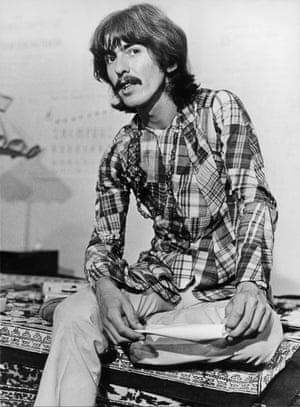
Almost 50 years ago, the Beatle stepped aside from the planet’s biggest band to create the soundtrack to Joe Massot’s movie Wonderwall. With the help of India’s finest musicians, he invented the idea of the world music crossover
Let’s call it the Riddle of the Dark Horse: what do you get if you cross a Monkee, two Beatles, the man they called God, Paul McCartney’s banjo, India’s musical elite and a film about a mad professor spying on a Biba girl called Penny Lane?
The answer is Wonderwall Music. Released on 1 November 1968, three weeks before the White Album, George Harrison’s heartfelt, happily eccentric film soundtrack was the first solo record by a Beatle, the first album on the Apple label and a world music crossover before such a notion even existed. That it later lent its name to a Britpop anthem is easily the least interesting thing about it.
Newly rereleased in a boxset of Harrison’s solo work, Wonderwall Music encompasses tambura drones, Vedic chants, skiffle, ragtime, clip-clopping country, wah-wah squalls, woozy Mellotron, experimental sonic collage and, on Ski-ing, 100 seconds of Eric Clapton at his most raggedly explosive. The sound of Harrison’s musical curiosity taking flight, it is also an implicit expression of his disaffection within the Beatles, perhaps even an intimation of the beginning of the end.
After the Beatles ceased touring in August 1966, Harrison spent six weeks in India with Ravi Shankar, an immersion that led to a chain reaction of musical and spiritual epiphanies. On his return, his contribution to Sgt Pepper was the quietly assertive Within You Without You; much of the album left him cold. He was scarcely more enthusiastic about Magical Mystery Tour. While McCartney worked on the title track in the studio, Harrison produced coloured crayons from his painted sheepskin jacket and started drawing pictures. “My problem, basically, was that I was in another world,” he later said. “I didn’t really belong; I was just an appendage.”
Little wonder he jumped at an invitation, from American director Joe Massot, to compose music for Wonderwall, a film starring Jane Birkin as the objectified model who sends her oddball neighbour, Mr Collins (Jack MacGowran), into a voyeuristic frenzy. With its pop-art palette, psychedelic sex scenes, dingy domesticity and an uncredited Anita Pallenberg, Wonderwall is a curious period piece, less Blow-Up than Come Down. “It’s aged badly,” Birkin says. “I wasn’t very interesting! I was disappointed, but there are rather wonderful decors. And George was lovely.”
Massot, who died in 2002, sought original instrumental music for the film’s many dialogue-free scenes, and promised Harrison a free hand. “George took advantage of this by including a lot of Indian music in his score,” says John Barham, who worked on the project as arranger, player and a kind of conceptual interlocutor. Having studied at the feet – literally – of Shankar, Harrison’s understanding of Indian music had deepened beyond the naive sitar burr heard three years previously on the Beatles’ Norwegian Wood. He viewed Wonderwall Music as “partly an excuse for a musical anthology to help spread the word”, he said. “I used all these instruments that weren’t as familiar to western people as they are now, like shehnais, santoor, sarod, surbahars, tabla tarangs.”
Heavily spiced with Indian flavours it may be, but the album is a beguiling mixture of competing passions. Visiting Twickenham film studios, Harrison “spotted” each scene, marking where the music would be inserted, then working up basic themes at his home in Esher in Surrey. Initial recordings were made at Abbey Road on 22 and 23 November 1967, with harmonica maestro Tommy Reilly, session mainstay Jim Sullivan, and the Remo Four, a Liverpool quartet from Brian Epstein’s Nems stable. The Beatles’ manager had been dead only three months; Harrison may have felt the need to maintain a connection.
“We recorded backing tracks to accompany certain points in the film,” says Remo Four drummer Roy Dyke. “George had timed it all with a stopwatch: ‘We need one minute and 35 seconds with a country and western feel.’ Or, ‘We need a rock thing for exactly two minutes.’ Nothing was really written. We’d talk over ideas he wanted, play something, and he’d say, ‘That’s good, keep that. I like the piano there.’ It was very experimental. The idea was to set an atmosphere.”
Some of the results are lovely: the stately piano waltz of Red Lady Too; the richly cinematic Wonderwall to Be Here, on which Tony Ashton’s rippling piano melody is framed by Barham’s strings. The exotically funky On the Bed was inspired by a visit Harrison had made the previous year to BBC Television Centre, where Barham and Shankar were working on the music for Jonathan Miller’s production of Alice in Wonderland. “We were recording a scene where Ravi soloed and I played an accompanying Indian jhala [a rapid climactic flourish] texture on piano,” Barham says. “George was fascinated by the combination of sitar and piano. Back at Abbey Road, I played flugelhorn over George’s jhala. Later that day, Big Jim Sullivan, who was recording with Tom Jones, happened to drop in and played bass on the same track. It was a free atmosphere on those sessions. They were very creative and enjoyable.”
Wonderwall’s most experimental five minutes are Dream Scene, a sonically disorientating pick-and-mix of ambient backwards guitar, swooning Bollywood love calls, wailing flutes, treated electronics, disjointed harmonicas, atonal pianos, air-raid sirens, the chimes of a grandfather clock, nightmarish sampled voices and church bells. Harrison later dismissed it as “horrible stuff”, but it is not entirely fanciful to view Dream Scene as an enabling step towards the Beatles’ Revolution 9, the avant-garde sound collage pieced together by John Lennon six months later.
In December, a passing Monkee was press-ganged into service. “I’d met George when he was visiting Cass Elliot in Los Angeles, and I was dating Cass’s sister, Leah,” Peter Tork says. “Later, the Monkees met the Beatles in England, and he invited me to his house. He played the sitar and said: ‘I’m working on a soundtrack album, I’d love to have you play a little banjo.’” Tork had travelled without his instrument, so Harrison borrowed McCartney’s five-string banjo for the session – “which Paul couldn’t play – at least conventionally, because the folk five-string banjo can’t be restrung in reverse order for left-handers, it must be custom made. I played for 45 minutes, George said, ‘Thanks very much,’ and we went our separate ways.”
Tork’s breezy contribution didn’t make the record, but it can be heard 15 minutes into the film, after Collins is chided by his mother for spying through the wall. “And I did not get paid,” he laughs. “George said: ‘We’ll figure that out later.’ He knew that the honour itself was payment enough!” This regally offhand attitude to accreditation was not untypical, and became an issue on Harrison’s next solo record, Electronic Sound, when he used, without permission, improvised recordings made on the Moog by Bernie Krause. Much rancour ensued.
There were other superstar cameos. Ringo Starr – old faithful – adds his unmistakable swing to the groovy-bluesy Party Seacombe, while Clapton’s monster riff ensures that Ski-ing fairly steams along. Ski-ing was later borrowed by Kula Shakar for their song Gokula, earning Harrison a co-writing credit.
Although he had used members of the Asian Music Circle in London, Harrison wanted to draw directly from the tap-root of Indian music. In early January 1968, he spent a week recording at the EMI/HMV studio in Mumbai, assisted by Shambhu Das on sitar, Aashish Khan on sarod, and many more local musicians. A two-track stereo machine was transported from Kolkata. By now, the original $600 budget for the project had risen to $15,000, the cost covered by Harrison.
As well as laying down the bulk of Wonderwall’s eclectic Indian pieces, during these sessions Harrison recorded several ragas, one of which became The Inner Light. Following a vocal overdub, recorded later at Abbey Road, it became the B-side to Lady Madonna in March, by which time the Beatles were camped out in north India, studying with the Maharishi Mahesh Yogi. For perhaps the first and only time, Harrison’s personal passions were driving the narrative of the band.
Wonderwall Music was released before the film – which premiered at Cannes before quickly vanishing into near obscurity – on 1 November 1968. Harrison’s participation was neither widely anticipated (“I didn’t even know until afterwards,” Birkin says) nor particularly celebrated. Although the record has always had its admirers, Harrison’s post-Beatles triple set, All Things Must Pass, released in 1970, is widely regarded as his first “proper” solo record, not least because of its colossal commercial and cultural impact.
Wonderwall Music, conversely, didn’t chart in the UK. Its significance lies elsewhere, in its affirmation of Harrison’s blossoming individuality, its determination to shine a tender light on an unheralded musical culture, and as a warning flare in the Beatles’ long race to extinction. The film it serves may have become a dated curio, but its soundtrack still carries an intoxicating whiff of not just one, but many futures.
• George Harrison: The Vinyl Collection is out now on Universal.
Leonard Cohen’s “Hallelujah” was a complex, nearly indecipherable musical riddle that flummoxed even its composer. Originally released as a funereal synth-laden dirge on 1984’s Various Positions, he spent years tinkering with the track during live performances in a relentless pursuit to unlock its full melodic potential. Ultimately, it was John Cale who provided the key.
The iconoclastic Velvet Underground co-founder, producer and innovative writer/arranger crafted an elegiac version of “Hallelujah” that vaulted the song into a rarefied strata of modern standards. Now he speaks to PEOPLE about the song’s long journey.
First included on an obscure Leonard Cohen tribute album, I’m Your Fan, commissioned by the French music magazine Les Inrockuptibles in 1991, it’s perhaps best known for the stark version that appeared the following year on Cale’s live collection, Fragments of a Rainy Season. Something of a precursor to the “unplugged” performance concept that exploded in the first half of the 1990s, the album was a stripped down career retrospective reaching back to Cale’s early collaborations with his Velvet Underground bandmate Lou Reed.
Last fall, the album was recently given a deluxe reissue, complete with bonus tracks and outtakes from throughout the extensive European tour. “Hallelujah” received a bewitching video directed by Abby Portner, invoking elements from Shakespeare’s MacBeth to portray the song’s crumbling grandeur.
Cale first heard the track while attending one of Cohen’s concerts at New York City’s Beacon Theater in 1990. “I was really an admirer of his poetry,” he tells PEOPLE. “It never let you down. There’s a timelessness to it.” The song stayed in his mind, he didn’t decide to record it until Les Inrockuptiblesasked him to contribute to I’m Your Fan several months later. In the pre-digital days, there was really only one way to learn the tune at short notice: “I called Leonard and asked him to send me the lyrics.”
Famously, there were a lot. “Fifteen verses,” Cale confirms. “It was a long roll of fax paper. And then I choose whichever ones were really me. Some of them were religious, and coming out of my mouth would have been a little difficult to believe. I choose the cheeky ones.”
After recording the song for I’m Your Fan, he toyed with a variety of arrangements on his 1992 tour documented on Fragments of a Rainy Season. “There were a lot of different venues and a lot of different kinds of performances. And as it turned out the ones that were best were the ones that were done on a real piano, not an electric piano. Every time we got a real Steinway things went up a couple notches.”
Cale’s version of “Hallelujah” immediately struck a chord, inspiring a host of artists to offer their own take. A young Jeff Buckley added a hauntingly intimate version to Grace, his sole release before drowning in the Mississippi at age 30. His death added an extra dose of pathos to the intensely gripping song, and within a decade the number of cover versions had swelled to 300. According to Cale, Cohen grew weary of his creation’s popularity. “He said, ‘I don’t want to hear any more new versions of “Hallelujah”! Let’s put an embargo on that!’”
“THE MAPPLETHORPE PHOTO SYNTHESIZES MY PASSIONS AND WORLD-VIEW”
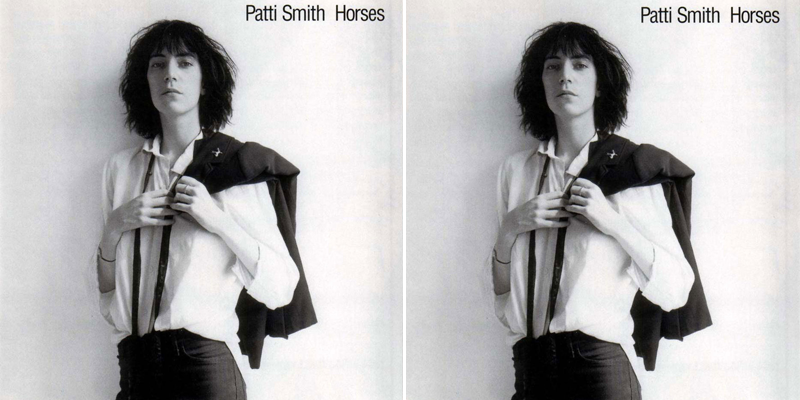
In 1975, Arista Records released Horses, the first rock album by New York bohemian poet Patti Smith. The stark cover photo, taken by someone named Robert Mapplethorpe, was devastatingly original. It was the most electrifying image I had ever seen of a woman of my generation. Now, two decades later, I think that it ranks in art history among a half-dozen supreme images of modern woman since the French Revolution.
I was then teaching at my first job in Vermont and turning my Yale doctoral dissertation, Sexual Personae, into a book. The Horses album cover immediately went up on my living-room wall, as if it were a holy icon. Mapplethorpe’s portrait of Patti Smith symbolized for me not only women’s new liberation but the fusion of high art and popular culture that I was searching for in my own work.
From its rebirth in the late 1960s, the organized women’s movement had been overwhelmingly hostile to rock music, which it called sexist. Patti Smith’s sudden national debut galvanized me with the hope (later proved futile) that hard rock, the revolutionary voice of the counterculture, would also be endorsed by feminism.
Smith herself emerged not from the women’s movement but from the artistic avant-garde as well as the decadent sexual underground, into which her friend and lover Mapplethorpe would plunge ever more deeply after their breakup.
Unlike many feminists, the bisexual Smith did not base her rebellion on a wholesale rejection of men. As an artist, she paid due homage to major male progenitors; she wasn’t interested in neglected foremothers or a second-rate female canon. In Mapplethorpe’s half-transvestite picture, she invokes her primary influences, from Charles Baudelaire and Frank Sinatra to Bob Dylan and Keith Richards, the tormented genius of the Rolling Stones who was her idol and mine.
Before Patti Smith, women in rock had presented themselves in conventional formulas of folk singer, blues shouter, or motorcycle chick. As this photo shows, Smith’s persona was brand new. She was the first to claim both vision and authority, in the dangerously Dionysian style of another poet, Jim Morrison, lead singer of the Doors. Furthermore, in the competitive field of album-cover design inaugurated in 1964 with Meet the Beatles(the musicians’ dramatically shaded faces are recalled here), no female rocker had ever dominated an image in this aggressive, uncompromising way.
The Mapplethorpe photo synthesizes my passions and world-view. Shot in steely high contrast against an icy white wall, it unites austere European art films with the glamorous, ever-maligned high-fashion magazines. Rumpled, tattered, unkempt, hirsute, Smith defies the rules of femininity. Soulful, haggard and emaciated yet raffish, swaggering and seductive, she is mad saint, ephebe, dandy and troubadour, a complex woman alone and outward bound for culture war.
John Cale reflects on the 50th anniversary of ‘The Velvet Underground and Nico’ and the chaos that surrounded it. Everett Collection/Alamy
The way John Cale tells it, he had a revelation one day in the mid-Sixties. He’d dedicated the majority of his first two decades to classical and avant-garde music, to such an extent that, he says dryly, “I may have missed out on my puberty.
“I woke up one day and said, ‘Wait a minute, there are people running around singing Beatles songs,'” he recalls. “The Beatles Invasion was going on. All the enjoyment that I’d gotten as a kid out of rock & roll was receding, and I thought, ‘Let’s put something together that blends the two.’ I wanted to cross-pollinate rock with the avant-garde, and then I met Lou Reed, and that was the solution.”
The union of Cale’s musical wanderlust, spurred on by collaborating with minimalist composer La Monte Young, and Reed’s rock-steady songwriting, which he had been exercising as an in-house songwriter at Pickwick Records, became the soul of the Velvet Underground. This weekend will mark the 50th anniversary of their most daring experiment – their debut, The Velvet Underground and Nico – the Andy Warhol–produced LP that found Cale, Reed, guitarist Sterling Morrison and drummer Maureen Tucker fusing gritty garage rock with overdriven viola noise and, on some songs, the lilting, expressionistic vocals of German chanteuse Nico.
The record, whose songs vividly described drug abuse and sexual deviance at a time when the Beatles were dominating the charts with a gentler, more whimsical countercultural vision, was far from a commercial hit, but its influence over the past half century has been undeniable. Artists ranging from David Bowie to Duran Duran have covered its songs, and Brian Eno is fabled to have once said, “The first Velvet Underground album only sold 10,000 copies, but everyone who bought it formed a band.”
Cale, who typically only looks forward to the next project and is currently in the midst of finishing up a new album, is in the process of celebrating the milestone. Last year, he performed the LP – along with songs from its follow-up, White Light/White Heat – with a number of guests, including Pete Doherty, Mark Lanegan and Animal Collective, among others, at a special concert in Paris. He’ll be doing it again, possibly with another set of collaborators, in Liverpool this coming May and will do a third final show in the U.S. this year. He’s invited the only other surviving member of the group from the time, Tucker, to join him but says she’s uncomfortable with flying so it’s up to her if she will participate in future celebrations.
In the meantime, Cale took a moment to look back on the album’s achievement.
What are your most vivid memories of the Velvet Underground and Nico sessions?
I remember how excited we were, and how we really didn’t care about the equipment we had. We had to walk carefully across the floor because the floorboards were up and you didn’t know if it’d make noise. We had no earphones. We just stood there and did it in a broken-down studio. Lou had headphones for doing vocals, but the rest of us were just trying to do what we did [at the rehearsal space] on Ludlow Street. It was a strange, exciting environment. I mean, here we are, “Hey, we’re making a record, guys.”
What did the Ludlow Street apartment look like when you rehearsed there?
I went back there with The Wall Street Journal a few years ago. I really felt like I was intruding on somebody’s house, but the people who live there now were very accommodating.
It’s very different now. It was a little disorienting, looking out at the window. I had a spring mattress over the window to stop burglars from getting in. Tony Conrad put that up. We nailed the mattress up on the window, but you could see through it. It was just a spring, but it was an excellent guard for the window. Back then, when you looked down, you could see the doorway across the street where all the high school kids would do doo-wop in the morning. We were there for about two-and-a-half years.
Andy Warhol is listed as the producer of the album. Did he give much input during the recording sessions?
He didn’t say much but he was there. That’s usual with Andy. He’d say a few things, but they’d be effective at getting things done. Even when he was making his films, he didn’t say much, but without him, they wouldn’t have happened. But we were glad to have Andy because we thought he was somebody would could talk to, and what I mean by that is that we didn’t say very much ourselves. We were pretty terse in our discussions of music. “Just try this. Just try that.” That’s about it.
Do you remember any specific advice Andy gave you in the studio?
Yeah. He told Lou, “Don’t forget to put the swear words in the songs.” We never used swear words. We felt the intellectual strength in what we were trying to do came from not using swear words. And then Lou wrote a few songs that were very different.
I think what happened was Andy gave Lou 14 titles and he said, “Now go away and write these songs,” because we were hanging around the Factory. He probably saw him as indolent and trying to figure out what to do next. And Lou was never happier than, “Hey, here’s a task. I got 14 titles. I can do that.”
It’s hard to imagine creating that way.
Yeah, but Andy’s really unlocking something. It’s very unorthodox and it worked perfectly.
According to legend, you wrote “Sunday Morning” with Lou in a bedroom. Was that on Ludlow Street?
No, we were at a friend’s house on Saturday late night. There was a harmonium in the corner of the room, and we got to it. And it was really Sunday morning by the time we finished. … It was one of those things where you didn’t expect it to happen, but you’re out for a Saturday night and … it shows how comfortable we were being players and musicians. The safety blanket was always the instrument. You’d grab it because you’d need something to hang onto and because you felt you were wasting time and that you had to goals to accomplish and it was a chance to do it, and we can do this with a friend. Wherever we were, if there was an instrument there, we’d zero in on it.
The first song Lou played for you that he’d written was “Heroin,” and you’ve said previously that you felt it fit perfectly with the musical concept you’d come up with. How was that? I just wanted to move out of La Monte [Young]’s sphere. When Lou played me the songs at Pickwick and said, “They won’t let me record these songs,” it kind of pissed me off. I said, “Let’s go and do it ourselves.” And he was so taken aback.” He said, “How are you gonna … ?” and I said, “Let’s just go do it ourselves. Let’s put a band together and go out there and play them.” And that’s where it started.
Then we started rehearsing, and you can tell from the box set how things changed over a year. We really developed all the music that was on the Banana Album. We never spent that amount of time on any of the other material after that. We became a road band, and the thing about a road band is that you put the backbeat in there no matter what and you’re safe. And if you start doing something strange, like “All Tomorrow’s Parties” or “Black Angel’s,” then people stand there with their mouths open. But there was a lot we tried to cover. I thought we could use both of those things [rock and avant-garde music] and make it work. And Lou did too.
So my initial reaction was just anger at the arrogance of a record company, which was boilerplate. But any young artist was always looking for the arrogance of the record company.
You tried many innovative things, including putting guitar strings on your viola, a practice that went back to your La Monte Young days. What was it about that sound that stuck with you?
It was very abrasive. And the pickups we had then were really not terrific. They had a lot of noise. It was a good racket. And we needed it to work with the guitars and bass.
What was it that attracted you to the viola in the first place? Oh, I was the fall guy for the school orchestra in Wales. They’d palmed out all the other instruments; the only one left was a viola, and I took it. And then I learned the material written for viola is really nowhere near as good as the material for violin. It’s disappointing. You end up playing stuff that was written for the violin on the viola.
One of the greatest viola songs on the album is “The Black Angel’s Death Song.” How did that come to be?
It’s taking a drone and creating a landscape. It becomes big because of the drone.
Did you and Lou work with a lot of drones as starting points for songs?
No. He had all the songs written. And then I would come in and put a drone on after it. As it turned out, most of the songs were in D or G, and that works with the viola.
Another standout is the jammy “European Son,” which had so much noise on the original, like glass breaking.
Yeah, that was in the studio. They had these little plates of tin that sounded like glass breaking. It happened to work out.
What were your concerts like back then, like the gigs under the Exploding Plastic Inevitable banner?
Chaotic. They were different wherever we went. We would always end with “European Son,” and everybody put down their instruments and thrashed around with the drums.
One time in San Francisco, Lou was feeding back with his guitar, and we all attacked the drums. I knocked the cymbal off Moe’s upper stand, and Lou was bending down in front of it when I hit it and it came down on his head and cut him.
Bill Graham was the owner of the place, and he had pissed off everybody before [we played], because he threw Sterling out of the club. He was so ornery. We were setting our equipment up, and everybody went out for a coffee or a beer and Sterling was left there. Bill came in and said, “Who the hell’s stuff is that?” Sterling, being his usual diffident self, said, “Yeah, some of that is ours.” And Bill said, “Well, move it over there.” He came back an hour later and said, “You haven’t moved that shit yet? Get out of here. Don’t come back.” We had to tell him, “Hey, he’s in the band.” But when we were done saying, he said, “That’s a short set. Get back onstage.” And he found out Lou had his head sliced and was bleeding and immediately the idea of insurance came down on his head, and he said, “Ahh.” [Laughs] It was shock and horror.
Did the chaos ever dissipate?
No, it wasn’t our style to discuss what we wanted to do. It was totally absurd. The worst kind of band you’d want.
The box set that came out five years ago has some photos of you all playing the New York Society for Clinical Psychiatry. What did they make of you?
They gave us stony glances. They didn’t like us very much. They told us we all needed some help and we would have agreed with them absolutely. Give us these pills and those pills and those pills and we’ll be fine.
Were you disappointed by the initial lack of success for the album?
No, I was used to that with avant-garde music anyway. You never got any kinds of accolades for that. It was a small coterie of people. And with La Monte, the coterie kept getting smaller and smaller. I was ready for that. It was the rest against us. And we had a point to make: “We weren’t there to fuck around. We’re doing this song about this subject and that subject. Have you ever heard a song about this subject?” We had a point to what we were doing, and we refused to be treated like the trash we were treated as.
You went in with a point, and then your next album, White Light/White Heat, was harder and heavier than the first one.
Yeah, we were becoming a road band. Everything on the Banana Album was rehearsed and rejiggered and rearranged, and on White Light/White Heat, it was whatever we threw together in the studio. “Lady Godiva’s Operation,” I mean, [producer] Tom Wilson did his best with what was available. He did very well on “Lady Godiva,” but it was all very spontaneous and in the studio. We had a rough idea of what were doing on the road, but we could barely rehearse on the road. The songs were improvised on the road or written in the studio. We’d do a lot of improvisational work, and it went on for hours.
Do you feel the improvisations were the best of what the Velvet Underground did?
Sometimes, yeah. I’ve heard some improvisations on bootlegs that had some interesting noises in it. It wasn’t as if everybody was drunk out of their minds and not paying attention. Everybody was trying really hard. Incessantly sometimes.
How was it having Nico on the road at those times?
Oh, just special. She had her own thing going. She arrived whenever she felt like it and left whenever [laughs]. It was all drifting from place to place. The people that really made sure they were at every gig was the Frank Zappa band, because [manager] Herbie Cohen wanted to make sure Frank got as much publicity as we did from all the stuff Andy would generate. He’d just make sure he’d get there when the TV crews showed up.
You’re typically not one to look back at your career. Why did you decide to mark the album’s 50th anniversary?
There was no way to avoid it; it was going to be asked of me. This venue in Paris popped up and it seemed like the best situation for us to do it. And it had an exhibit with it that was really good. I’ve seen a bunch of exhibits about the V.U., but this one was very good. It had stuff I’d never seen before. It was intriguing to look at.
What piqued your interest?
There were films. We invited Jonas Mekas and a bunch of people from New York who showed their films. There was a film of Lou, one of me, one of Sterling, one of Moe, and it was all these things – footage, photography, writing – I’d never seen before. It was the best exhibit I’d ever seen about the V.U. and the Exploding Plastic Inevitable. It had everything from the cinema tech and the cultural revolution. I’m not sure yet if I’ll be able to bring it to the other shows. I hope so.
You recently relistened to the album as you’ve been planning the 50th-anniversary shows. What strikes you about it when you hear it now?
It’s exciting to figure out who can do what songs. Some people, for instance, can’t sing “Heroin.” And others can’t sing “Black Angel’s [Death Song].” There are so many new ways to do these songs and give them props.
Did rearranging the songs come together easily for the Paris show?
Well, with that one I just used what was there and got some wild and crazy guys to come in and play, Pete Doherty and a lot of others. “Heroin” was really difficult, but it worked. I don’t know how far astray I want to go in the arrangements. When you come to a 50th-anniversary show, you expect to hear exactly what you heard before, or you at least hope it’s just as intense as it was before. I’m still reviewing who I’m interested in approaching for the Liverpool concert.
Will the song arrangements in Liverpool be like the ones in Paris?
I don’t know yet. We’ll look at the artists we end up with and see which ones can handle a new arrangement. I don’t want to offend people who are coming to see us. I want to be careful with how outlandish I want to be.
There have been many covers of these songs, and the ones that have been covered make me think, “I want to do ’em another way.” There’s plenty of scope with electronica and everything else to change the arrangement and the emphasis of the songs. But I want people to be able to recognize the songs, so I try to hold it together.
Well, the very nature of the Velvets was to experiment.
Yeah. I’m torn between that and really providing people with what they know. I love doing new things anyway. It can go on forever.
When you did the Paris show, and you worked on finding the intensity of the songs, did you glean anything new from them? It was great with Pete Doherty onstage, and seeing the shambles of the music come to life. That was very familiar to me. It was so much fun watching people trip over each other onstage. It was a great concert, but we also had a lot of fun up there.
Did you feel like you came close to the feeling of the Velvet Underground shows at your Paris gig?
Yeah. It sounded a lot better. It had all the energy that I remember. You just cut loose.


 (Photo: close up of a statue of Kuan Yin, the Bodhisattva of great compassion which was atomic-bombed in Hiroshima)
 (Photo: Left to right – Shigeo Kobayashi, Reiko Yamada, Midori Yamada & Peace Campers)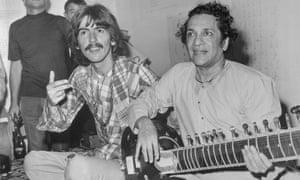

 Kenny Wilson's Blog