“This year marks the 50th anniversary of the publication of Coney Island of the Mind, Lawrence Ferlinghetti’s landmark second volume of poetry. In commemoration, New Directions has recently released a new hardback edition of the book, complete with a CD of the author reading the bulk of its poems, as well as selections from Pictures of the Gone World, his first collection of verse. Such an elaborate republication is highly appropriate–for time has revealed Coney Island of the Mind to be not only a book of great cultural importance, but also a major classic of modern poetry. As a social phenomenon Coney Island of the Mind is truly remarkable. With roughly a million copies in print, few poetry collections come anywhere close to matching its readership. Raw sales, though, only tell part of the story. Along with Jack Kerouac’s On the Road and Allen Ginsberg’s Howl…
“A persistent symbol of resistance and unity, the clenched fist (or raised fist) is part of the broader genre of ‘hand’ symbols that include the peace ‘V,’ the forward-thrust-fist, and the clasped hands. The clenched fist usually appears in full frontal display showing all fingers and is occasionally integrated with other images such as a peace symbol or tool. The human hand has been used in art from the very beginnings, starting with stunning examples in Neolithic cave paintings. Early examples of the fist in graphic art can be found at least as far back as 1917, with another example from Mexico in 1948. Fist images, in some form, were used in numerous political graphic genres, including the French and Soviet revolutions, the United States Communist Party, and the Black Panther Party for Self-defense. However, these all followed an iconographic convention. The fist was always part of something – holding…
This is an account of the Harmony which was an all night cafe in Soho. It is famous for being the meeting place of the earliest modern jazz musicians in England as well as some of the most dubious “wide-boys” and gangsters of London!
Cy Laurie
The late 50s was the height of the English traditional jazz boom and Soho was a Mecca for trad’ fans who headed for the clubs of Ken Colyer and Humphrey Lyttleton. But by far the most successful venue was the Cy Laurie Club.
Unlike some of his fellow New Orleans jazz revivalists, Cy never made the charts but his club was by far the most popular. Situated in scruffy Ham Yard, at the junction of Great Windmill and Archer Street, it was entered by going through a set of doors it shared with a strip-club and a boxing gym. (Ham Yard was used by the street traders of Rupert Street to store their barrows.)
A dingy staircase descended into a vast basement that was used as a dance rehearsal room during the day. There was little in the way of décor, just hardwood floors and a few dilapidated sofas, alongside minimal lighting and a PA system that worked only intermittently.
Refreshments – limited to soft drinks and crisps – were dispensed from a crude bar next to some equally crude toilets.
Despite the dismal surroundings Cy’s band drew an enormous following from, initially, art school students with a distinctly bohemian bent.
Drainpipe trousers and Jesus-sandals were de rigeur for guys, along with Bardot hairstyles for females and compulsory duffel coats for both sexes.
The club’s fame soon spread and at the weekends hundreds of fans from the suburbs packed into the smoke-filled basement, all jiving wildly as Cy waved his clarinet in front of his six piece stomping group.
The craziest scenes were at the occasional all-niters that drew much unfavourable reporting from the popular press. (Although drugs were used by jazz musicians they were very rarely seen amongst their audiences.)
When the sessions finished at eleven most of the kids ran for the late night buses and tubes back to the suburbs, but the few who hung about often ended up in the small hours in the only place around that stayed open through the night – a big greasy spoon caff in the middle of Archer Street audaciously named The Harmony Inn.
Archer Street ran behind Great Windmill Street and was home to the Musician’s Union offices. On Monday mornings in the 50s and 60s all manner of musicians would gather there to find engagements for dance bands, jazz groups and even classical orchestras. (Recently, BBC4’s Jazz Britannia series aired a documentary about it called The Street.)
Everything about The Harmony was unsavoury. Grubby Formica tables and chairs were ranged around a dismal counter in a totally bland room; the only colour was the red and white shirts on the table football teams. The most exotic fare was a cheese sandwich, tea and foul Camp coffee.
The clientele were even more dubious. The late-night trad’ fans who drifted in had little in common with the Harmony Inn’s regulars. The customers that it attracted after midnight were drawn from the spivs, petty and major criminals that gave Soho a bad name: Billy Hill, Tony Muller, Ronnie Chambers, Mick the Hammer, and the Capone figure of Jack Spot.
The caff was presided over by Dixie France who was allegedly a police informer who gave evidence at the Hanratty murder trial (and mysteriously committed suicide shortly after Hanratty was hanged in 1962.)
Those in the know said that there was an arsenal of weapons under the counter ready for any emergencies, mostly the punch-ups that arose over the football machine that occupied one corner of the room.
There was also a downstairs room used as a private club. Details of what occurred there are sketchy but are said to involve a pair of West Indian girls whose dancing skills were much ‘admired’.
Alongside the heavies and trad-merchants, The Harmony was also the hang-out for a group of modern jazz musicians that had formed around tenor-sax man Ronnie Scott. (Jazz Modernists would have no truck with trad’ which they considered an anachronism. Their heroes were the New York bop musicians like Charley Parker, Dizzy Gillespe and Thelonius Monk.)
The audience for modern jazz was relatively small and there was no central venue for it in the West End, but the Harmony Inn played a crucial role in its development.
Ronnie Scott’s Club house-magazine editor Jim Godbolt recalls: “We (including Ronnie Scott, Peter King, Benny Green, Derek Humble, Tony Crombie and Jimmy Deuchar) were all sitting in the Harmony Inn in Archer Street, near Piccadilly, one day in January 1953 when we conceived the idea of forming a nine piece co-operative band and it turned out to be one of the better ideas we had that year.”
The Harmony cafe crew would go on to set the foundations for modern jazz in England.
One of the earliest jazz clubs in the UK was run by the clarinetist Cy Laurie. Born in London in 1926, Cy was an admirer of New Orleans clarinet player Johnny Dodds and would claim to be the reincarnation of Dodds, even though Dodds was alive while Cy was a teenager.
Here’s Cy Laurie’s band playing Sol Blues in 1955 with Alan Elsdon (trumpet), Graham Stewart (trombone), Cy Laurie (clarinet), Pat Hawes (piano), Brian Munday (banjo), Stan Leader (bass), and Peter Mawford (drums) :
Cy had previously run a small weekly club at the Seven Stars in Bow, but in the early 1950s he started up the club for which he would become so well known. Cy Laurie’s Jazz Club became a focal point for live traditional jazz for most of the decade and was renowned particularly for its all-night raves.
The club was in the basement of 41 Great Windmill Street opposite the Windmill Theatre in London’s West End. During the day, the space was used as Mac’s Rehearsal Rooms. Many jazz musicians used the rehearsal rooms at that time – if you were living in a flat or a bed-sit, you needed somewhere to practise or rehearse to avoid disturbing the neighbours. There was a nightclub on the ground floor and a boxing gymnasium on the first floor. An obituary for Cy Laurie in the Daily Telegraph newspaper (click here) describes the setting as: ‘Dark and intimate, with a dance floor surrounded by dilapidated sofas, these premises held an irresistible bohemian appeal for the young people from the suburbs who flocked to the club’s “all-nite raves”’.
Above:41 – 44 Great Windmill Street in 2011 opposite The Windmill. Ham Yard is a little further up on the left, and Archer Street opposite Ham Yard on the right.
There is an excellent description of the club on the website Classic Cafés (click here). The page is primarily about the Harmony Cafe in Archer Street but says of Cy’s Club: ‘Situated in scruffy Ham Yard, at the junction of Great Windmill and Archer Street, it was entered by going through a set of doors it shared with a strip-club and a boxing gym. (Ham Yard was used by the street traders of Rupert Street to store their barrows.) A dingy staircase descended into a vast basement that was used as a dance rehearsal room during the day. There was little in the way of décor, just hardwood floors and a few dilapidated sofas, alongside minimal lighting and a PA system that worked only intermittently. Later on it became the most iconic club of the Mods in the early 60s The Scene, which became the model for many other clubs throughout the U.K. e.g. the Nite Owl club in Leicester.
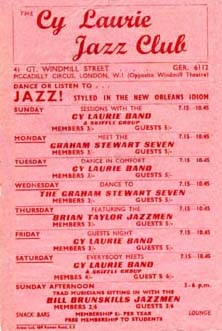
Steve Fletcher has sent us this programme for the Cy Laurie Jazz Club in 1956. You can see from the programme that in 1956 jazz was on the menu every day of the week from 7.15 pm to 10.45 pm and if you were a member you could get in for 3/- (was that 30p?). Steve says: ‘I have lots of memories of the Cy Laurie club. I spent so many evenings there that eventually the manager gave me a job on the door. It was simply the best ‘trad’ club in London from 1953 – 58. Why? Not because it had the best music – we teenagers at the time could not really make reasoned judgements about whether Cy’s band was that much better than Ken Colyer’s or Humph’s. In all of the clubs you just went in to jive – and to try to pull a chick – and Cy’s had the best chicks, mainly from St Martin’s Art School. Cy’s, certainly at weekends, was packed to capacity, and personally I never left without a different bird on my arm. Humph’s was for tourists and Colyer’s for purists but Cy’s was for jiving and raving.’
‘The place itself was a dump, a grubby basement rehearsal room with no decent furniture, clapped-out P.A., filthy toilets and a lousy little tea bar – but the arty bohemian mob loved it like they loved the French coffee bar in Old Compton Street. Ironically Cy, himself was a very straight guy – aesthetic vegetarian, non smoker or drinker, and a total disciple of Johnny Dodds who would not compromise to cash in on the ‘trad’ boom. I was never really a ‘trad’ fan – at home I was listening to Mulligan and Kenton – but I would never miss a Friday, Saturday or Sunday night at Cy’s – for half-a-crown’s worth of unbridled noise, smoke, sweat-laden jiving and – what all young men are looking for…’
This photograph of an all-night session at the Cy Laurie Club in March 1956 is by Magnum photographer, David Hurn. It was used widely to advertise an exhibition at the Photographers’ Gallery in London in 2008 – Soho Archives 1950s and 1960s. You are
able to see this and other images of Soho by clicking here.
There are two recollections of the Club on the History Is Made At Night web blog that help in describing Cy’s Club and the scene at that time (click here). The blog quotes the source of the recollections as being http://www.jazzhouse.org/com, but that website no longer seems to have the information.
‘The Windmill Street club was the Saturday Night magnet in my late teens; it was the music and the atmosphere, but also the place to find out the address of that week’s rave; there were five of us, and between us we could muster three cars – unusual in those days – which ensured that we always gathered passengers who knew the ropes. On one then celebrated occasion, four of us went to Manchester, at the drop of a hat in an Austin A35, by the time we got there it was all over, so we returned to London with an extra passenger, who had been given a trumpet which he taught himself to play on the journey’ (so years before the late 1980s London orbital parties, the convoy of rave pilgrims was established).’
Great Windmill Street with Ham Yard to the right in 2010
‘All nighters at Cy’s were a buzz. I was one of the – all dressed in black and often barefoot – dancers who was first AND last on the floor…. Cy’s place was a culture thing, and included the early morning rush to Waterloo station to get the Milk Train to Hastings, for “FUN” in the Hastings caves’. Others would stumble into the Harmony Inn cafe in Archer Street. By the end of the 1950s, Laurie had moved on to India to study with the Maharishi Mahesh Yogi, beating the Beatles to it, while revivalist jazz had been superseded by the trad jazz boom and a new crowd of ravers.’
Archer Street was just round the corner from Great Windmill Street and it was there that musicians would meet in the street outside the Musicians Union office making contacts for gigs.
In 1958 a film was made to advertise the Ford Thames Van range. Called Band Wagon, it is a valuable piece of film in that features some rare footage of the Cy Laurie Jazz Band. Here is the video.
Steve Fletcher has identified some of the musicians: Cy Laurie -clarinet, Colin Smith – trumpet, Terry Pitts – trombone, Stan Leader – bass … but who are the drummer and banjo player? (Chris Mitchell tells us that the drummer is Ernie O’Malley and the banjo player is Tim Streeton).
By the way – did you know that you can buy a Cy Laurie mug for £8.99? (click the picture)
From Norman Simpson
Norman comments on the video of the Cy Laurie band:
‘I suspect that the banjoist is Tim Stretton and the drummer Ernie O’Malley. The band had a pianist at the time, Ron Weatherburn, but he obviously couldn’t fit in the van – so it wasn’t all that great a bandwagon!’ 4.2011
As he looks forward to the A Love Supreme festival, Ivan Hewett looks back at the day in 1960 that jazz fans went on the rampage at the third Beaulieu Jazz Festival
Outdoor jazz festivals have an air of wholesome, clean fun. It’s hard to be cutting-edge when there are infants pottering about and midges biting. The ambience is best suited to trad jazz played by chaps of a certain age, dressed in ties and with bald pates reddening gently in the sun.
Next week something more ambitious and up-market takes place in rolling meadows in Sussex. This is the second instalment of Britain’s only green-field jazz festival, A Love Supreme, which is set against “the gorgeous backdrop of Glynde Place,” an Elizabethan Manor House. Top-flight acts including Gregory Porter, De La Soul, Laura Mvula and Dave Holland will be there. You can bring a tent, or go for a superior ‘Glamping’ experience complete with hot showers, Pamper Parlour and 24-hour security.
For those with very long memories, this might remind them of a somewhat less upmarket event more than 50 years ago, when some jazz fans went on the rampage in front of a similarly “gorgeous backdrop”. The year was 1960, the occasion was the third Beaulieu Jazz Festival, which took place at Lord Montagu’s estate at Beaulieu near the New Forest. Lord Montagu was something of a jazz fan, and thought this was a risk-free way to indulge his enthusiasm.
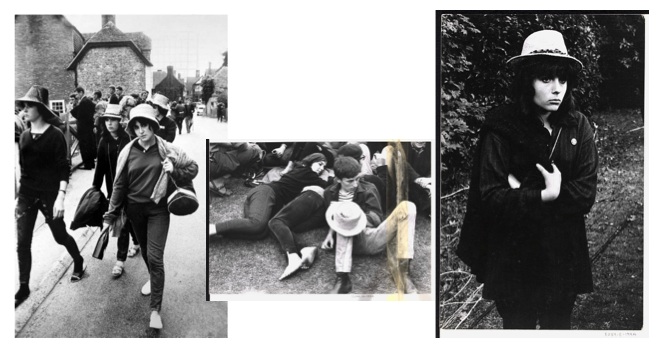
Unfortunately it all went wrong, when specimens of a new and puzzling sort of human being – the teenager – invaded the stage. Stuart Nicholson, now the distinguished columnist of Jazzwise magazine, remembers that as the lighting gantry collapsed “someone grabbed a microphone and demanded ‘free beer for the working man’.” A lone figure made it to the top of the stage, a converted merry-go-round complete with fairground horses, and once the crowd realised he was on television, a mass climb began to join him.” There’s some tantalisingly brief footage on this Pathé newsreel.
How wonderfully British. It wasn’t an end to bourgeois hegemony the young rioter was fighting for, or even more power for the unions. It was just some free beer. However the invader wasn’t some lone eccentric. Jazz at that time was a hotbed of competing styles, with deep antagonisms between different sets of fans. These were driven by class differences as much as musical tastes. The jazz historian Duncan Heinen has uncovered these simmering tensions in his fascinating history of jazz in the Sixties and Seventies, entitled Trad Dads, Dirty Boppers, and Free FusionG
The book shows that the 1960 Beaulieu festival was really more a tail-piece to the Fifties, that edgy decade of beatniks, CND marches, Angry Young Men, pop art, and race riots (it’s only because the Sixties have been so mythologised that people automatically think of the Fifites as drab). Jazz was in the thick of it, though witnesses of the period never seem to agree whether a fondness for drainpipe trousers meant you were anti-nuclear power and for modern jazz, or despised Dizzy Gillespie and preferred skiffle.
The jazz festival’s stage was a converted merry-go-round. Pic: GETTY IMAGES
Some say it was a working class thing to like modern jazz, and that middle-class rebelliousness came out in ‘jiving’ to trad. One indubitable fact is that the rock and roll, R&B and jazz scenes were closely interlinked, and players such as Ginger Baker could migrate from one to another. Look closely at this film clip of the 3rd Beaulieu jazz festival and you’ll catch a glimpse of a very young Rod “the Mod” Stewart among the eager crowds.
So with competing styles of jazz on the platform, plenty of beer on tap, and the provocative backdrop of a stately home, the stage was a set for a classic British class confrontation. One imagines some of the youth were just itching to feel aggrieved, like the character in Colin MacInnes’s novel Absolute Beginners, who describes the Beaulieu festivals as “garden party’s (sic) for the ooblies and Hooray Henries.” (According to the poet Jeff Nuttall, “ooblies” was Humphrey Lyttleton’s term for devotees of the “original purist trad subculture”. George Melly preferred the term “moron”).
Finding out what really happened that day at Beaulieu is like asking what really happened at the riotous premiere of the Rite of Spring. Some say it was the bearded trad fans versus the modern jazzers. Other say it was nothing to do with music at all. One witness insists it was Teddy Boys shouting “We want Acker!” (meaning trad jazz clarinettist and singer Acker Bilk), while the correspondent for Melody Maker sniffed about working-class “mobsters” coming from Portsmouth and Southampton. Once the stage had been invaded, chaos quickly ensued. A building was set on fire, 39 people were injured, and the BBC pulled its outside broadcast feed off the air six minutes early. “Things are getting quite out of hand,” said the announcer primly.
That wasn’t quite the end of the Beaulieu jazz festival. Lord Montagu was game enough to try again the following year, but the cost of the increased security meant the event was no longer financially viable. And that was it, for “green-field” jazz festivals in the UK – until Love Supreme came on the scene. More than 50 years on, will this stir the same passions? Will someone grab a microphone after Gregory Porter’s set and demand “free champagne for the working man”? Somehow I just can’t see it.
This is a video of my talk at BRLSI in July. It’s not great quality but you get the whole thing! I originally put it on YouTube but it got blocked because of my use of two Bob Dylan songs. This was a bit disappointing but I have decided to upload it here instead. I hope Bob won’t mind too much, he always seemed to understand the true value of copyright theft and plagiarism!
I am doing a talk at The Secular Hall, Humberstone Gate, Leicester on the 6th October 7.00 p.m. Hope you can make it. It should last about an hour including audio and film clips, and there will be an opportunity for questions and comments at the end. Also, in the spirit of the time, it is free.
Counterculture Talk Leicester October 6th at Secular Hall
This is an interesting article from the BBC Website about writers and artist who have inspired various songwriters, including Frieda Kahlo, William Burroughs and Sylvia Plath.










 Kenny Wilson's Blog