Interactive Maps for Jack Kerouac’s “On the Road” by Dennis Mansker

This is a re-post from Dennis Mansker’s web site. The original can be found here: http://www.dennismansker.com/ontheroad.htm

In 1957, two novels were published that were destined to have a profound effect on the future of the United States, and indeed, the world, effects that would long outlast the lives of their creators.
The first was Atlas Shrugged, by Ayn Rand, and those who read it and felt that is was “speaking directly to them” went on to become Republicans, vulture capitalists, the kind of self-absorbed greed mongers epitiomized by Gordon Gecko and empathy-eschewing rightwing politicians epitomized by Paul Ryan, who wants to get rid of Social Security.
The second was On the Road, by Jack Kerouac, and its fans became late-period Beats, transitional “Fringies”1, and ultimately evolved into Hippies and End-the-Vietnam-War protesters
We also became, by and large, those who didn’t burn out, liberals and Democrats.

The Trips:
On the Road is broken into five parts, but only the first four feature the extended road trips that the book is famous for. I’ve created interactive maps for each of the four road trips in the book.

  1. Map One — Summer 1947: New York to San Francisco by way of Denver, and back again.
  2. Map Two — Winter 1949: Rocky Mount NC to San Francisco by way of New Orleans
  3. Map Three — Spring 1949: Denver to New York by way of San Francisco
  4. Map Four — Spring 1950: New York to Mexico City by way of Denver

These are Google Maps and they are zoomable. Click on one of the placemarkers on the map to see a quotation from the book, zoom in it to see the location on the map. In many cases where the narrative wasn’t clear on a given place, I’ve had to approximate — apply a “best guess” solution to a given location.
There is also a link on each map to allow you to view a larger size on the Google Maps site.

The Cars:
The automobile and other forms of motor-driven transit figured prominently in On the Road, as it did in Post-WWII America. But no one who has read the book can forget three vehicles that figured prominently in the story. These are the only three vehicles that are identified by make and year in the whole book, and there was a reason for that: The cars themselves became sort of minor characters during the course of the adventures.

Dean Moriarty 1949 Hudson

1949 Hudson

In the second trip, starting actually at Xmas 1948, Dean Moriarty (Neal Cassidy) shows up at the house of the brother of Sal Paradise (Jack Kerouac) in “Testament, Virginia” (really Rocky Mount, NC) in a brand new 1949 Hudson. This is the car in which they blast off to New Orleans and the West Coast, January 1949.
Like all of Dean’s cars, this one really took a beating.

Dean Moriarty 1947 Cadillac

1947 Cadillac Limousine

In the third trip, Dean and Sal score a “driveaway” car at a travel agency in Denver, for delivery to a ritzy Lakeshore address in Chicago. Needless to say, the car is somewhat the worse for wear when it finally gets home.

Dean Moriarty 1937 Ford

1937 Ford Sedan

In the fourth trip, this is the rattletrap car that gets the boys to Mexico City. It also, offstage as it were, gets Dean back as far as Louisiana where it finally gives up the ghost.

1937 Art Deco Greyhound

1937 Greyhound Bus

It always comes a surprise to readers who first read On the Road to learn that Sal Paradise spent hardly any time hitchhiking. When he couldn’t boost a ride with Dean, in the cars listed above, he was comfortable in taking the bus. He logged many more miles on Greyhound buses than he ever did beating his shoe leather hitchhiking.
This is an example of the buses that, while they were ten years old or more at the time, were still rolling on American highways in the late 40s and early 50s.

The Links:

Note: These links to other websites are not — and could never be — all inclusive. Do your own search and stumble onto some terrific sites that deal with the phenomenon that was — and remains — On the Road and the Beat Generation.

Footnote 1: “Fringies” may have been just a Seattle or West Coast phenomenon. I dropped out of college in early 1964, which was at the start of the Fringie movement in Seattle’s University District, and I remember some great times hanging out, listening to folk music and drinking espresso coffee in the great Beat coffee houses that littered “The Ave”, such as The Pamir House and The Edge.
See Countercultural Seattle Remembers the Fringies for more information. Later of course we all became Hippies.


These maps are brought to you by Dennis Mansker, the author of A Bad Attitude: A Novel from the Vietnam War, as part of my general “presence on the Internet” page, which you can click on here if you want more information.

Photo Videos of Some of My Trips

I have recently got into making videos of the photos of some of my trips accompanied by music that has been important to me over the years. This includes tracks by the likes of the Velvet Underground, Country Joe and the Fish and Bix Beiderbecke. Quite a variety really. It is amazing how the music changes the way I look at the photos, and they seem to take on a different meaning. It’s quite an eye opener really.

The first one is of Essex and Suffolk when I went on a tour playing with my old friends, folk group Bodger’s Mate. It is accompanied by “I’m Coming Virginia”, one of my favourite tracks by Bix Beiderbecke from 1927. I’m amazed how well the music stands up. It could almost be contemporary. The guitar playing by Eddie Lang is incredibly subtle, considering it is the main rhythm part.

The next one is of the Old Town of Marbella with “Grace” by Country Joe and the Fish. “Electric Music for the Mind and Body” was one of my favourite albums when I was young, along with the even better “I Feel Like I’m Fixin’ to Die”. I first went to Marbella in 1971 and didn’t go back there until last year. It was virtually unrecognisable until I found the Old Town, which was actually the only bit that existed when I went there before, and it was just the same and the memories came flooding back.

The last one is of my photos of New York when I visited there in 2012. This was the first time I had ever been to America and I had a brilliant time. I went to all the places I had heard of when I first started playing the guitar and it felt like I had gone home. I think New York is the only place I have been where people seem to know what I’m talking about. Fantastic! Greenwich Village may have changed but it resonated with meaning for me. This is accompanied by “Sister Ray” by the Velvet Underground who were one of my favourite bands in 1968. It’s worth watching this just to hear “Sister Ray” all the way through although it is very long.

We support each other

hovercraftdoggy's avatarhovercraftdoggy

acrobats -balancing on the edge of a building / A stunning black and white photo capturing acrobats at the top of the Empire State Building performing the stunt during the opening of the building possibly on May 1, in the 1931.

A stunning black and white photo capturing acrobats at the top of the Empire State Building performing the stunt during the opening of the building possibly on May 1, in the 1931.

View original post

My Favourite Albums of All Time (Part One)

This is a tricky one. I’ve never been that impressed with ‘best of’ lists but I found myself sitting in a hotel room listening to music on my phone and I began thinking about what my favourite (and most influential) albums of all-time were. I say influential because, as some of you know, I am a musician and song-writer who has followed in the footsteps of numerous greats. It’s a hard choice but here’s my favourite 10. I’ve limited myself to two albums by the same artist or else they would probably be all by Bob Dylan ! I also realise, having completed the list, that, with the exception of the first 5, the rest are in no particular order. I’m also aware that there are countless others that could, and probably should, be included. Alright, it’s a stupid idea but here it is!

1. Highway 61 Revisited by Bob Dylan.
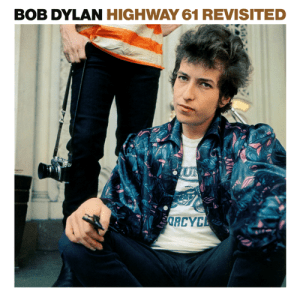
Highway+61+Revisited+Bob+Dylan++Highway+61+Revisite

Okay, what can I say about this album apart from the fact that it is probably the most inspired piece of work I have EVER heard (notice the Dylanesque emphasis) and I’m not just talking about music! I have read reports about the session and all participants agree that something very special happened here. It contains, in my opinion, the greatest rock song of all time “Like a Rolling Stone” but this is not really the essence of the album. It stands apart and, indeed, was produced by a different person from the rest of the record. The remainder contains Dylan at his most aggressive and elusive best. The most interesting song, again in my opinion, is Desolation Row, a surreal trawl through 20th Century culture and ideas. “Ezra Pound and T.S. Eliot fighting in the captain’s tower, while calypso singers laugh at them and fishermen hold flowers”. This isn’t just poetry and music it is an assault on the senses and intellect! “The Agents” and “The Superhuman Crew” check to see that no one is escaping to Desolation Row. The famous voice that people either love or hate is at it’s expressive best. Like many albums on my list this one is unique. There was nothing like it before and there’s been nothing like it since. Even the titles of the songs were a new departure with weird names like “Queen Jane Approximately”, “Just Like Tom Thumb’s Blues” and “Ballad of a Thin Man” that seemed to have nothing to do with the lyrics of the songs but probably did have. Pop music had found Symbolist poetry and the kids loved it!! (Well, this one did). It stands alone and sounds forever modern and archaic at the same time. Dylan himself has said that he had no idea how he wrote the songs and wouldn’t be able to do them now. The musicianship is impeccable especially the electric guitar playing of Mike Bloomfield and the acoustic lead of Charlie McCoy imported especially from Nashville for just one track!

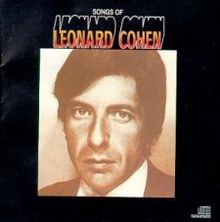
2. The Songs of Leonard Cohen220px-SongsOfLeonardCohen

If Bob Dylan in the mid sixties was on an amphetamine fueled creative voyage into oblivion Leonard Cohen was on a quietly mannered journey back from it. This album emerged in 1968 and gradually became a bedsit legend as many sad young men and women took the songs to heart. Okay, it has been called music to slit your wrists to and Cohen’s voice has probably been even less complimented than Dylan’s but to those in the know this is an album of beautifully crafted songs whose underlying message is surprisingly optimistic completely unlike the eternal whinging of say Morrissey and the Smiths who actually DID create music to slit your wrists to. Cohen’s songs deal with ideas that had seldom been dealt with by popular music before. Despair, spirituality, sexual love and he wrote like a real poet which of course is what he was. He was also a well known novelist before he became a singer and a songwriter. A very different pedigree to most of the pop singers and rock and rollers at the time. He was a remarkable performer though and managed to follow Jimi Hendrix at 4 in the morning at the 1970 Isle of Wight Festival and still get a standing ovation. Producer Bob Johnson was so impressed with him that he gave up producing and joined his band as a keyboardist. This was his first album and contains classics like “Suzanne” and “Hey That’s No Way to Say Goodbye”. My favourite is “The Stranger Song” that manages to evoke feelings of loss, alienation and redemption. ” And then sweeping up the jokers that he left behind you find he did not leave you very much not even laughter. Like any dealer he was watching for the card that is so high and wild he’ll never need to deal another.He was just some Joseph looking for a manger”. It also has his trade mark guitar ripple which is quite difficult to do. The perfect song for existentialists.

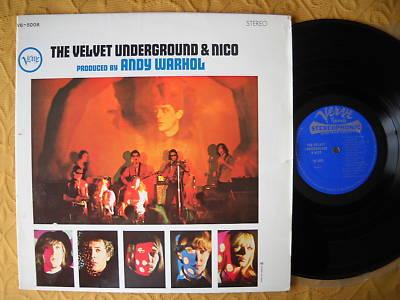
3. The Velvet Underground & Nico

The Warhol Banana cover is more well known but this was the original cover in the UK.

The Warhol Banana cover is more well known but this was the original cover in the UK. The record label is wrong. It should be black.

If Leonard Cohen was the poet laureate of despair and alienation the Velvet Underground were like a sound track to the heroin drenched ravings of William Burroughs in “The Naked Lunch”. Here we have tracks like “Heroin”, “The Black Angel’s Death Song” and “Waiting for the Man” complete with drones and excruciating feed back. This is like the antithesis of pop music, both disturbed and deranged. Not surprisingly it was neither played on the radio nor bought in any quantity by the general public at the time. It has since of course been cited as one of the greatest records of all time and was a massive influence on punk rock. Famously produced by Andy Warhol (or should that be non-produced as he knew nothing about music or record production!) it also contained some sweet ballads dealing with wholesome events like “All Tomorrow’s Parties”, “Femme Fatale” and “Venus in Furs” that reference both mental insecurity and sado-masochistic sex. Not your typical pop song.! This is a truly adorable record that managed to both scare and make me smile. Lou Reed thinks that if it had NOT been produced by Warhol it might have sold a lot more as he was so universally detested at the time (Warhol that is. Lou Reed has only become detested more recently!) and his name on the record put people off. On the other hand it would never have been released as it is without his influence. Some PROPER record producer would have cleaned it up and totally ruined it.

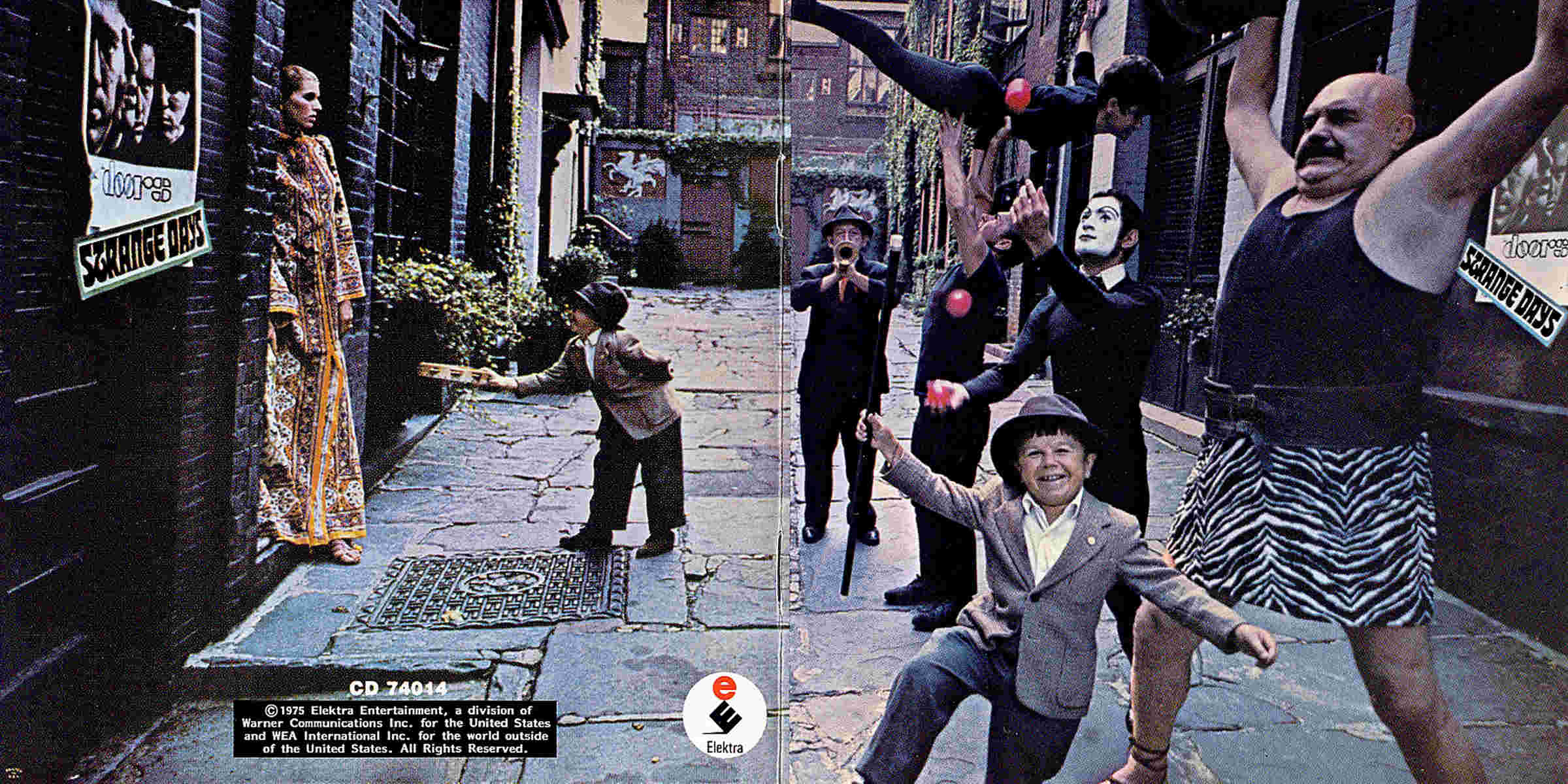
4. Strange Days by The Doorsfreecovers.net
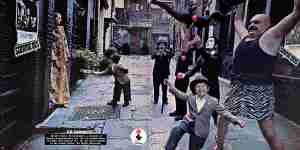
You may wonder why this record by the Doors is so high up the chart and not their dazzling first LP. Well, the answer is simple. Apart from a couple of singles like “Light My Fire” I missed the first one and went straight into “Strange Days” which I think is absolutely brilliant. The sound of the Doors is wonderful and the quality of Jim Morrison’s voice is just perfect. He described it as “sick crooning” as he had based it on the sound of Frank Sinatra. Mind you, he doesn’t sound much like Frank when he bellows out “Cancel my subscription to the Resurrection!!” He was a great lyricist who raided the poems of William Blake and created something new. The final song “When the Music’s Over” is monumental and gives the impression of spontaneity and improvisation. Morrison introduced performance poetry to pop music and created the way for great artists like Patti Smith. I just love the line “Before I sink into the big sleep, I want to hear the scream of the butterfly”. It has been said by some critics that this album is not as good as the first and they used up all their best songs on that one. I disagree, I think this is just as good and,in my mind, perhaps even better. Mind you, I also love “Waiting for the Sun” and even the song “Hello, I Love You” which attracted some derision at the time because it was seen as cynically commercial (and plagiarised The Kinks)! I guess the Doors can do no wrong for me!

5. Revolver by The Beatles220px-Revolver

In a similar way that I missed the first Doors album I also missed “Rubber Soul” by the Beatles. If I hadn’t have done it would probably have been my favourite Beatles record. As it is, I didn’t listen to it in it’s entirety until years later! However, “Revolver” still stands up as the most ambitious Beatles record until that date. “Sgt. Pepper” is probably more ambitious but it is not as interesting, in my opinion, with the exception perhaps of “Day in the Life”. “Revolver” totally knocked my socks off. From the opening count-in of “Taxman” to the wailing drones of “Tomorrow Never Knows” I was captivated. This was music I had never heard before and I loved it! It also had the first real use of Indian music. Sure, George had used the sitar on “Rubber Soul” but here we have a full Indian ensemble including tabla with George crooning mystically over the top of it. Totally brilliant!! There is also the first use of experimentation with the recording of reverse guitar tracks and tape loops. The Beatles are growing up and trying new things! This record probably has the Beatles playing together at their best. George’s lead guitar playing has improved and changed considerably. Ringo’s drumming has never been better. John and Paul’s voices are perfectly matched. It is interesting that in the same year that they gave up playing live they produced their tightest recordings ever. Songs like “And Your Bird Can Sing” and “She Said, She Said” are miniature gems of great writing and playing. Oh, and the sleeve’s pretty cool as well!

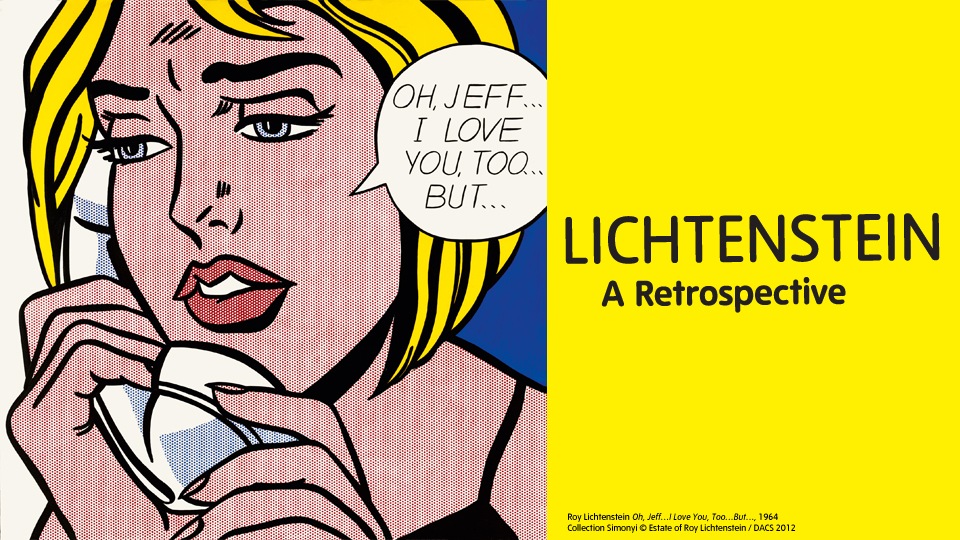
Diagram of an Artist: Roy Lichtenstein

Lichtenstein A Retrospective at Tate Modern

lichtenstein_web-banner

I visited this exhibition last week and was very impressed. The paintings are incredibly familiar ( at least, the 60s pop art pictures) but to see them full size in a gallery is a monumental experience. They are huge. This is what gives them their power.

Lichtenstein has been accused of being shallow and only concerned with surface but there is a suprising depth in much of the work in this exhibition. The Late Nudes and Chinese Landscapes are particularly affecting. The landscapes enhance and yet subvert the Japanese originals by their sheer size  but the use of dots is incredibly subtle and project a calm atmosphere.

This is what the program notes say about the nudes:

Unlike many artists, Lichtenstein did not use live models for his depictions of the female body; instead he returned to his archive of comic clippings to select female characters as subjects – and then literally undressed them, by imagining their bare bodies under their clothes before painting them as nude.

The paintings Nudes with Beach Ball 1994 and Blue Nude 1995 are examples of his late approach to the nude, brought together at a huge scale in original compositions of single, double and group portraits. The result is a disturbing violation of conventions. The noble nude has been rendered as erotic graphic pulp; the paintings propose her large schematic bland body as an object of desire, yet she experiences desire as well, often captured in a state of reverie or bliss. Like Picasso and Matisse before him, Lichtenstein’s fascination with the painter/model relationship reaches a new level of intimacy and sensuality, meshed with the formal concerns of his painting.

Blue Nude

Blue Nude

Henri Matisse, Blue Nude II, 1952, gouache déc...

Henri Matisse, Blue Nude II, 1952, gouache découpée, Pompidou Centre, Paris (Photo credit: Wikipedia)

His reimagining of works by other artists also display a greater depth than some people might have thought. He covers many different periods and brings more than just parody to the work. In fact, he shows just  how effective the use of lines and dots can be.

Still, my favourite of his is his first pop art picture “Look Mickey” to prove to his son he could paint pictures as good as in the comics. Now that is real genius! The rest, as we know, is history!

a000014d

Infinity Blue a poem/song by Kenny Wilson!

This is a poem/song I wrote in 2005. It was inspired by the name and the view of a restaurant on the island of Skiathos in Greece. I was trying to connect with the space between consciousness and sleep, that space when thoughts drift without any idea of rationality, when words just connect with each other and everything makes sense! I composed a backing that I recently rediscovered and will record it again!

4b14f66d-7634-4d8b-82af-3831ef4edbec

The first time that I saw you
I was dressed in black.
The last time that I saw you
You said you won’t be back.

Oh Infinity Blue

There were times
When I thought I could be with you
To be a real lover
And always be true.

Oh Infinity Blue

The angels came down once
And they spoke to me.
They gave me a message
That would set me free.

Oh Infinity Blue

The sun it was setting
It set in the east.
And somewhere inside me
It unleashed the beast.

Oh Infinity Blue

I walked through the centre line
Of what’s right and wrong.
And I tried to find freedom
In the words of a song!

Oh Infinity Blue

The words they controlled me
They forced me to stand.
When I was lost at sea
They showed me the land.

Oh Infinity Blue

And as I was waiting
For wisdom to come.
The words came and showed me
The warmth of the Sun.

Oh Infinity Blue

Between what is lost
And what cannot be
The words are like diamonds,
The words set you free.

Oh Infinity Blue

I was looking for mercy
I was looking for love
The words they came to me
Like a snowy white dove.

Oh Infinity Blue

I looked in your eyes
And I found mystery
And love, peace and mercy
Was our destiny!

Oh Infinity Blue

img_9754

Radio interview in New York May 2012