Tom Rapp, ’60s Folk Experimentalist And Civil Rights Attorney, Dead At 70 | BPR

I found this link on the Middle Earth Facebook group. Tom Rapp was part of a great late 60s band called Pearls Before Swine. They were one of my favourites. He was a really great songwriter and a big influence on me. He wrote a song called Rocket Man which inspired Elton John to write his version, which obviously became a big hit. Tom’s was better in my opinion, though.

Tom Rapp, a civil rights attorney and musician best known for his late-’60s and early-’70s recordings under the name Pearls Before Swine, has died while in hospice care at his home in Melbourne, Fla., his publicist confirmed to NPR Music. He was 70 years old.

Like many of his generation, Rapp was inspired by Elvis and The Everly Brothers. But it was hearing Bob Dylan‘s “Blowin’ in the Wind” in the early ’60s that finally galvanized him to begin writing music in earnest. (A possibly apocryphal tale goes that Rapp and Dylan actually competed as children in the same talent contest, with Dylan placing fifth, Rapp second.)

Pearls Before Swine’s first record, One Nation Underground, released in 1967, wore that influence plainly on its sleeve — not so much the fraught Hieronymous Bosch extract that adorned its cover, but in the Xeroxing of Dylan’s vocal delivery (with the addition of Rapp’s notable and endearing speech impediment) heard on the song “Playmate.” While Rapp may have been emulating on the mic there, the rest of the music on “Playmate” is woven with forward-thinking threads of psychedelia and garage rock. Further on, Rapp steps into his own, even presaging punk’s approach to institutional fealty (don’t) in the lyrics of “Drop Out!” and an avant-garde approach to a cursing word, spelled out in Morse code, on “(Oh Dear) Miss Morse.”

The album would go on to sell “about 250,000,” Rapp told NPR Music’s Bob Boilen last fall during a conversation centered on its 50th anniversary reissue. Despite the impressive sales, Rapp and his bandmates received next to no money from them. Bernard Stollman, who ran the label ESP-Disk’ that released One Nation Underground and its follow-up, told them that “the CIA and the Mafia were putting [the records] out themselves,” and so the sales weren’t ending with money in the pocket of ESP-Disk’ and, by extension, Pearls Before Swine. (Or many of the label’s other artists, the story goes.)

Rapp would go on to release eight more well-regarded records — Balaclava, the follow-up to One Nation Underground, perhaps highest among them — before utterly disappearing from music in 1974, not long after opening a concert for Patti Smith.

Infused with the spirit of the counterculture, but not willing to take his own advice and “drop out,” Rapp headed to college and, from there, law school, graduating from the University of Pennsylvania Law School in 1984. Rapp was a civil rights attorney in Philadelphia until 2001, after which he returned again to Florida. His practice emphasized reining in corporations and local governments.

As much as his music, Rapp’s work as a lawyer and his attitude towards his rediscovery in the popular imagination were illustrative of his spirit. Nearly 17 years ago, Rapp’s career was profiled for Weekend Edition by Peter Clowney. Rapp was bemused at the bloom of his late-in-life celebrity, treating it with a humbled, arm’s-length detachment, the attitude of someone who had long since filled his life.

Describing that rediscovery, which began around 1992 while he was in Philadelphia, Rapp said: “They call me a psychedelic godfather and they have these articles about how I’m a legend. The way that works is, you do some albums in the ’60s that are OK, you go away for 30 years, and you don’t die — then you’re a legend.”

During that piece, Rapp shared his “lessons from the ’60s.” They began with a dark half-joke: “One of the lessons of the ’60s was that assassination works.” He continued: “Love is real. Justice is real. Countries have no morals; you have to kick them to get them to do the right thing. Honesty is possible and necessary. And everything is not for sale.”

Source: Tom Rapp, ’60s Folk Experimentalist And Civil Rights Attorney, Dead At 70 | BPR

Interview with Dave Andrews of Radio Leicester about iconic music venue “Il Rondo”

This is an interview by Dave Andrews of Radio Leicester with me, Shaun Knapp, and Sue Barton about the iconic music venue Il Rondo that is now a store room for an Italian restaurant! It was amazing to see it and realise it was still there virtually unchanged but rather derelict.

The Il Rondo hosted some of the greats of popular music including The Rolling Stones, The Who, Howlin’ Wolf, Fleetwood Mac and a host of others!


The day Jazz fans had a riot |Telegraph

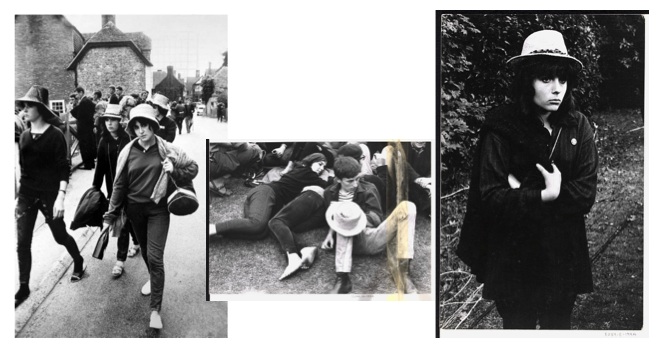
Beaulieu Jazz Festival 1960

As he looks forward to the A Love Supreme festival, Ivan Hewett looks back at the day in 1960 that jazz fans went on the rampage at the third Beaulieu Jazz Festival

Outdoor jazz festivals have an air of wholesome, clean fun. It’s hard to be cutting-edge when there are infants pottering about and midges biting. The ambience is best suited to trad jazz played by chaps of a certain age, dressed in ties and with bald pates reddening gently in the sun.

Next week something more ambitious and up-market takes place in rolling meadows in Sussex. This is the second instalment of Britain’s only green-field jazz festival, A Love Supreme, which is set against “the gorgeous backdrop of Glynde Place,” an Elizabethan Manor House. Top-flight acts including Gregory Porter, De La Soul, Laura Mvula and Dave Holland will be there. You can bring a tent, or go for a superior ‘Glamping’ experience complete with hot showers, Pamper Parlour and 24-hour security.

For those with very long memories, this might remind them of a somewhat less upmarket event more than 50 years ago, when some jazz fans went on the rampage in front of a similarly “gorgeous backdrop”. The year was 1960, the occasion was the third Beaulieu Jazz Festival, which took place at Lord Montagu’s estate at Beaulieu near the New Forest. Lord Montagu was something of a jazz fan, and thought this was a risk-free way to indulge his enthusiasm.

Unfortunately it all went wrong, when specimens of a new and puzzling sort of human being – the teenager – invaded the stage. Stuart Nicholson, now the distinguished columnist of Jazzwise magazine, remembers that as the lighting gantry collapsed “someone grabbed a microphone and demanded ‘free beer for the working man’.” A lone figure made it to the top of the stage, a converted merry-go-round complete with fairground horses, and once the crowd realised he was on television, a mass climb began to join him.” There’s some tantalisingly brief footage on this Pathé newsreel.

How wonderfully British. It wasn’t an end to bourgeois hegemony the young rioter was fighting for, or even more power for the unions. It was just some free beer. However the invader wasn’t some lone eccentric. Jazz at that time was a hotbed of competing styles, with deep antagonisms between different sets of fans. These were driven by class differences as much as musical tastes. The jazz historian Duncan Heinen has uncovered these simmering tensions in his fascinating history of jazz in the Sixties and Seventies, entitled Trad Dads, Dirty Boppers, and Free FusionG

The book shows that the 1960 Beaulieu festival was really more a tail-piece to the Fifties, that edgy decade of beatniks, CND marches, Angry Young Men, pop art, and race riots (it’s only because the Sixties have been so mythologised that people automatically think of the Fifites as drab). Jazz was in the thick of it, though witnesses of the period never seem to agree whether a fondness for drainpipe trousers meant you were anti-nuclear power and for modern jazz, or despised Dizzy Gillespie and preferred skiffle.

The jazz festival’s stage was a converted merry-go-round. Pic: GETTY IMAGES

Some say it was a working class thing to like modern jazz, and that middle-class rebelliousness came out in ‘jiving’ to trad. One indubitable fact is that the rock and roll, R&B and jazz scenes were closely interlinked, and players such as Ginger Baker could migrate from one to another. Look closely at this film clip of the 3rd Beaulieu jazz festival and you’ll catch a glimpse of a very young Rod “the Mod” Stewart among the eager crowds.

So with competing styles of jazz on the platform, plenty of beer on tap, and the provocative backdrop of a stately home, the stage was a set for a classic British class confrontation. One imagines some of the youth were just itching to feel aggrieved, like the character in Colin MacInnes’s novel Absolute Beginners, who describes the Beaulieu festivals as “garden party’s (sic) for the ooblies and Hooray Henries.” (According to the poet Jeff Nuttall, “ooblies” was Humphrey Lyttleton’s term for devotees of the “original purist trad subculture”. George Melly preferred the term “moron”).

Finding out what really happened that day at Beaulieu is like asking what really happened at the riotous premiere of the Rite of Spring. Some say it was the bearded trad fans versus the modern jazzers. Other say it was nothing to do with music at all. One witness insists it was Teddy Boys shouting “We want Acker!” (meaning trad jazz clarinettist and singer Acker Bilk), while the correspondent for Melody Maker sniffed about working-class “mobsters” coming from Portsmouth and Southampton. Once the stage had been invaded, chaos quickly ensued. A building was set on fire, 39 people were injured, and the BBC pulled its outside broadcast feed off the air six minutes early. “Things are getting quite out of hand,” said the announcer primly.

That wasn’t quite the end of the Beaulieu jazz festival. Lord Montagu was game enough to try again the following year, but the cost of the increased security meant the event was no longer financially viable. And that was it, for “green-field” jazz festivals in the UK – until Love Supreme came on the scene. More than 50 years on, will this stir the same passions? Will someone grab a microphone after Gregory Porter’s set and demand “free champagne for the working man”? Somehow I just can’t see it.

Source: The day Jazz fans had a riot – Telegraph

Kenny Wilson at Bath Royal Literary and Scientific Institution 12th July 2017

This is a video of my talk at BRLSI in July. It’s not great quality but you get the whole thing! I originally put it on YouTube but it got blocked because of my use of two Bob Dylan songs. This was a bit disappointing but I have decided to upload it here instead. I hope Bob won’t mind too much, he always seemed to understand the true value of copyright theft and plagiarism!

Me? I’m having trouble with the Tombstone Blues!


Summer of Love 50 Years On – London Then and Now

This is an article from the Guardian that cleverly shows how iconic sites in London looked in 1967 and how they look now. With a slider you can blend the two. Very impressive. It is amazing how little they have changed.

Related image


2017-09-19 (1)

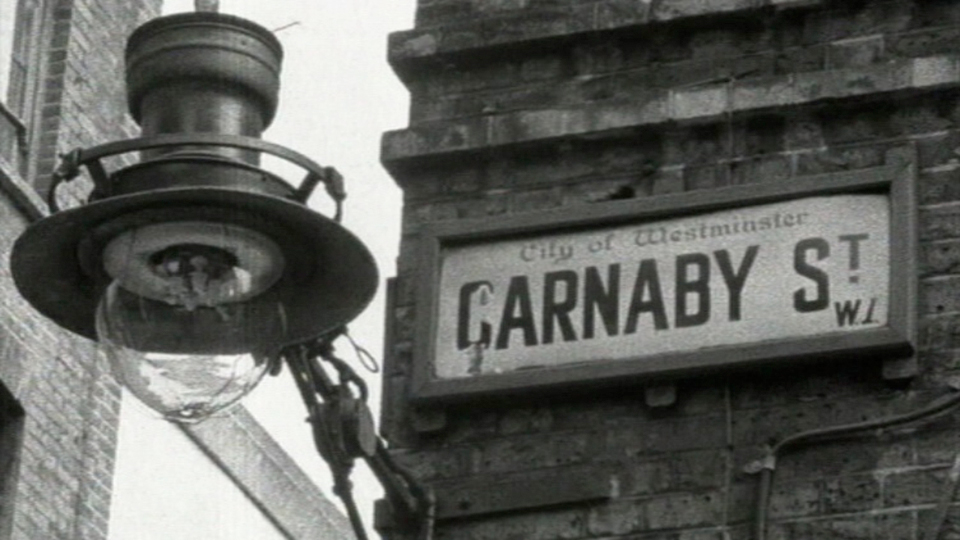
Newburgh Street (near Carnaby Street) London 1967

Newburgh Street 2017

Newburgh Street

Running parallel to Carnaby Street, Newburgh Street forms the boundary of what is known as the Newburgh Quarter, where fashionable concept stores and classic tailors sit alongside traditional pubs such as the White Horse.

Now pedestrianised and cobbled, back in 1967 it was a tarmacked road.

Summer of love 50 years on – London then and now:

https://www.theguardian.com/artanddesign/2017/aug/31/summer-of-love-50-years-on-london-then-and-now?CMP=Share_AndroidApp_WordPress

Golden daze: 50 years on from the Summer of Love | Culture | The Guardian

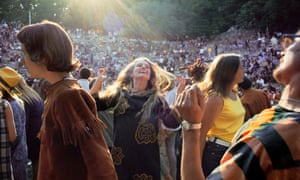
High times: dancing during the Summer of Love, San Francisco, 1967.

San Francisco 1967

It’s the 50th anniversary of San Francisco’s Summer of Love. Here five people who were at the heart of the counter-culture movement tell Aaron Millar how flowers, LSD, music and radical ideas changed youth consciousness forever

Source: Golden daze: 50 years on from the Summer of Love | Culture | The Guardian

Tonite Let’s All Make Love in Leicester: Peter Whitehead and the Long 1960s (March 2017 De Montfort University)

Friday 3rd and Saturday 4th of March 2017 I attended a conference at DMU, Leicester about film maker Peter Whitehead, and celebrating the donation of his archive to the University.

I found out about it late but am really glad I went. There were some excellent talks that brought new light to the meaning and relevance of the 1960s Counterculture, and other aspects of the Swinging 60s, and also a sublime showing of Whitehead’s Tonite Let’s All Make Love in London on the big screen at Phoenix Square Cinema, Leicester. It was almost like watching a different film to the one I have only previously seen on YouTube.

This is a fascinating view of what was happening at the height of what is now seen as the first great flowering of the Counterculture. It is not uncritical though and the seeds of it’s decline can be seen in the interviews of contemporary stars like Julie Christie, Michael Caine and David Hockney. There is almost a sense of impending loss, and also a critique of it’s superficiality and materialism.

The film is really a response to Time Magazine’s famous article about Swinging London that shifted American’s ‘must visit’ tourist location from Paris to London. After a brilliant start with footage from the UFO Club accompanied by a great version of Interstellar Overdrive by Pink Floyd, Michael Caine bizarrely announces that “…it all started with the loss of the British Empire….”

There is no narrative as such but a series of Chapters that are linked by the time and place, and a general sense of bewilderment by the participants. Following some amazing footage of the Rolling Stones live in Ireland Mick Jagger comes across as a slightly lost , petulant school boy trying to make sense of it all “… they don’t like violence but they themselves are violent which doesn’t seem to make sense…”. Yes okay Mick, thanks for that, you sound just like my mother. Julie Christie, who looks absolutely stunning, bemoans the fact that she is totally superficial and has nothing to say “… everything’s happening to me and I’m not happening to anything…am I allowed to talk?…”. David Hockney is not impressed by ‘Swinging London’ at all and prefers New York and California. The bars stay open til 2 a.m. and the drinks are cheaper and he can meet ordinary people in the clubs, unlike London which is overpriced and exclusive. To be fair though, David Hockney has been moaning about something for most of his life, quite often about not being allowed to smoke cigarettes wherever he wants! He is very amusing though. When Julie Christie smokes a cigarette in the film she doesn’t look like she quite knows what to do with it. Vanessa Redgrave, on the other hand, exudes confidence and political commitment and sings a capella and lectures the audience, a bit like an over-confident trainee teacher.

Andrew Loog Oldham is the stereotype of a cynical, Svengali-like pop manager who talks about how he ‘invented’ the Rolling Stones image as the ‘bad boys’ of pop, which, in fact, they quite obviously are not. He revels in his lack of knowledge but obviously believes he can do anything he wants “… I might get into politics someday..or films” he says. In some ways, this is quite a refreshing and confident attitude. Nevertheless, he never did get into either politics or films which is probably just as well as I am sure he would have joined the ranks of the Thatcherites and done something really terrible like close down the NHS or sell the whole of England to Disneyworld. The film ends where it began with some amazing footage of dancers at the UFO Club and the music of Pink Floyd. A truly remarkable film! There is a real sense of dynamism and change. The way the music accompanies the live performances of the Stones is inspired especially with the song Lady Jane. Whitehead doesn’t bother about synchronicity and blends unrelated recordings with live footage. Have You Seen Your Mother Baby (Standing in the Shadows), a surprisingly dark and seemingly uncommercial recording (even though it was a top ten hit), it’s not unlike the Velvet Underground, plays while the band and audience go wild and Lady Jane introduces a strange and eerie sense of calm.

The rest of the conference passed quickly. It took place over two days but the papers delivered were so fascinating that I never lost interest the whole time I was there. This has got to be a first for me, my attention can easily wander! I usually have alternative activities at hand in case I get bored! Didn’t need them this time! There were a wide range of themes that dealt with the 60s with some, but not all, relating to the work of Peter Whitehead

Adrian Smith discussed the interesting sub genre The Love Business: European Prostitution Drama as British Popular Entertainment. This dealt with the film distributors who were showing European films, many of which had a serious sub-text, as soft porn films to a British audience. There are some echoes of this theme in a recent Channel 4 series Magnifica 70 that deals with film and censorship in Brazil in 1970. Worryingly, this is about a right wing dictatorship in Brazil but could just as easily be about censorship and social control in Britain in the 1960s.  Definitely worth a look.

The Love Business: European Prostitution Drama as British Popular Entertainment

Richard Farmar looked at the bizarre film The Touchables and Melanie Williams gave an interesting account of the film maker David Hart. She talked about the “Right-wing Counterculture” which to some would be a contradiction in terms. The majority of  countercultural participants were either “left wing” or perhaps “apolitical” but she made a very good argument about how many issues, like women’s lib or gay rights, could belong to either the left or right.  She pointed out how politician and journalist Jonathon Aitken started as a countercultural figure in the 1960s but ended up as a cabinet minister in the Conservative Government of the 1980s (before he ended up in jail, that is!). I have investigated elements of right wing attitudes in my essay The Decline of the 1960s Counterculture and the Rise of Thatcherism in which I look at libertarianism and other aspects of the counterculture in the 1980s such as sexual freedom, drug taking and “alternative” businesses such as Virgin and Gap.

David Hart and Right-wing Counterculture

Caroline Langhorst gave an interesting talk on three lesser known films of the 1960s all of which are critical of the optimism and the joie de vivre of the period. These are Tonite Let’s All Make Love in London, Privilege (starring Manfred Mann singer Paul Jones) and Herostratus (featuring a young Helen Mirren).

1960s Dystopian Tendecies

Both Privilege and, especially, Herostratus are relatively unknown films. Privilege had a cinema release in the 1960s (I actually saw it) but I believe Herostratus was virtually lost, although there is a copy now on Blu-ray (which I have yet to see). There are some clips of it on YouTube which are quite intriguing. Personally, I feel that the films that really define and critique the era, especially in terms of pop music and the counterculture, are Easy Rider, Performance (featuring Mick Jagger) and, of course, Tonite Let’s All Make Love in London. What becomes generally apparent is the mainstream media’s inability to really understand what is going on during this period. Their attempt to commercialise the movement in films of the time often produced a cliched view of pop culture and society that, for some, defines what the 1960s are about but is actually a ridiculous fiction.

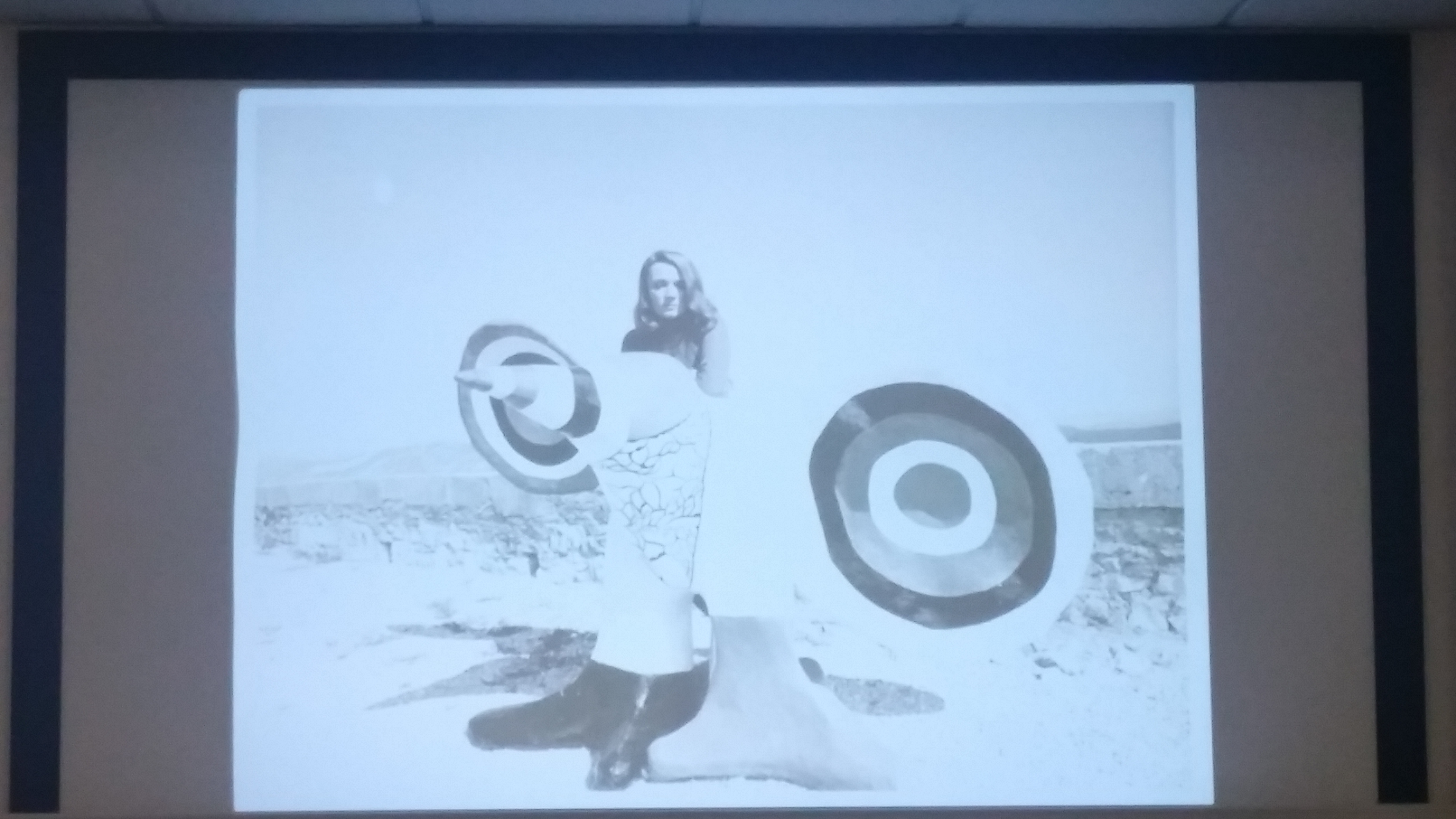
Niki de Sainte Phalle with her trademark targets. An influence on Mod fashion?

There were some interesting talks about feminism in the 1960s. Alissa Clark investigated Peter Whitehead and Niki de Saint-Phalle’s collaberation Daddy. In 1972, Saint Phalle shot footage for this surreal horror film about a deeply troubled father-daughter, love-hate relationship. She was an artist, sculptor and film maker who made quite an impact on the avant garde scene from the 1940s onwards.

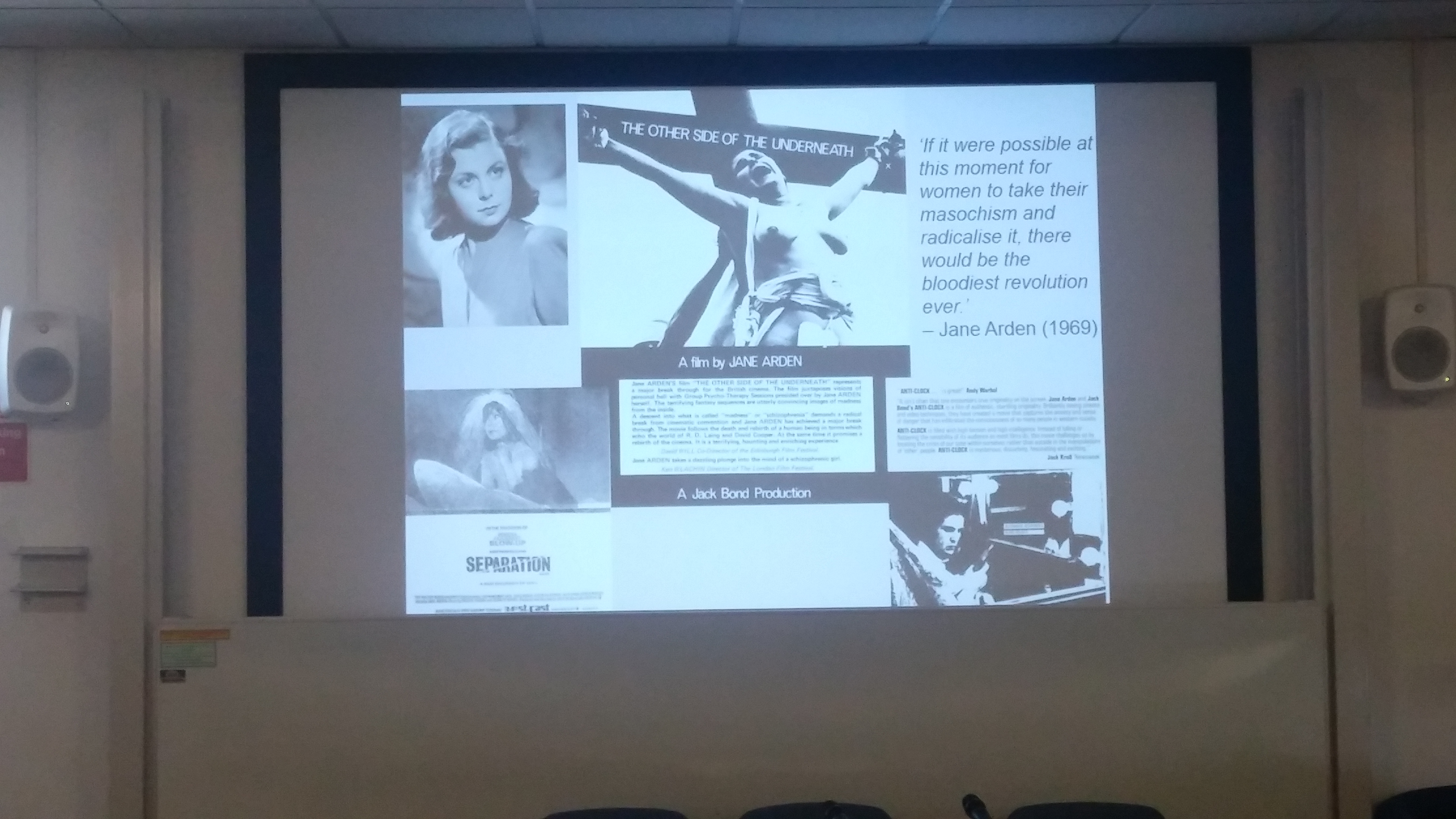
Jane Arden “The Other Side of Underneath”

There was also a passionate and forceful account of radical filmmaker and theatremaker Jane Arden who I had actually not heard of before. In 1970, Arden formed the radical feminist theatre group Holocaust and then wrote the play A New Communion for Freaks, Prophets and Witches. The play would later be adapted for the screen as The Other Side of the Underneath (1972). Arden directed the film and appeared in it uncredited; screenings at film festivals, including the 1972 London Film Festival, caused a considerable stir. The film depicts a woman’s mental breakdown and rebirth in scenes at times violent and highly shocking; the writer and critic George Melly described it as “a most illuminating season in Hell”, while the BBC Radio journalist David Will declared the film to be “a major breakthrough for the British cinema”. Interesting stuff!

Stephen Glynn gave an entertaining look at Whitehead’s films of the Rolling Stones including the iconic promotional film for the song We Love You and Steve Chibnall showed us what the 1960s Counterculture was like in a provincial city, namely Leicester! Well, I should know because I was there, but he managed to come out with facts that I knew nothing about. For example, how the local paper The Leicester Mercury led a campaign to close down the late night clubs and coffee bars that proliferated at the time. Do You Know What Your Children Are Up To While You Sleep? screamed the headlines. My favourite band Legay complained that they had hardly anywhere left to play and were moving to London! I am shocked and stunned by these revelations!

Jimi Hendrix at the Leicester Art College Hawthorn Building. Local rock and roll band Warlock ended up doing the support spot.

Richard Dacre gave an entertaining account of the Counterculture and Peter Whitehead at the Royal Albert Hall. Apparently, after Wholly Communion, poetry performances were banned at the hall for more than 20 years! Hilarious. I am looking forward to the Whitehead inspired festival at the RAH later on this year!

Counterculture at the Royal Albert Hall


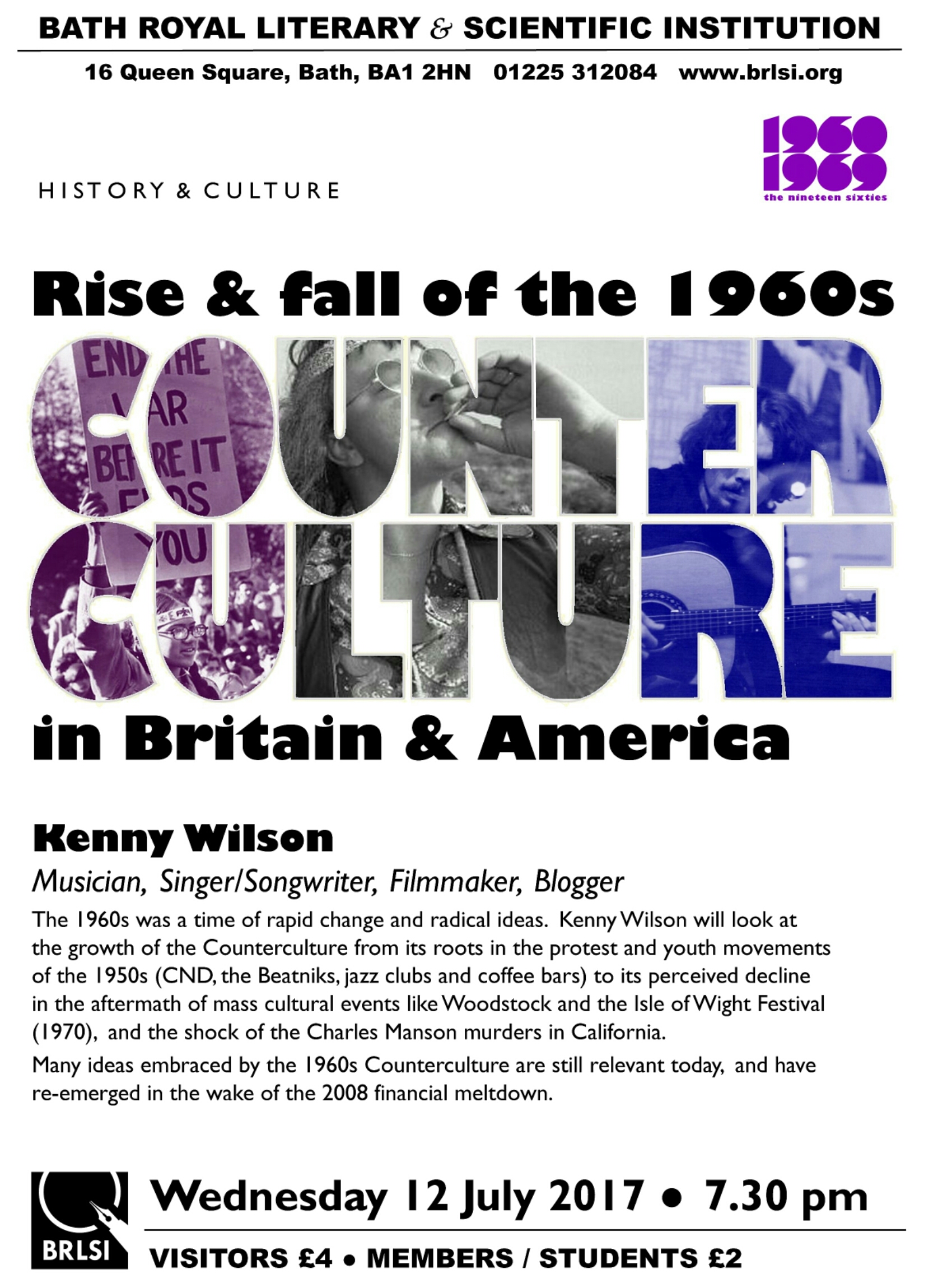
Poster for my lecture at the Bath Royal Literary & Scientific Institution 12th July