Coney Island of the Mind – Lawrence Ferlinghetti (1958)

1960s: Days of Rage's avatar1960s: Days of Rage


“This year marks the 50th anniversary of the publication of Coney Island of the Mind, Lawrence Ferlinghetti’s landmark second volume of poetry. In commemoration, New Directions has recently released a new hardback edition of the book, complete with a CD of the author reading the bulk of its poems, as well as selections from Pictures of the Gone World, his first collection of verse. Such an elaborate republication is highly appropriate–for time has revealed Coney Island of the Mind to be not only a book of great cultural importance, but also a major classic of modern poetry. As a social phenomenon Coney Island of the Mind is truly remarkable. With roughly a million copies in print, few poetry collections come anywhere close to matching its readership. Raw sales, though, only tell part of the story. Along with Jack Kerouac’s On the Road and Allen Ginsberg’s Howl

View original post 150 more words

Kenny Wilson at Bath Royal Literary and Scientific Institution 12th July 2017

This is a video of my talk at BRLSI in July. It’s not great quality but you get the whole thing! I originally put it on YouTube but it got blocked because of my use of two Bob Dylan songs. This was a bit disappointing but I have decided to upload it here instead. I hope Bob won’t mind too much, he always seemed to understand the true value of copyright theft and plagiarism!

Me? I’m having trouble with the Tombstone Blues!


6 Cult Heroes Who Inspired Your Favourite Musicians – BBC Music

This is an interesting article from the BBC Website about writers and artist who have inspired various songwriters, including Frieda Kahlo, William Burroughs and Sylvia Plath.

Source: 6 cult heroes who inspired your favourite musicians – BBC Music

fridakahlo

Frieda Kahlo


William Burroughs (far right) with Andy Warhol and Mick Jagger

Sylvia Plath

Sylvia Plath

The writers, artists and great minds that gave songwriters some of their best ideas

Source: 6 cult heroes who inspired your favourite musicians – BBC Music

THE HOLY BARBARIANS by Lawrence Lipton

The famous Beat cafe at Venice West, Los Angeles. The place where Doors lead singer Jim Morrison went in the mid 60s to develop his poetry and performance.

The Holy Barbarians was a book published in 1959 detailing the lives of the Beats living on Venice Beach in Los Angeles by poet Lawrence Lipton. It was very influential and was like a How to Do book for us in the mid 1960s in Leicester. Following is a quote from the book about the difference and similarities of Beats and Juvenile Delinquents! Much was written and talked about Juvenile Delinquents in this period. It was seen as a big problem. I remember my Grandmother was very bothered that I might have become one! I assured her I hadn’t but, then again, I did have my moments!

Of course, the Beat writers were in awe of criminal hipsters like Herbert Huncke and Neal Cassady but they weren’t seen as just delinquents, they had a kind of holy destiny. They were viewed almost as divine figures on a spiritual quest and, certainly, Cassady probably saw himself that way as well.

Later on in the 60s Venice Beach was the place that keyboardist Ray Manzarek first met singer and poet Jim Morrison and they formed the Doors.

“Everyone has to go to jail some time in his life,” remarked a fifteen year-old girl I met at Angel’s pad one afternoon. She was playing hooky from high school for the day and had just come back from visiting her boy friend in the County Jail. He had been busted for pot and they were also trying to hang a car-stealing rap on him. “They” were the heat and this was the bond that this chick felt with beatland. The beards puzzled her, and the poetry was so much baby talk to her. She had enough of that at school. One book was the same as any other to her. Pot was baby stuff, too. She had been on horse since she was thirteen.

What drew her to the beatniks was the way they understood her attitude toward her family and elders in general and the fact that they didn’t think she was a bad girl. The fuss that parents and older people made about sex seemed silly to her. Virginity? She and her girl friends at high school had a word for it. “Big issue about a little tissue.”

As a juvenile delinquent Myra Flores belonged to the cool cats who could be seen coming out of Venice High after school hours and piling into a car – integration was no problem here – white, Negro, Mexican. They didn’t hang around street corners; they drove fast cars in car pools that were also clubs of a sort. The Mexican girls were popular with these boys. Sometimes the blond girls dyed their hair to look like Mexican chicks. Their cars were not souped-up hot rods, that was for squares. Their clothes were sharp. Every penny they could beg, borrow or steal went into clothes. They drank wine and smoked marijuana. They didn’t talk much. They were physical in their relations, fondled each other a lot and watched television by the hour. Looking older than their years was very important to them. It meant that they could pass for twenty-one without an I.D. card in the taverns.

Rarely can a girl like Myra Flores make the beat scene except as a place of refuge or a drop-in lay, but a J.D. like Willie Frank can make it for quite a while on nothing but an ability to say little, listen much and play it close to his vest, which passes for cool as long as he doesn’t make any false moves. Willie fell into Venice West from a town in New Jersey where things had gotten too hot for him. He had smoked pot since he was fourteen, graduated to horse not long afterward, and served a term in jail back east.

The beat and the juvenile delinquent are only kissin’ cousins. They have the same enemies, which is the slender thread that sometimes unites them in temporary alliance. Both are outlaws, speak a private language and put down the squares, but in beat circles the J.D. is regarded as a square, a hip square in some things, but still a square.

He is a square because his values are the conventional American values: success, the worship of things, the obsession with speed and devil-take-the-hindmost attitudes in everything They are “sharpies” always looking for angles. They believe everything they read in the ads. The “kick” they are looking for when they “borrow” a car for a night is the kick of making “a majestic entrance” in front of a chick’s house. The juvenile delinquent wants a Ford in his future, but he wants his future right now. He can’t buy it so he steals it. “My old man waited,” one of them remarked to me, “and what did it get him? He’s fifty and he’s still driving a ’49 Chevy.”

The names they give their gangs are indicative of their hunger for social status. In Venice West it’s The Doges. Some of them pronounce it “dogs” but they know it means something like The Man of Distinction. (Wasn’t “putting on the dog” once a slang synonym for distinctive?) If one gang names itself The Counts, the gang in the next block goes it one better with The Dukes. Such pretensions are abhorrent to the beatnik.

Their “social protest,” which is a common theme in liberal magazines trying to “understand” the J.D., is so much double talk in the beatnik’s opinion. They are not victims of the society, they are its fruit and flower. The J.D. in a stolen car, dressed up in his sharp clothes, seated beside his chick and smoking the cigarette that is the choice of men who demand the best, is the ironic triumph of the adman’s dream. They are not likely to yield to the lures of communism. In fact, many of the J.D.’s of past generations are now among the society’s most successful businessmen.

The vandalism of the juvenile delinquent is directed against symbols of authority, like the school. If he finds school too confining or oppressive, or too boring, the beatnik finds ways of “beating the system.” He cuts classes as often as he can but he keeps his scholastic average high enough to stay out of trouble. He doesn’t go back after school hours and wreck the classroom or waylay a teacher and slug him for giving him low marks. Any show of violence among the beat generation, when it does occur, is rare enough – and significant enough – to become legendary. Such a legend is the one you hear frequently about Carl Solomon. “It was at Brooklyn College,” says Allen Ginsberg. “Some square lecturer was giving a lecture on Dadaism, and Carl pelted him with potato salad.” Which is exactly what any Dadaist would have done. That Carl was expelled for it is only further proof that the lecturer was a square.

The violence of the delinquent is usually directed against older people. The beatnik would not commit such acts of violence. He would write a poem about it.

Only a newspaperman with his feet stuck in a slot at the rewrite desk could possibly mistake a J.D. for a beatnik. The newspaper stereo-typed vandal is a composite of “teenager,” “juvenile delinquent” and “beatnik,” a convenient composite since it simplifies headline writing and makes every youth crime story a rewrite of the familiar dope fiend, sex fiend, youth-on-the-rampage yarn. All the reporter has to do is change a few names and places. The J.D. doesn’t mind the publicity. It gives him status. The only thing Willie Frank objected to in the news stories about him and his gang when they were busted for drugs was that the papers misspelled his name and even mixed up names under the pictures. “DOPE RING SMASHED” was a little too grandiose a headline, Willie thought, for a twenty-dollar haul of pot, but it gave him a glow just the same.”

My European Musical Adventure Part 2 October 2015

Frankfurt Station

Frankfurt Station

I arrived in Frankfurt at about 10.30 p.m. It was an easy run and the bus station was next to the railway station, like they are in many European cities. It makes sense. Why don’t they do that in British cities? Mind you, the bus stations have a very different atmosphere. There is a slight air of desperation with people waiting for buses, an atmosphere of uncertainty. And things happen that don’t happen elsewhere. Everyone has a story to tell!

I was a bit nervous when I arrived at Frankfurt. After my experiences with the hostel in Brussels I was afraid that things may go wrong. Also, the reviews of the hotel I was staying in were not great. There was talk of drug addicts and prostitutes hanging about outside the hotel! Well, at least they weren’t inside and, actually, it turned out to be fine! Yes, it was a slightly dodgy area but it was really close to the station and the town centre and it was clean and had a 24 hour reception which meant I wasn’t standing around for hours outside. I had a really good night’s sleep!

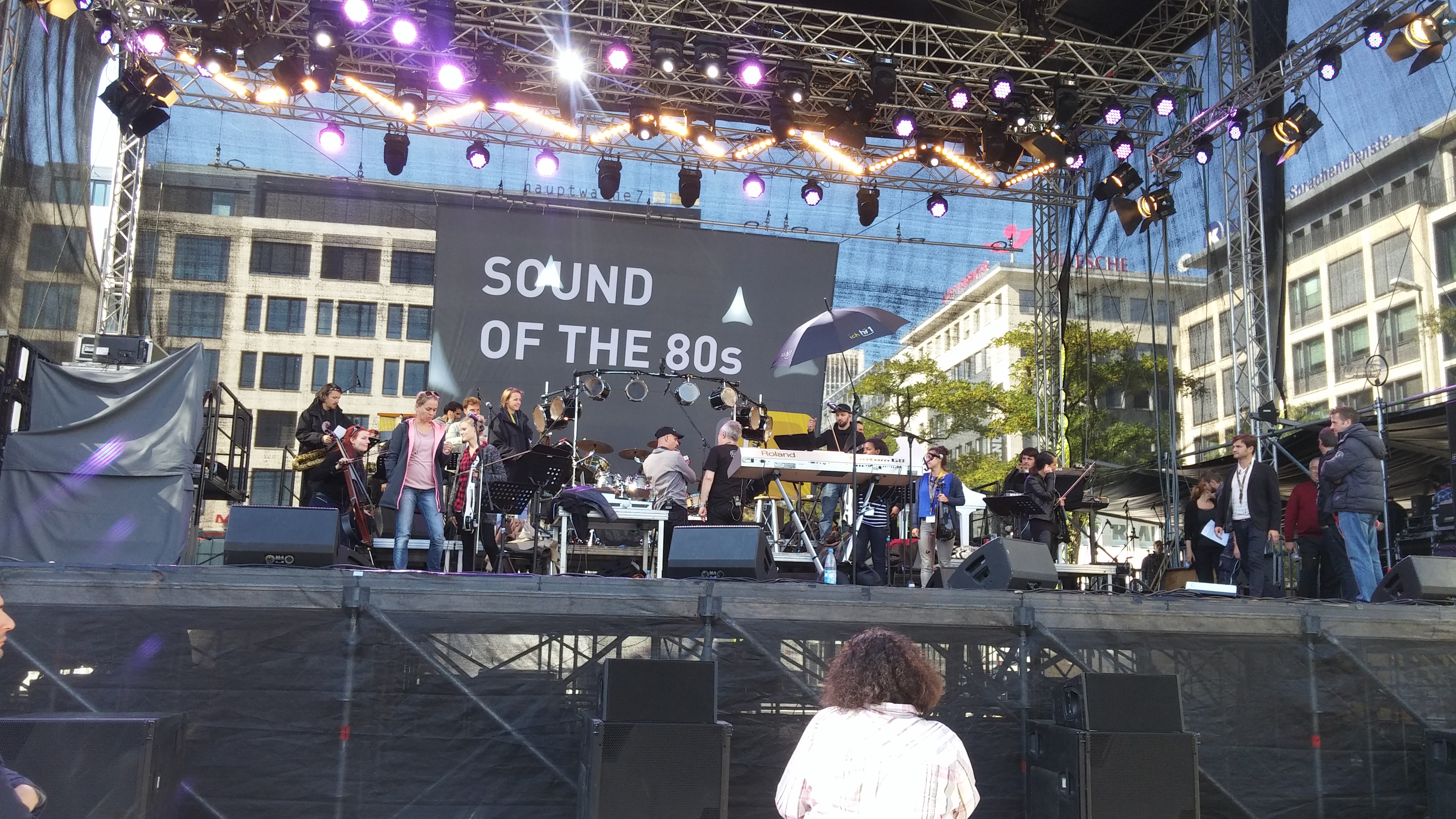
I didn’t know what to expect with Frankfurt. When I worked out my itinerary for the trip it was a convenient stop on the way from Brussels to Prague and it’s a place I didn’t really know anything about apart from it was where hot dogs were invented! I certainly wasn’t expecting a major festival to be happening that had taken up most of the town. I eventually found out it was a commemoration of the re-unification of Germany. Things were happening everywhere. I decided that busking was not really going to be feasible. There was noise coming from countless tents and stages. At night there was a major rock concert in the centre of town with thousands of people and a major police presence. Very exciting. Yet again, my busking plans had been thwarted (or was I just bottling out?!).

Festival time in Frankfurt. Stages everywhere!

Festival time in Frankfurt. Stages everywhere!

Anyway, I decided to try and rent a bike from the stands outside the station. This time I had more luck and I managed to get the pay station to accept my credit card. However, it took a long time for me to work out how to actually unlock the bike. The instructions for everything were in German and when I tried to phone the helpline the operator knew nothing about how to hire the bikes. Great helpline!! In the end I worked it out by downloading the Android phone app that was in English and I realised that hiring the bike was easier than I thought. Fantastic! I went cycling off round the city.

Got the bikes to work! Liberation!!

Got the bikes to work! Liberation!!

The city is interesting with a futuristic financial area full off postmodernist buildings and hipster delis. It was so nice not having to walk but still be able to get round and see everything! Bliss!! As expected, there are very few old buildings but it has a good atmosphere and it is very nice down by the river. I had an Indian meal from a market stall which wasn’t that great but it filled me up.
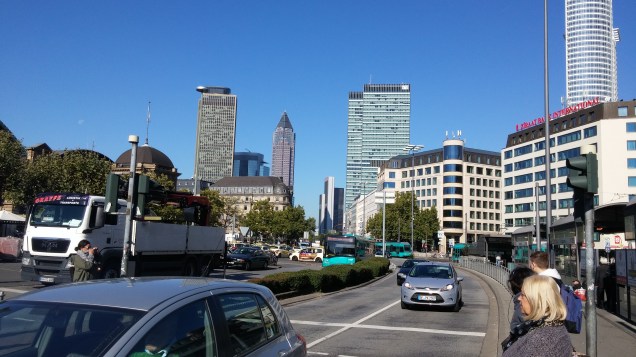
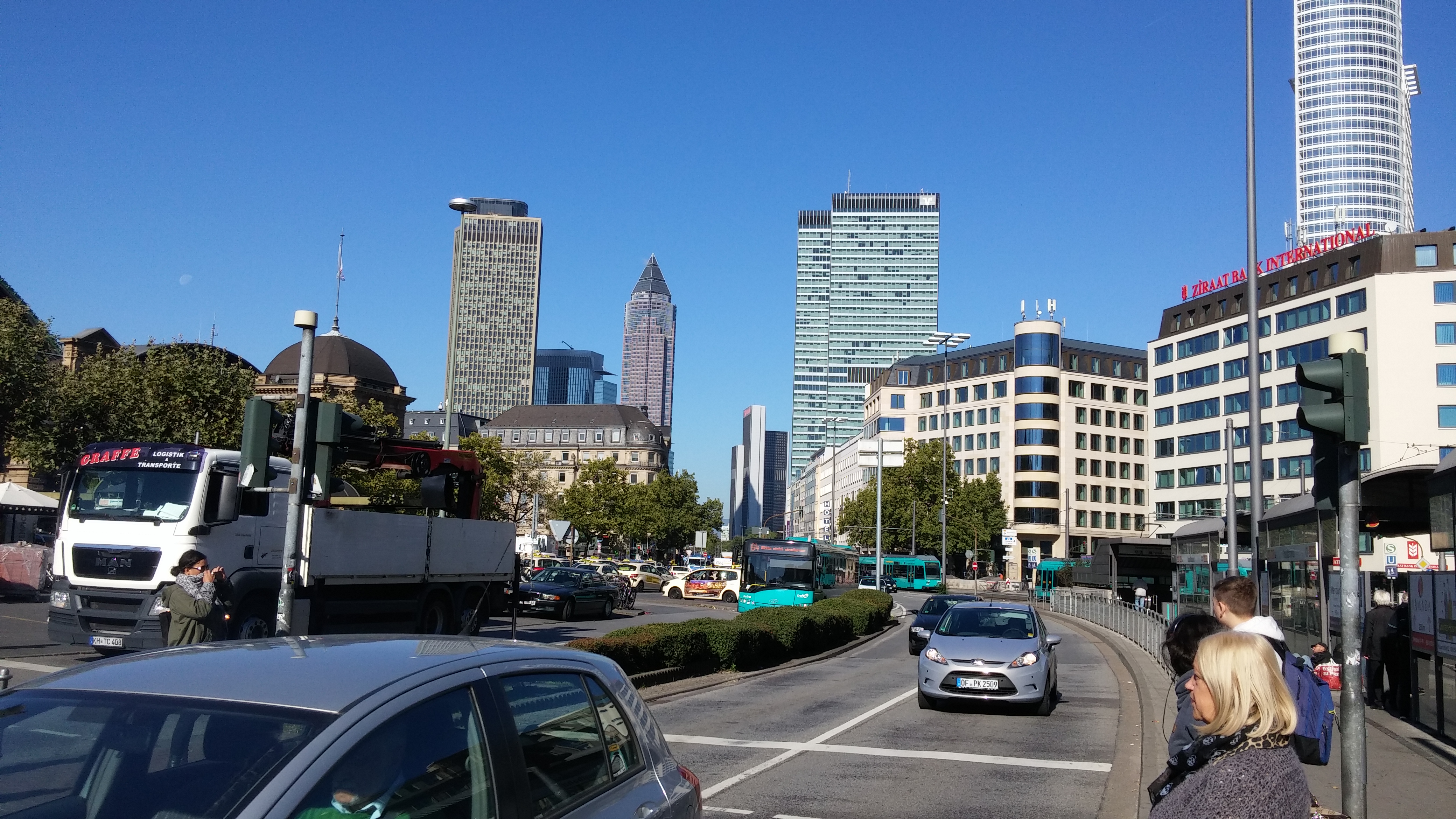
View from Frankfurt Station
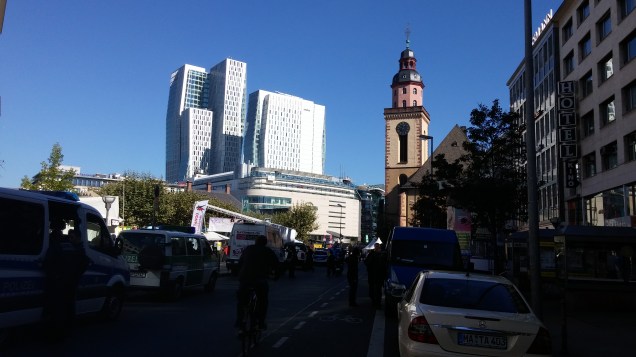
View from Frankfurt Station

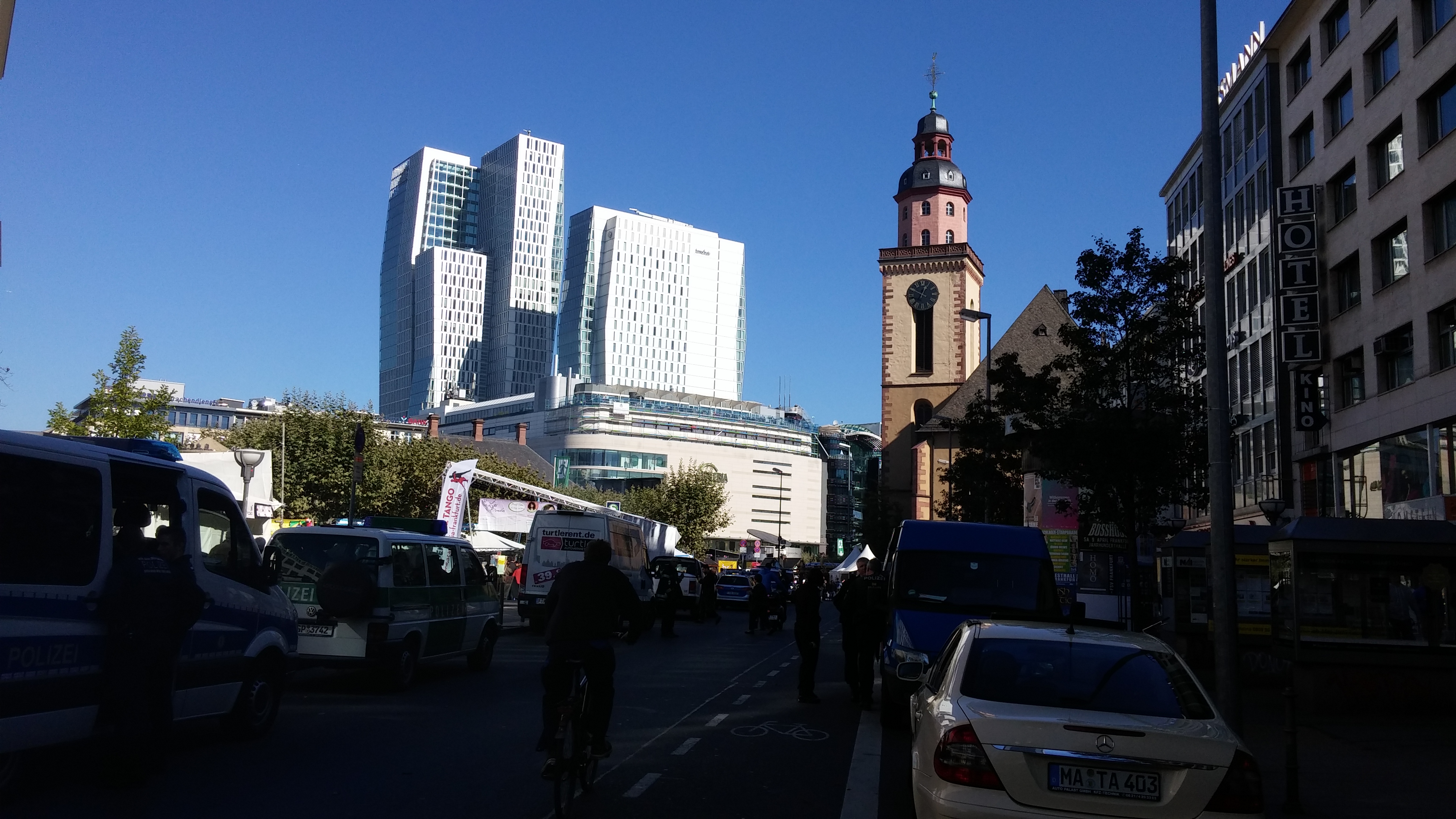
Frankfurt centre. Many interesting modern buildings.

Frankfurt centre. Many interesting modern buildings.

At night I had a look round for live music venues. There is a street with several jazz clubs and bars down in it and I was heading for these. I had been told about a bar called Club Voltaire that I went to but when I got there it looked a bit dull so I didn’t stay long. I also never got to the jazz clubs. On the way I came across a bike park and decided to do more biking, this time at night. Loved it! What a liberating feeling biking is! Then I went back to the hotel and watched Star Wars Episode 1 on my computer. It was better than I remember it.

Frankfurters everywhere cooked over wood barbecues!

Frankfurters everywhere cooked over wood barbecues!

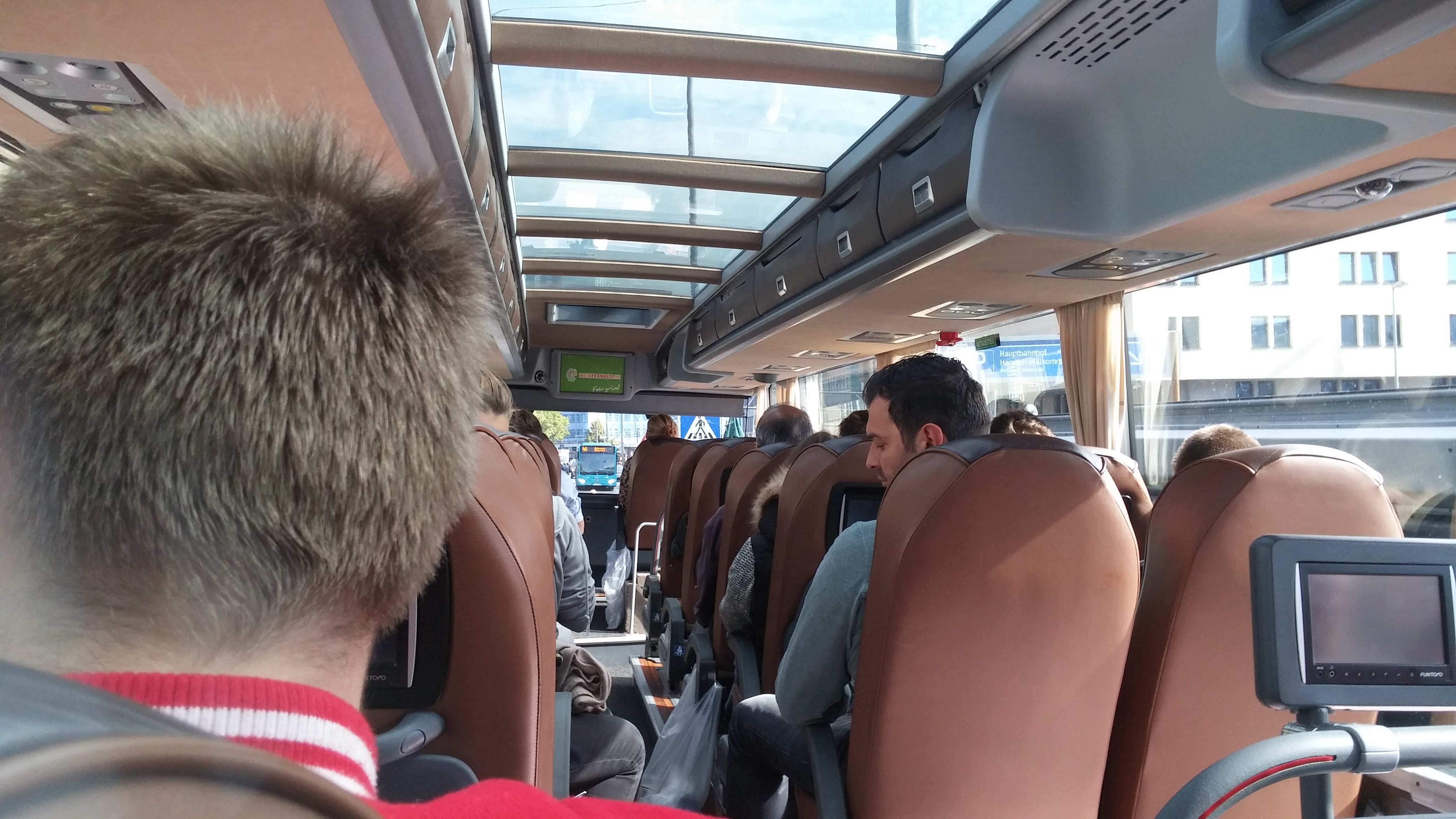
Next morning I went to the bus station to get the bus to Prague, the next city on my list.The stop I wanted was down a side street. The buses are actually clean and comfortable but the bus station was a complete mess. Rubbish was everywhere. The bins were either overflowing or broken. This is not what I expected in a German city! There was also nowhere for passengers to sit and wait. I was beginning to feel like a second class citizen. It was good experience though and the other passengers were really friendly, and of course it is really cheap! You may think it’s odd me saying it’s a “good” experience but at least part of what I was doing was to see things from a different perspective, and it made me aware of how other people live and survive. It made me a part of things just by being there. There really were shades of the Jack Kerouac zeitgeist in what I was doing. I was on the outside looking in and I saw much that I haven’t seen before.

The trip from Frankfurt to Prague is really good. The scenery is wonderful and there are hundreds of miles of pristine forest. The only stop we made was at Nuremberg which is pretty grim. Glad I wasn’t staying although lots of passengers got off there. You can’t just base opinions on what a place looks like. It’s the people that count and Nuremberg’s history is pretty disturbing what with the carpet bombing and Sovietisation. It makes Coventry look picturesque! I was glad to get back into the beautiful countryside though.
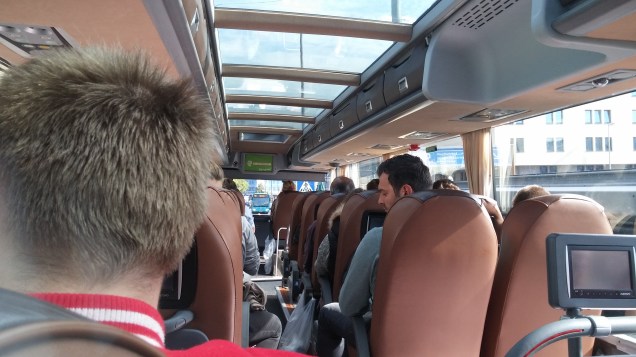
On the bus to Prague

On the bus to Prague

Prague is a beautiful city. I think it was the nicest place I’ve been to on the whole trip. Again, it wasn’t good for busking because of punitive by-laws. You need a licence and can only play for an hour at a time. Some of the buskers on Charles Bridge were brilliant, among the best I’ve ever seen. There were two accordionists playing Bach fugues, perfectly! I decided not to go rogue, and didn’t busk!
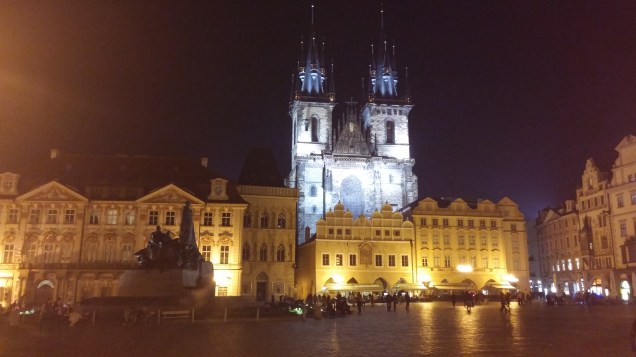
Prague at night

Prague at night

Unfortunately, there were no street bikes to hire so I was back on foot. I went all over and was particularly impressed  by the Franz Kafka Museum. It didn’t have many exhibits but it presented itself as a kind of art installation and it gave a real insight into the work of Kafka, especially his novel, The Castle. It’s inspired me to revisit his work.

Franz Kafka Museum, Prague
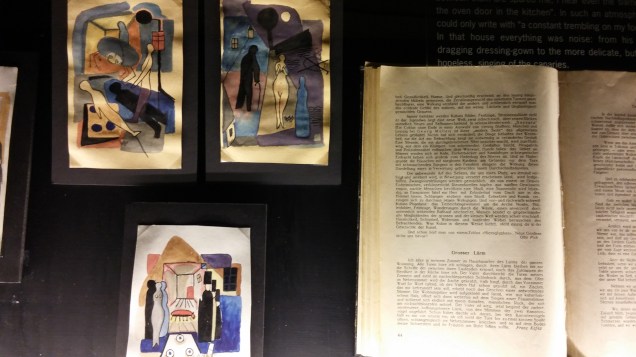
Franz Kafka Museum, Prague

Kafka's illustrations of The Castle.

Kafka’s illustrations of The Castle.

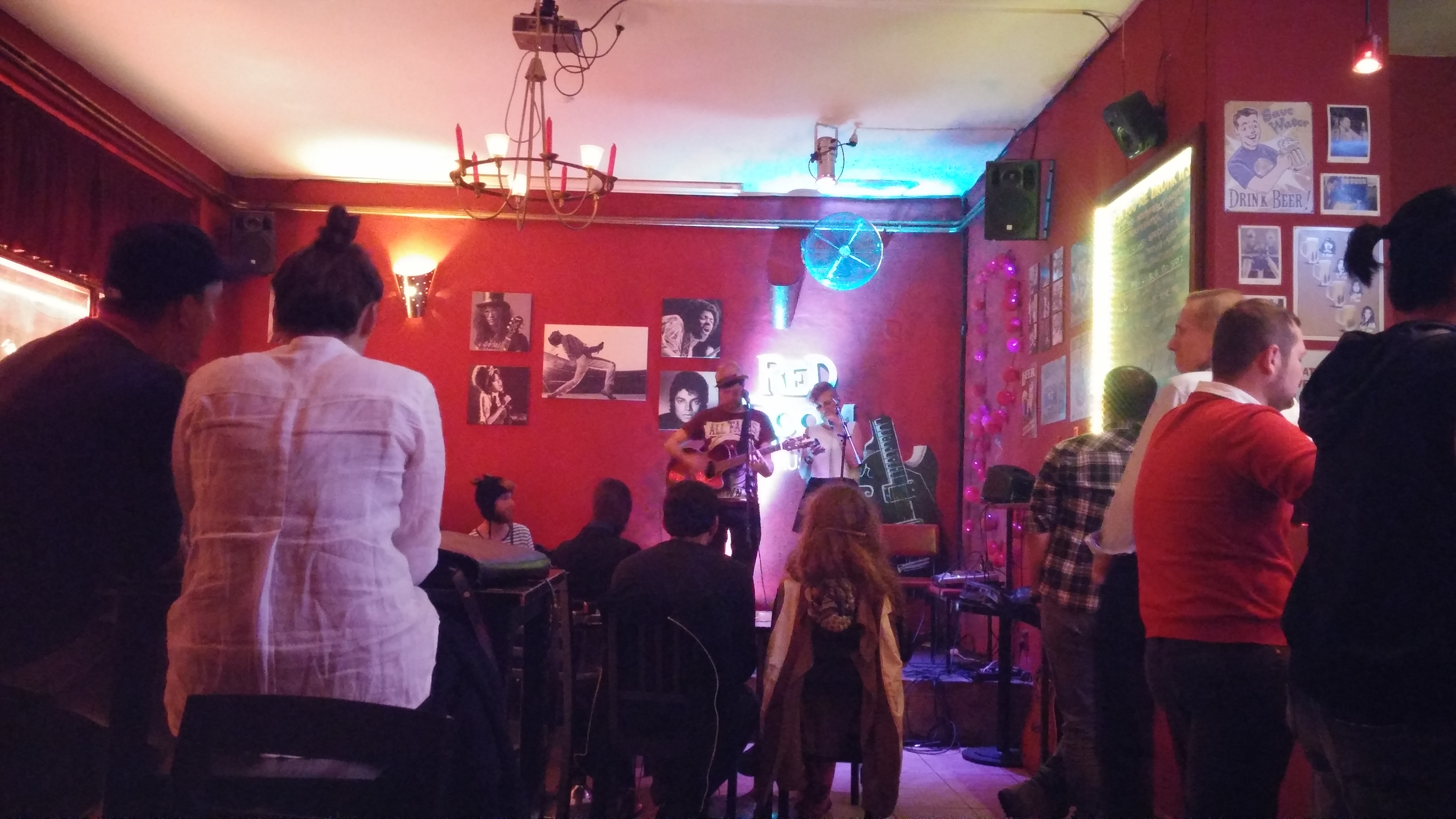
That night I took my accordion to an open mic at The Red Room bar. This was very good and I made lots of new friends including a couple from San Francisco who were doing a European tour. They did a brilliant version of Voodoo Chile by Jimi Hendrix using acoustic guitar and voice. Check them out: The Jeff Jolly Band.

Red Room Open Mic, Prague. Jeff and Desiree playing.
Red Room Open Mic, Prague. Jeff and Desiree playing.

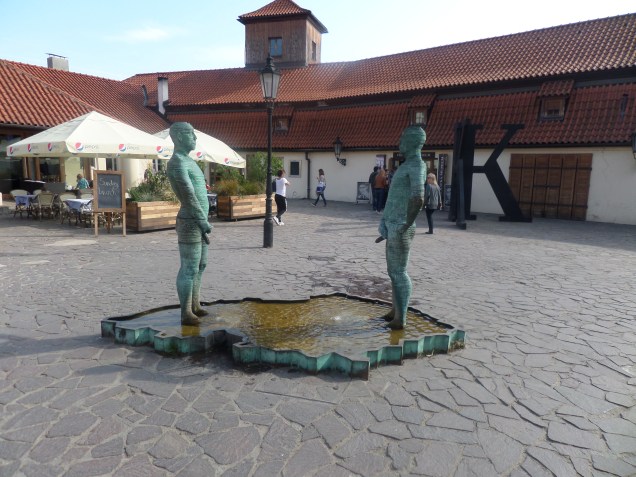
Statue outside the Kafka Museum, Prague

Hilarious statue outside the Kafka Museum, Prague

Next morning I was up early to get a bus to Berlin. This left at seven in the morning but I made it. It stopped at Dresden which is also a grim East German city that suffered terribly in the War. It made me realise how profoundly affected Europe was by the War, something I hadn’t really realised as a child growing up in Leicester which was relatively unaffected by bombing, although I did know about Coventry which was another beautiful city reduced to rubble! I went there as a child to visit the new Cathedral on a school trip.It was very memorable, especially the statue of Lady Godiva! What a terrible thing war is!
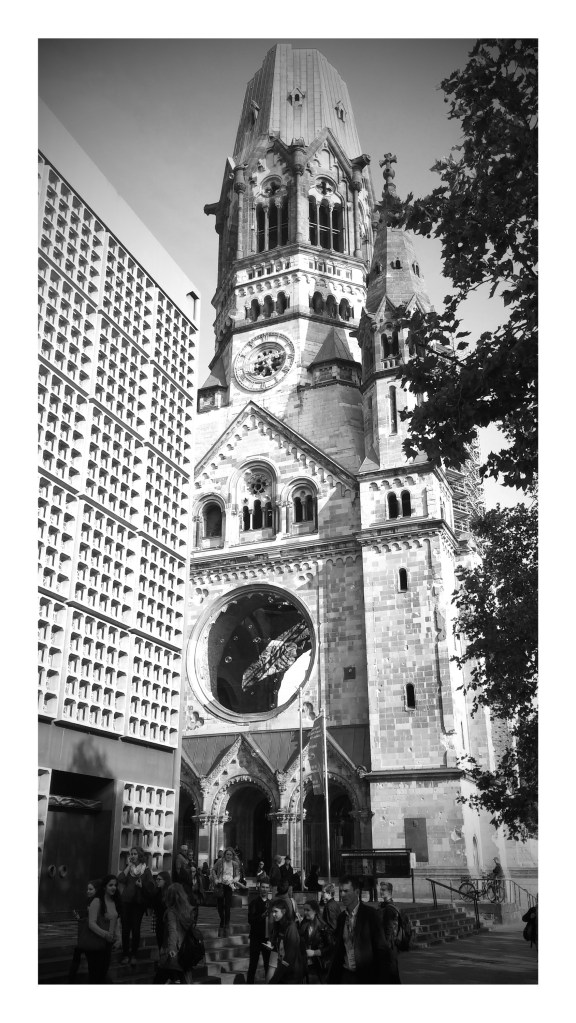
Kurferstendamm Berlin

Kurferstendamm Berlin

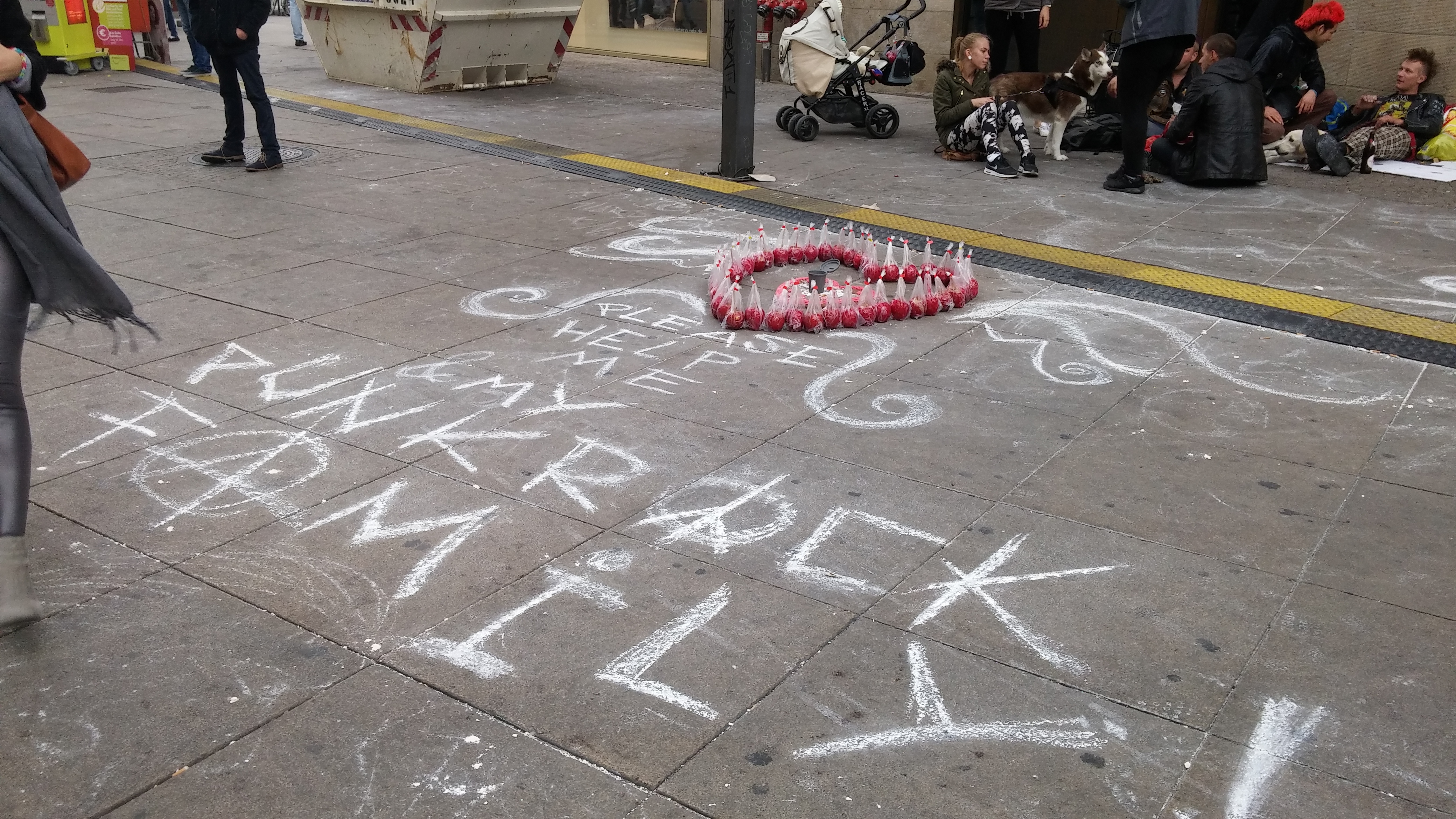
Alexanderplatz, Berlin. Full of strange, dislocated people.

Alexanderplatz, Berlin. Full of strange, dislocated people.

Berlin was my last stop and I only stayed there for a day before I went back overnight on the bus to Brussels. I went to a strange bar that night that had an open mic. It had a stream flowing down the bar! The barman didn’t think I was drinking enough beer. He was quite eccentric! It was mainly songwriters and the standard was really high. The atmosphere wasn’t as good as some of the places I’ve been to and I left early to make sure I got the metro back to the hotel before it shut down for the night.

Arcanao Bar Open Mic. Some really great singer/songwriters!

Arcanao Bar Open Mic, Berlin. Some really great singer/songwriters!

I had most of the day in Brussels before I got the train back to London so I decided to go to the Musical Instrument Museum and the Magritte Museum. Both were really interesting, especially the Magritte. I never realised a seminal surrealist could be so conventional and bourgeois! Still, I like his work!

Magritte Museum, Brussels

Magritte Museum, Brussels

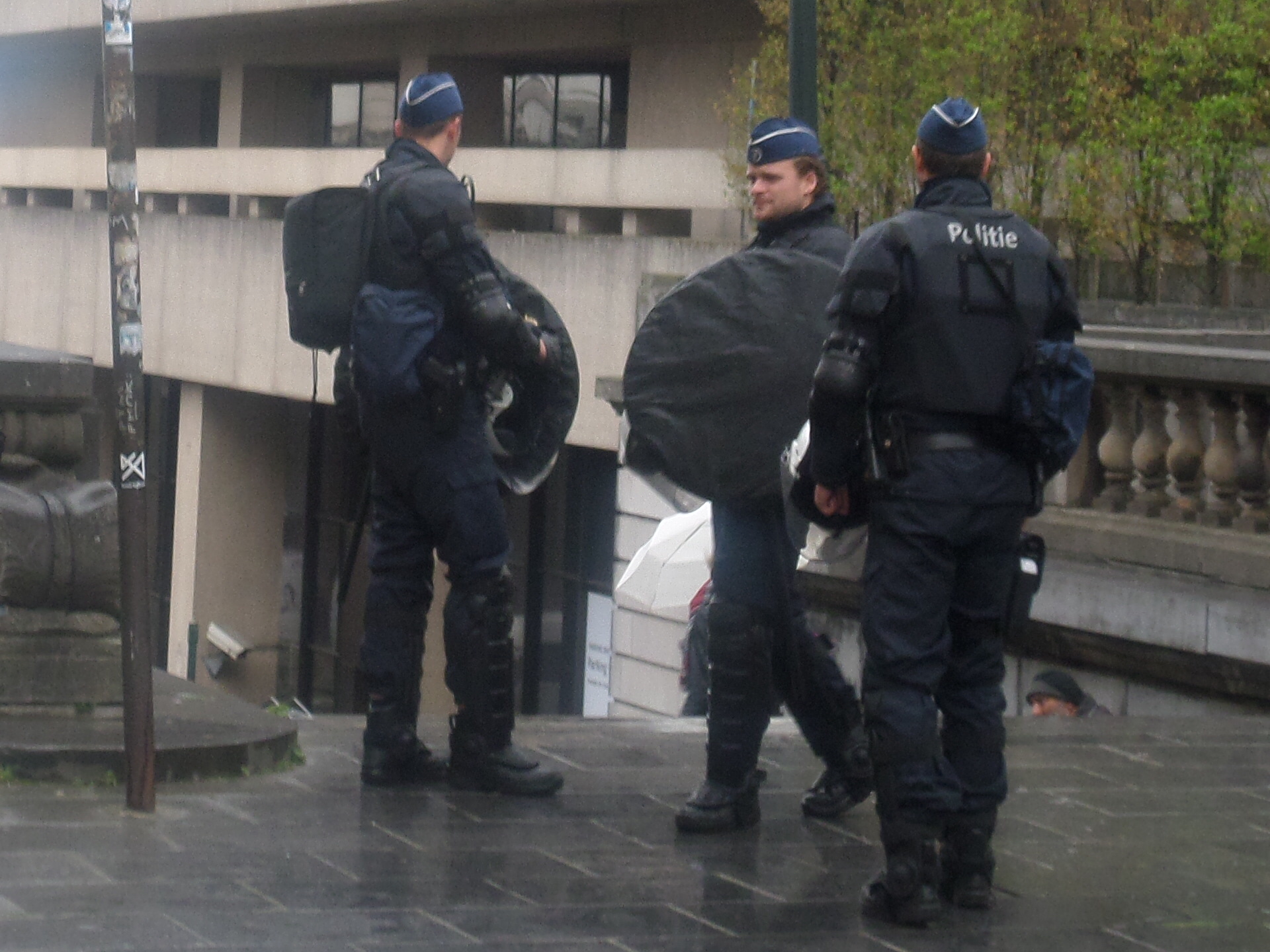
Outside, the riot squad are getting restless, they need somewhere to go..

Outside, the riot squad are getting restless, they need somewhere to go..

Got back to London at 7 p.m. Adventure over, but there’ll be another one soon!

My Thoughts on Bob Dylan and “Highway 61 Revisited”

Highway+61+Revisited+Bob+Dylan++Highway+61+Revisite

Next Sunday (27th September 2015) I am organising a night commemorating the 50th anniversary of the song “Like a Rolling Stone” and the album it is from “Highway 61 Revisited”, at the Musician Pub in Leicester. I’ve got a few days to go and I’m beginning to get a bit nervous now. Some of Leicester’s best are coming to perform their favourite tracks from the album and other songs from the other great mid 60s records, when Dylan decided to “plug in” (“Bringing It All Back Home” and “Blonde on Blonde”). 50 years is a long time but the songs and music have not lost their power. In fact, to my ears, they seem even more startling and profoundly modern. Not only have they stood the test of time but they are in the pantheon of great 20th Century Art along with T.S. Eliot’s “The Waste Land”, Jackson Pollock’s evocative splatterings and Charlie Parker’s mindbending improvisations. It had never been done before and it will never be done again. It stands alone!

Of the three great “electric” records “Highway 61 Revisited” is the pinnacle. It is the first Dylan album that he was part of a real band rather than a soloist with backing musicians. “Bringing It All Back Home” paved the way with some really exciting performances, especially “Subterranean Homesick Blues” and “Bob Dylan’s 115th Dream” but half of it was acoustic although the songs were like nothing heard before. Dylan had rejected political protest and replaced it with a kind of explosive, image laden, nihilistic stream of consciousness. Popular music had never experienced anything like it. “It’s Alright Ma (I’m Only Bleeding)” takes an Everly Brothers lick and creates a blast of vitriolic energy which is mindblowing: ” Old lady judges watch people in pairs, limited in sex they dare, to push fake morals insult and stare, while money doesn’t talk, it swears, obscenity who really cares, propaganda all is phony”. But, in this record he is still making sense. “Highway 61″ moves the song writing into a different realm. This is a world in which the songs seem to mean something but you can’t quite place what it is. ” Ballad of a Thin Man” epitomises this: “Something is happening but you don’t know what it is, do you Mr. Jones?”. A series of bizarre incidents follow involving sword swallowers, professors and geeks and how your imagination is being attacked! This is the ultimate statement of the Hip/Straight divide that was emerging in the growing counterculture of the 1960s. Most of the songs on “Highway 61” defy logic. They are absurdist and mysterious and yet seem to pertain to a deeper meaning that washes over us and draws us in. “They’re selling post cards of the hanging, they’re painting the passports brown, the beauty parlour is full of sailors, the circus is in town” and all through the song we learn that “Desolation Row” is either the place to be or the place you are prevented from going. “Right now I can’t read too good, don’t send me no more letters no, not unless you mail them from Desolation Row”.

Perhaps the ultimate Dylan song is “Like a Rolling Stone”. Bruce Springsteen described the beginning of this, the opening song on “Highway 61 Revisited”, as the “snare shot that sounded like somebody’d kicked open the door to your mind.” Folk singer Phil Ochs was even more rhapsodic about the LP: “It’s impossibly good… How can a human mind do this?” When I first heard this song I moved from being a fan of Pop Music to someone who wanted to play and write songs and that desire has never left me. That’s why I’m looking forward to the gig next Sunday and am also quite nervous about it. It is commemorating something that changed my life!!

Talks from the South Bank Centre, London “The Rest is Noise” Festival “Art of Fear” 11th and 12th May 2013

Image

“So Here I Am” a poem by Kenny Wilson

2013-06-02 16.44.05

so here I am in florence
connecting with the past
trying to find myself in a weird way
playing music in a strange land
full of cobwebs and fairies
that leap up at me and scare me
and wake me from my renaissance sleep

there is no past
only the present
where art screams from the river banks
and the railway lines
and I am lost again
my legs aching and my mind about to explode

i think I lost something here
and not my sanity
no
a weary contempt of the past
that did nothing but grind me down
and left me on the pavement
with nothing to think about
but oblivion and feelings of inadequacy

so here i am in florence