Interactive Maps for Jack Kerouac’s “On the Road” by Dennis Mansker

This is a re-post from Dennis Mansker’s web site. The original can be found here: http://www.dennismansker.com/ontheroad.htm

In 1957, two novels were published that were destined to have a profound effect on the future of the United States, and indeed, the world, effects that would long outlast the lives of their creators.
The first was Atlas Shrugged, by Ayn Rand, and those who read it and felt that is was “speaking directly to them” went on to become Republicans, vulture capitalists, the kind of self-absorbed greed mongers epitiomized by Gordon Gecko and empathy-eschewing rightwing politicians epitomized by Paul Ryan, who wants to get rid of Social Security.
The second was On the Road, by Jack Kerouac, and its fans became late-period Beats, transitional “Fringies”1, and ultimately evolved into Hippies and End-the-Vietnam-War protesters
We also became, by and large, those who didn’t burn out, liberals and Democrats.

The Trips:
On the Road is broken into five parts, but only the first four feature the extended road trips that the book is famous for. I’ve created interactive maps for each of the four road trips in the book.

  1. Map One — Summer 1947: New York to San Francisco by way of Denver, and back again.
  2. Map Two — Winter 1949: Rocky Mount NC to San Francisco by way of New Orleans
  3. Map Three — Spring 1949: Denver to New York by way of San Francisco
  4. Map Four — Spring 1950: New York to Mexico City by way of Denver

These are Google Maps and they are zoomable. Click on one of the placemarkers on the map to see a quotation from the book, zoom in it to see the location on the map. In many cases where the narrative wasn’t clear on a given place, I’ve had to approximate — apply a “best guess” solution to a given location.
There is also a link on each map to allow you to view a larger size on the Google Maps site.

The Cars:
The automobile and other forms of motor-driven transit figured prominently in On the Road, as it did in Post-WWII America. But no one who has read the book can forget three vehicles that figured prominently in the story. These are the only three vehicles that are identified by make and year in the whole book, and there was a reason for that: The cars themselves became sort of minor characters during the course of the adventures.

Dean Moriarty 1949 Hudson

1949 Hudson

In the second trip, starting actually at Xmas 1948, Dean Moriarty (Neal Cassidy) shows up at the house of the brother of Sal Paradise (Jack Kerouac) in “Testament, Virginia” (really Rocky Mount, NC) in a brand new 1949 Hudson. This is the car in which they blast off to New Orleans and the West Coast, January 1949.
Like all of Dean’s cars, this one really took a beating.

Dean Moriarty 1947 Cadillac

1947 Cadillac Limousine

In the third trip, Dean and Sal score a “driveaway” car at a travel agency in Denver, for delivery to a ritzy Lakeshore address in Chicago. Needless to say, the car is somewhat the worse for wear when it finally gets home.

Dean Moriarty 1937 Ford

1937 Ford Sedan

In the fourth trip, this is the rattletrap car that gets the boys to Mexico City. It also, offstage as it were, gets Dean back as far as Louisiana where it finally gives up the ghost.

1937 Art Deco Greyhound

1937 Greyhound Bus

It always comes a surprise to readers who first read On the Road to learn that Sal Paradise spent hardly any time hitchhiking. When he couldn’t boost a ride with Dean, in the cars listed above, he was comfortable in taking the bus. He logged many more miles on Greyhound buses than he ever did beating his shoe leather hitchhiking.
This is an example of the buses that, while they were ten years old or more at the time, were still rolling on American highways in the late 40s and early 50s.

The Links:

Note: These links to other websites are not — and could never be — all inclusive. Do your own search and stumble onto some terrific sites that deal with the phenomenon that was — and remains — On the Road and the Beat Generation.

Footnote 1: “Fringies” may have been just a Seattle or West Coast phenomenon. I dropped out of college in early 1964, which was at the start of the Fringie movement in Seattle’s University District, and I remember some great times hanging out, listening to folk music and drinking espresso coffee in the great Beat coffee houses that littered “The Ave”, such as The Pamir House and The Edge.
See Countercultural Seattle Remembers the Fringies for more information. Later of course we all became Hippies.


These maps are brought to you by Dennis Mansker, the author of A Bad Attitude: A Novel from the Vietnam War, as part of my general “presence on the Internet” page, which you can click on here if you want more information.

From the Observer archive, 24 May 1964: Mods v Rockers: Britain’s summer of discontent

I have discovered the digital archives of several publications and they contain fascinating contemporary reports of events and happenings in the past. More importantly, I can also access them.This is one about the Mods in 1964 and the leaders known as Faces. Incredible! I’ve found lots more like this and I feel quite excited by it all. Will post more as I collect them.

Observer journalist Peter Dunn hangs out at the Scene for a Mods’ eye view of the tribal war that led to the vicious battle of Margate in 1964.
Teenage mods

Teenage mods keeping up with the fashion.


The Mod and Rocker season will probably last in its present form until August Bank Holiday. It will feature renewed forays to the south coast and possibly to Southend. Last Monday’s fighting at Brighton and Margate, followed by skirmishes throughout the week in London, is then expected to enter its final phase. That, in any event, was the opinion of a Mod who stood outside the Scene, the rhythm and blues club off Great Windmill Street, early yesterday. It was raining and dark and he wore sunglasses.

He was a smallish boy who came from Liverpool to find work and had got a job loading crates in a London milk depot. The languid Merseyside tone underplayed the alternating exhilaration and disappointments of his life – the T-shirt he got by “chatting up a Yank”; the purple heart pills he could buy at 18s 6d for 20; the singlehanded fight he almost had in Paddington with three Rockers; and the battle of Margate. “We just charged up the beach. There were 800 of us and 100 Rockers. I didn’t see what was going on because I was at the back with my tart.”

Last week’s fighting in London isolated both factions even further from the public, which welcomed the hearty talk about “hooligans… rats… and miserable specimens” from the seaside magistrates’ bench. The heavy sentences handed down last week have led to some ominous threats of retaliation. “If anyone fined me £75,” a Mod said, “I’d go back and do some real damage; put a few windows through with a hammer.”

Mods and Rockers have co-existed comparatively well for a year or so – the Mods, neatly dressed and on scooters, the Rockers in studded leather jackets and on motorbikes. The Rockers may have jeered at the Mods’ fancier ways (sublimating sex, as one Mod’s father put it, to the problems of motorbike clutchplates) but they had been slowly copying the Mods’ form of dress. When, for example, the Mods’ high-heel boots went out of fashion, the Rockers started wearing them.

Mods are losing interest in their scooters but they do care about changing fashions and spend £4 or £5 a week to keep up to date. The latest trend is towards American crew-cuts, T-shirts with big letters, Y for Yale, H for Harvard.

Seventy-five per cent of the Scene’s members are reckoned to be middle class and can usually afford to follow the trends; the rest tend to say that fashion is no longer so important.

Four of the Mods outside the Scene at 2am yesterday – two still carrying their Margate war wounds – said they stayed out all night because they wanted to enjoy themselves while they still had time. One said: “My old lady raised hell the first few times. I’m not going home tonight. I might go in for a wash-up tomorrow but I’ll be out again all tomorrow night.”(Observer 24th May 1964)

Faces that lead the Mods

Malta in May 2013

March was one of the coldest on record and April wasn’t much better. I had some gigs in Florence, Italy at the end of May and was looking forward to that but in the meantime I was freezing in Leicester. Time to get some Sun. Found some cheap flights and even cheaper hotel on the island of Malta for the first two weeks in May and, yes, the weather was beautiful. Every day was mainly sunny with the occasional shower and the temperature was warm but not too hot. Still warm enough to sit out at night!  Superb! Only downside was that on the second day I had my pocket picked on a bus going to Valletta. It was all good after that though. Yes, Malta is a beautiful and historic island and will become part of my yearly schedule I think. Anything to get away from the cold!!

In Malta a lot of people live in a small space. It is the smallest country in the European Union and has the biggest density of population. It doesn’t feel claustrophobic though and most people live in the areas around the capital city Valletta. Valletta is a beautiful town which is a World Heritage Site. It was built by the Knights of St. John and is extremely well preserved and traffic free. A nice place to sit outside drinking coffee and watching the world go by. There is a magnificent cathedral there as well.

St. John's Co-Cathedral, Malta

St. John’s Co-Cathedral, Malta

Here you can see one of the most remarkable and famous paintings by Caravaggio “The Beheading of John the Baptist“.

You need to get here early as it closes at 3.30 p.m. and 12.30 p.m. on Saturdays. You can’t visit at all on Sundays or public holidays but you can attend services on those days. Their web site is here:  St John’s Co-Cathedral, Malta

The Beheading of John the Baptist by Caravaggio.

The Beheading of John the Baptist by Caravaggio.

Apart from this blast of culture we spent most of the time driving round the island and visiting  Gozo, a tiny island you can go to free on the ferry. Mind you, you have to pay to get back!  Mdina is very interesting and old and was the original capital city. There are lots of great beaches and some unique neolithic monuments. There are some amazing sights and the restaurants and bars are generally good. Here are some pictures I took of the trip. They are from all over the island:

This slideshow requires JavaScript.

The great Chinua Achebe was the man who gave Africa a voice | Ellah Wakatama Allfrey

The great Chinua Achebe was the man who gave Africa a voice | Ellah Wakatama Allfrey

Chinua_Achebe

Chinua Achebe

http://gu.com/p/3ek8f

Nottingham Contemporary

A strange thing happened to me on Thursday. On a complete whim I decided to take a train to Nottingham. I had a bit of a walk round and then went to Caffe Nero for a cappuccino. So far so boring. Then I decided to visit a gallery. I’ve never been to Nottingham Contemporary before so I decided to give it a try.

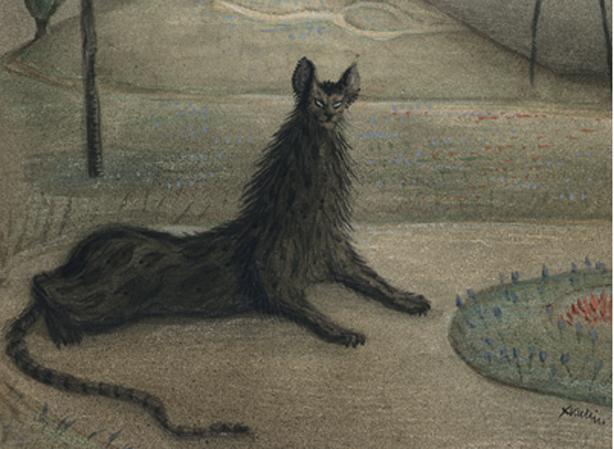
There were two exhibitions on. One was an exhibition of drawings by Alfred Kubin, an Austrian artist and writer who I have never heard of before. He is described as a late Symbolist and all the drawings were made as a young man in the late 19th/early 20th centuries. They are incredibly powerful and predate but are similar to later Surrealist works. This is what the programme notes say:

“Haunting drawings of death, trauma and fantastical creatures inhabiting imaginary worlds sprung from Alfred Kubin’s pen at the beginning of the 20th century. His work, executed in a delicate, atmospheric ink wash technique, anticipated some of the horrors of the First World War, and the following decades, at a time when Europe’s empires were toppling. His exquisite, yet nightmarish black and white drawings came from his own imagination, or from illustrating works by writers like Fyodor Dostoyevsky and Edgar Allan Poe.” I would definitely recommend visiting this exhibition.

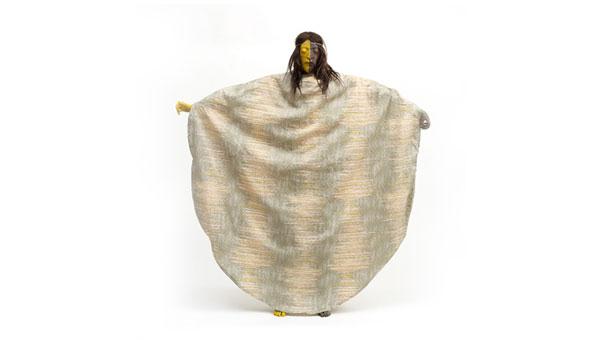
The other exhibition was of Francis Upritchard who is a New Zealand artist. At first I couldn’t quite see what her sculptures were aiming at. The more I looked at them though the more it became apparent, helped by the exhibition notes! Again, they are very impressive and quite haunting. I was most impressed by the “Hippies and Holy Fools” section. There seems to be a weariness and almost hopeless feel to them as though it is the last clinging to  a lost ideal. This is what the notes say about it:

“Francis Upritchard’s psychedelically coloured human figures “live” on islands of ornate furniture. There is a festival feeling to their gatherings, emphasised by Upritchard’s acid-bright colours, hand-woven blankets and tie-dyed silks. Upritchard has said “all the things that hippies hoped would happen, or felt might happen, didn’t.” In one sense her exhibition is about the failure of the 1960s and 70s counter-culture that is still celebrated at festivals – and its gaudy, individualistic “alternative” aftermath.”

What really struck me about this exhibition is how close it was to what I’ve been thinking about my own past as I write about it in “My Life In Music” and also what a coincidence it was that I had discovered the exhibition by chance. I’d only just finished writing about how the year of the Woodstock festival had seemed like the end of an era to me. I haven’t referred to any other sources other than my own memories and here I was confronted by my own feelings. Even more astonishing was a talk by James Riley that I saw in the study area of the gallery. In this he speaks about ” the symbolic status of 1969 as a terminal point at which the decade’s earlier optimism gives way to death, violence and ‘bad craziness’.” Almost exactly what I’d been thinking and writing. I came away feeling quite strange and determined to follow up some of the leads he discusses and to continue my own work. It’s taking on an importance I never really intended!