Lichtenstein A Retrospective at Tate Modern

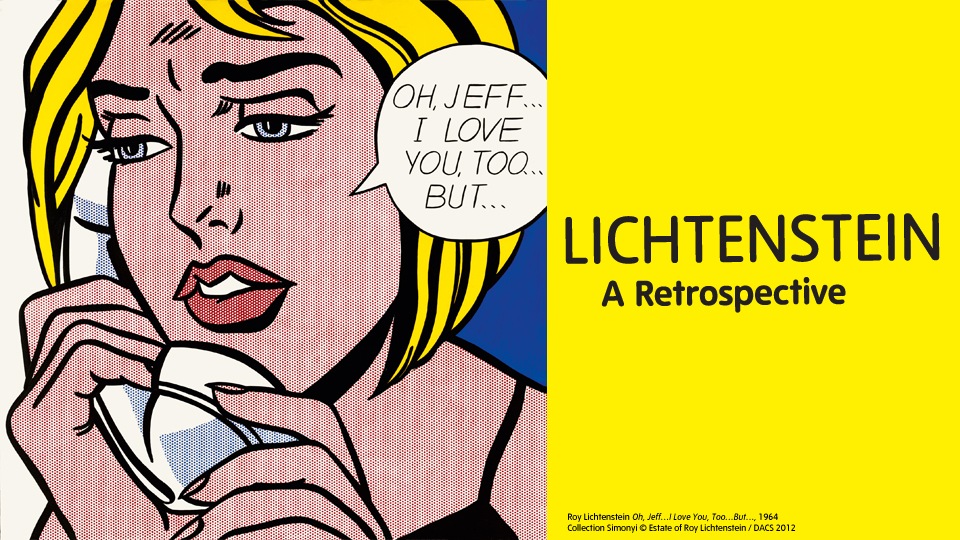
lichtenstein_web-banner

I visited this exhibition last week and was very impressed. The paintings are incredibly familiar ( at least, the 60s pop art pictures) but to see them full size in a gallery is a monumental experience. They are huge. This is what gives them their power.

Lichtenstein has been accused of being shallow and only concerned with surface but there is a suprising depth in much of the work in this exhibition. The Late Nudes and Chinese Landscapes are particularly affecting. The landscapes enhance and yet subvert the Japanese originals by their sheer size  but the use of dots is incredibly subtle and project a calm atmosphere.

This is what the program notes say about the nudes:

Unlike many artists, Lichtenstein did not use live models for his depictions of the female body; instead he returned to his archive of comic clippings to select female characters as subjects – and then literally undressed them, by imagining their bare bodies under their clothes before painting them as nude.

The paintings Nudes with Beach Ball 1994 and Blue Nude 1995 are examples of his late approach to the nude, brought together at a huge scale in original compositions of single, double and group portraits. The result is a disturbing violation of conventions. The noble nude has been rendered as erotic graphic pulp; the paintings propose her large schematic bland body as an object of desire, yet she experiences desire as well, often captured in a state of reverie or bliss. Like Picasso and Matisse before him, Lichtenstein’s fascination with the painter/model relationship reaches a new level of intimacy and sensuality, meshed with the formal concerns of his painting.

Blue Nude

Blue Nude

Henri Matisse, Blue Nude II, 1952, gouache déc...

Henri Matisse, Blue Nude II, 1952, gouache découpée, Pompidou Centre, Paris (Photo credit: Wikipedia)

His reimagining of works by other artists also display a greater depth than some people might have thought. He covers many different periods and brings more than just parody to the work. In fact, he shows just  how effective the use of lines and dots can be.

Still, my favourite of his is his first pop art picture “Look Mickey” to prove to his son he could paint pictures as good as in the comics. Now that is real genius! The rest, as we know, is history!

a000014d

Otto Gross — A Charming Anarchist

A rather good article about Otto Gross!

Eric Koch's avatarSketches

Otto Gross: minor character in David Cronenberg’s New Film, A Dangerous Method – major character in Eric Koch’s 2008 novel, Premonitions.

If you have seen the film, you will remember Otto Gross, a handsome character, played by Vincent Cassel, who gave the advice never to repress any sexual urges.

In Eric Koch’s novel – written without any reference to Jung’s love affair with Sabina Spielrein – he gives the same advice. Freud first welcomed him as an unusually gifted disciple, then rejected him because Gross turned out to be too radical for him, and too unethical.

Here are some extracts from the introduction:

“He was the nearest approach to the romantic idea of genius I have ever met, and he also illustrated the supposed resemblance of genius to madness.” Ernest Jones, Free Association, Memoirs of a Psychoanalyst, page 173.

“He is a man known to very few by name…

View original post 1,407 more words

Infinity Blue a poem/song by Kenny Wilson!

This is a poem/song I wrote in 2005. It was inspired by the name and the view of a restaurant on the island of Skiathos in Greece. I was trying to connect with the space between consciousness and sleep, that space when thoughts drift without any idea of rationality, when words just connect with each other and everything makes sense! I composed a backing that I recently rediscovered and will record it again!

4b14f66d-7634-4d8b-82af-3831ef4edbec

The first time that I saw you
I was dressed in black.
The last time that I saw you
You said you won’t be back.

Oh Infinity Blue

There were times
When I thought I could be with you
To be a real lover
And always be true.

Oh Infinity Blue

The angels came down once
And they spoke to me.
They gave me a message
That would set me free.

Oh Infinity Blue

The sun it was setting
It set in the east.
And somewhere inside me
It unleashed the beast.

Oh Infinity Blue

I walked through the centre line
Of what’s right and wrong.
And I tried to find freedom
In the words of a song!

Oh Infinity Blue

The words they controlled me
They forced me to stand.
When I was lost at sea
They showed me the land.

Oh Infinity Blue

And as I was waiting
For wisdom to come.
The words came and showed me
The warmth of the Sun.

Oh Infinity Blue

Between what is lost
And what cannot be
The words are like diamonds,
The words set you free.

Oh Infinity Blue

I was looking for mercy
I was looking for love
The words they came to me
Like a snowy white dove.

Oh Infinity Blue

I looked in your eyes
And I found mystery
And love, peace and mercy
Was our destiny!

Oh Infinity Blue

img_9754

Poem: The City Was a Golden Sea by Kenny Wilson

The city was a golden sea
Where angels played with destiny
The clouds were bouncing snowy white
And disappeared into the night
I came upon a diamond orb
That glowed satanic ghostly white
What has become of all these things?
“The City changed” the angels sing

The city was a golden sea
Where people learned what they must be
The stars were like daggers in the sky
That stuck like needles in my eye
Is this the meaning of the word
That linked the real to what’s absurd?

The city was a golden sea
It changed my life it made me free
I chose to wander aimlessly
Amongst the ancient symmetry
And there I found the meaning of the word
That linked the real to the absurd

Richard Hamilton Late Works at the National Gallery

I had a lovely time visiting London this week. Like New York it is a place that makes me feel good just by being there, walking around! This time I went to The National Gallery to see the Richard Hamilton exhibition before it closed.

ecard-RH-with-text-revised2

Richard Hamilton is one of the first artists to describe what he was doing as Pop Art a long time before Andy Warhol started using the term. His iconic picture from  1957 is called “Just what is it that makes today’s homes so different, so appealing?

Just what is it that makes todays homes so different so appealing

Just what is it that makes today’s homes so different, so appealing? Notice the word Pop on the lollipop.

Here is his potential manifesto for Pop Art written in January 1957:

“16th January 1957

Dear Peter and Alison,

I have been thinking about our conversation of the other evening and thought that it might be a good idea to get something on paper, as much to sort it out for myself as to put a point of view to you.

There have been a number of manifestations in the post-war years in London which I would select as important and which have a bearing on what I take to be an objective:

Parallel of Life and Art
(investigation into an imagery of general value)

Man, Machine and Motion
(investigation into a particular technological imagery)
Reyner Banham’s research on automobile styling
Ad image research (Paolozzi, Smithson, McHale)
Independent Group discussion on Pop Art – Fine Art relationship
House of the Future
(conversion of Pop Art attitudes in industrial design to scale of domestic architecture)

This is Tomorrow
Group 2 presentation of Pop Art and perception material attempted impersonal treatment. Group 6 presentation of human needs in terms of a strong personal idiom.

Looking at this list is is clear that the Pop Art/Technology background emerges as the important feature.

The disadvantage (as well as the great virtue) of the TIT show was its incoherence and obscurity of language.

My view is that another show should be as highly disciplined and unified in conception as this one was chaotic. Is it possible that the participants could relinquish their existing personal solutions and try to bring about some new formal conception complying with a strict, mutually agreed programme?

Suppose we were to start with the objective of providing a unique solution to the specific requirement of a domestic environment e.g. some kind of shelter, some kind of equipment, some kind of art. This solution could then be formulated and rated on the basis of compliance with a table of characteristics of Pop Art.

Pop Art is:
Popular (designed for a mass audience)
Transient (short-term solution)
Expendable (easily-forgotten)
Low cost
Mass produced
Young (aimed at youth)
Witty
Sexy
Gimmicky
Glamorous
Big Business

This is just a beginning. Perhaps the first part of our task is the analysis of Pop Art and the production of a table. I find I am not yet sure about the “sincerity” of Pop Art. It is not a characteristic of all but it is of some – at least, a pseudo-sincerity is. Maybe we have to subdivide Pop Art into its various categories and decide into which category each of the subdivisions of our project fits. What do you think?

Yours,

(The letter was unanswered but I used the suggestion made in it as the theoretical basis for a painting called Hommage á Chrylsler Corp., the first product of a slowly contrived programme. R.H.)”(Collected Words 1953-1982)

The exhibition for the Late Works was in preparation before Hamilton died on 13th September 2011. It seems odd to have such contemporary images in the conservative National Gallery but it is based on his studies of works that are in there. There is a particular interest in Renaissance perspective. There are also allusions to work by his hero Marcel Duchamp.

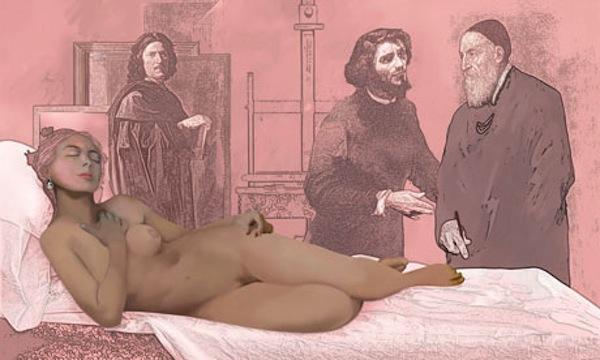
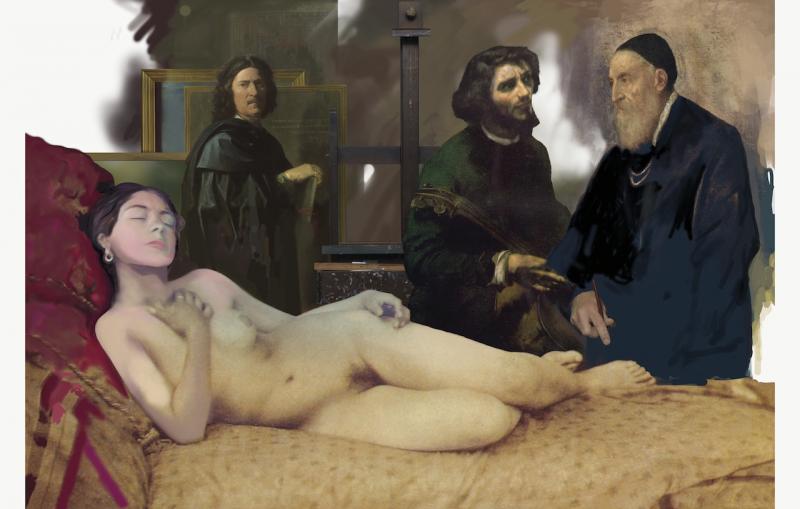
I found the exhibition very interesting although I know some others were disappointed. I am most impressed that right into old age Hamilton was still experimenting and using computers and Photoshop to create his images. I was particularly impressed by the culmination of the exhibition Le chef-d’oeuvre inconnu in which three great painters contemplate a reclining nude. This is very evocative and emotional.

3420

Le chef-d’oeuvre inconnu

Richard Hamilton_Venus

Le chef-d’oeuvre inconnu

An evocation of Marcel Duchamp

An evocation of Marcel Duchamp

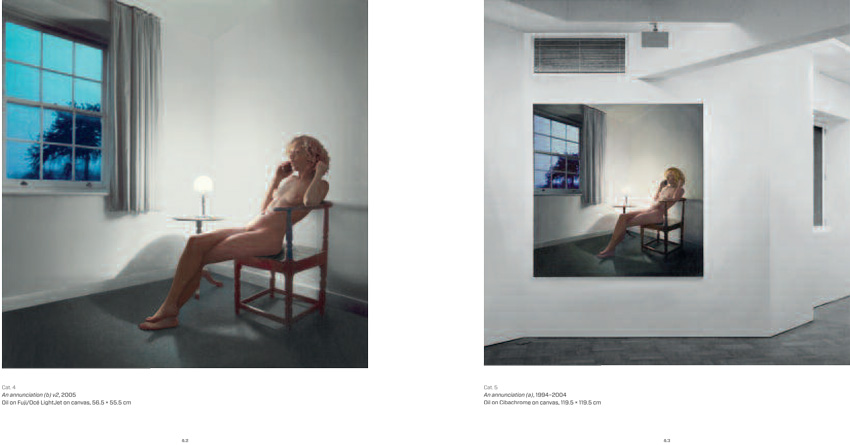
An annunciation

An annunciation

The Passage of the Angel to the Virgin, 2007

The Passage of the Angel to the Virgin, 2007

Yes, I am very impressed by these pictures and would recommend this exhibition if it moves somewhere else although I think it was particularly curated for the National Gallery with it’s many references to pictures in it’s collection and the building itself.

August Sander at Leicester Museum and Art Gallery

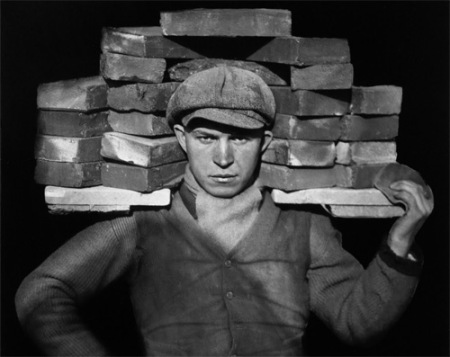
Bricklayer by August Sander

If you haven’t been recently you really should go to Leicester museum and Art Gallery on New Walk. It has recently been refurbished (not quite finished yet) and looks great. Currently there is an exhibition of photographs by August Sander that is really worth a look. I realise that in my wanderings I have come across exhibitions with the subtitle Artist Rooms. I have discovered that this refers to art dealer Anthony D’Offay who donated most of his art collection to the nation in 2008.

” In 2008 Anthony donated hundreds of his own works, including many Warhols, to the nation. This collection is known as ARTIST ROOMS and is managed by Tate and the National Galleries of Scotland. Artworks from it are lent to national and regional museums and galleries with the opportunity of receiving funding to attract young audiences. This was an incredibly generous thing to do and really makes d’Offay one of the ‘good guys’.” (From the Sheffield Art Gallery web site).

Both the Warhol exhibitions in Sheffield and Hull are part of this and so is the exhibition in Leicester of August Sander.

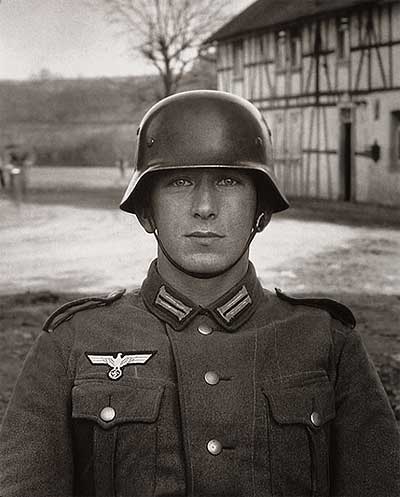
Soldier by August Sander

This is what the programme says of his work:

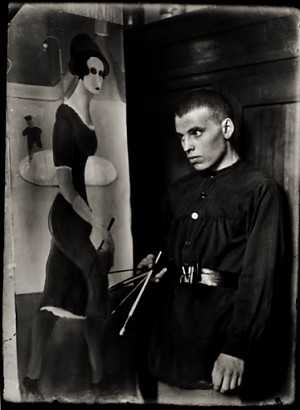
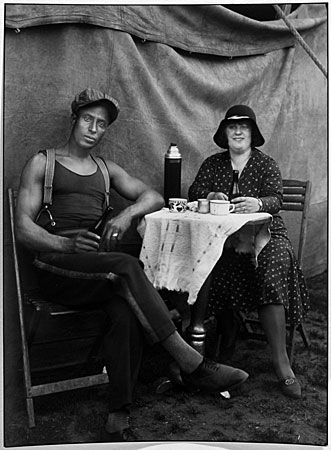
“The exhibition of German photographer August Sander (1876-1964) draws together 175 photographs and a wide range of archival material from the collections of Tate, National Galleries of Scotland, Anthony d’Offay and Gerd Sander.

This presentation creates a unique opportunity to see the different facets of August Sander’s photographic practice, including his celebrated portraits alongside less well known aspects of his work.

August Sander’s most significant project was ‘The People of the Twentieth Century’. Sander wanted to create an encyclopaedic survey of different types of people from the first half of the twentieth century. His working life in Germany spanned the First World War, the interwar years, the rise of the Nazi party, the Second World War and its aftermath.

The Artist

His photographs are unflinching documents of a society going through huge change. The work reflects both the catastrophic political convulsions that Germany was enduring and a society slowly coming to terms with the impact of industrialisation. The clarity and breadth of his vision remains powerful and his vocational portraits still resonate today.”

It is a fascinating exhibition with incredibly sharp black and white pictures. He attempts to photograph all types of people in his native Germany but it inevitably becomes much darker as the Nazis take power and the build up to World War 2. By this time the sections include The Soldier, The Victims and The National Socialist!

Victim Of Persecution

Here is a short biography of him:

August Sander (17 November 1876 – 20 April 1964) was a German portrait and documentary photographer. Sander’s first book Face of our Time (German title: Antlitz der Zeit) was published in 1929. Sander has been described as “the most important German portrait photographer of the early twentieth century.”
Sander was born in Herdorf, the son of a carpenter working in the mining industry. While working at a local mine, Sander first learned about photography by assisting a photographer who was working for a mining company. With financial support from his uncle, he bought photographic equipment and set up his own darkroom.
He spent his military service (1897–99) as a photographer’s assistant and the next years wandering across Germany. In 1901, he started working for a photo studio in Linz, Austria, eventually becoming a partner (1902), and then its sole proprietor (1904). He left Linz at the end of 1909 and set up a new studio in Cologne.
In the early 1920s, Sander joined the “Group of Progressive Artists” in Cologne and began plans to document contemporary society in a portrait series. In 1927, Sander and writer de:Ludwig Mathar travelled through Sardinia for three months, where he took around 500 photographs. However, a planned book detailing his travels was not completed.
Sander’s Face of our Time was published in 1929. It contains a selection of 60 portraits from his series People of the 20th Century. Under the Nazi regime, his work and personal life were greatly constrained. His son Erich, who was a member of the left wing Socialist Workers’ Party (SAP), was arrested in 1934 and sentenced to 10 years in prison, where he died in 1944, shortly before the end of his sentence. Sander’s book Face of our Time was seized in 1936 and the photographic plates destroyed. Around 1942, during World War II, he left Cologne and moved to a rural area, allowing him to save most of his negatives. His studio was destroyed in a 1944 bombing raid.
Sander died in Cologne. His work includes landscape, nature, architecture, and street photography, but he is best known for his portraits, as exemplified by his series People of the 20th Century. In this series, he aims to show a cross-section of society during the Weimar Republic. The series is divided into seven sections: The Farmer, The Skilled Tradesman, Woman, Classes and Professions, The Artists, The City, and The Last People (homeless persons, veterans, etc.). By 1945, Sander’s archive included over 40,000 images.
In 2002, the August Sander Archiv and scholar Susanne Lange published a seven-volume collection comprising some 650 of Sander’s photographs (August Sander: People of the 20th Century, Harry N. Abrams).”

Circus Workers

SS Captain


Day Trip to Hull

I woke up early this morning and decided to go somewhere. But where? Well, there are many places I have never been to that I want to see. Not all of them are pretty or picturesque but there is always something worth seeing and interesting people to meet. So, I decided on Hull. It’s not a place with the best reputation and it’s not the sort of place you pass through. You have to make a deliberate decision to go there. So, here I am on a train headed for Sheffield, then to Doncaster, then to Hull. Total travelling time three hours but you couldn’t drive it any quicker. I’m quite excited really. What will I find when I get there? Many interesting things no doubt. It will also be nice to be by the sea although I won’t be doing any sunbathing today, or any bathing for that matter!

image

Humber Bridge

Travelled on a tiny two coach train from Doncaster to Hull that stopped at every station. Had a good view of the Humber bridge which is pretty amazing. The Hull station is very nice with a statue of poet Philip Larkin who lived in Hull for thirty years. He’s the one who came out with the famous line about sex being invented in 1963 between the trial of Lady Chatterley and the Beatles first LP. Good stuff. Initial impression of Hull is quite good. It’s got a nice feel about it and the people are friendly with a great accent. Now to find the interesting bits.

image

Philip Larkin at Hull station

Hull is bigger than I expected and there are many grand civic buildings attesting to it’s obvious great wealth in the past as a major port. It is also colder than Leicester presumably because of it’s proximity to the sea. Actually, it’s not as near the sea as I thought. The main tributaries are the mighty Humber River and the River Hull where the main docks were. There are some nice anomalies like the cream telephone boxes . Very strange after a lifetime of seeing red boxes (although I know many are just glass now!) There are also some really nice Victorian shopping arcades with delightful specialty shops.
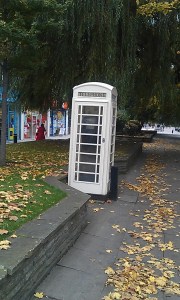
Cream telephone boxes!

Lovely shopping arcades!

Of course, my first stop was Caffe Nero where I had a nice cappuccino. Then I walked into the centre of town where there are many museums and galleries. I was amazed to find a major Andy Warhol exhibition at the Ferens Art Gallery. This was totally unexpected. I hadn’t done any research before I came so to find this was quite strange. Warhol seems to be everywhere! I’m beginning to think that rather than being famous, in the future everyone will be Andy Warhol for 15 minutes. This exhibition is huge. There is a room full of later paintings, a room with stitched pictures and a room full of posters for the many events and films he was involved with.
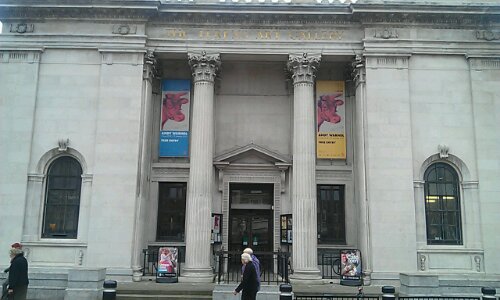
image

Ferens Art Gallery

I’d never come aross the stitched pictures before. There are his trade mark multiple representations of the same picture but not like his silk screen prints. They are exactly the same picture but sewn together with thread, with bits of cotton dangling down which show exactly how they are done. Venus In A Shell alludes to Boticcelli but is set in the garden of a 60s Las Vegas house. Very intriguing. One of the remarkable things about the early screen printed multiple images is the way they change across the canvas because of the random way the technique works. They are all the same, but different. Like the images of Elvis that gradually fade away. There are no changes in the photographs. The only changes are caused by the dangling thread.

Venus in a Shell by Andy Warhol
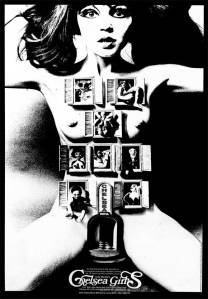
Poster for Chelsea Girls

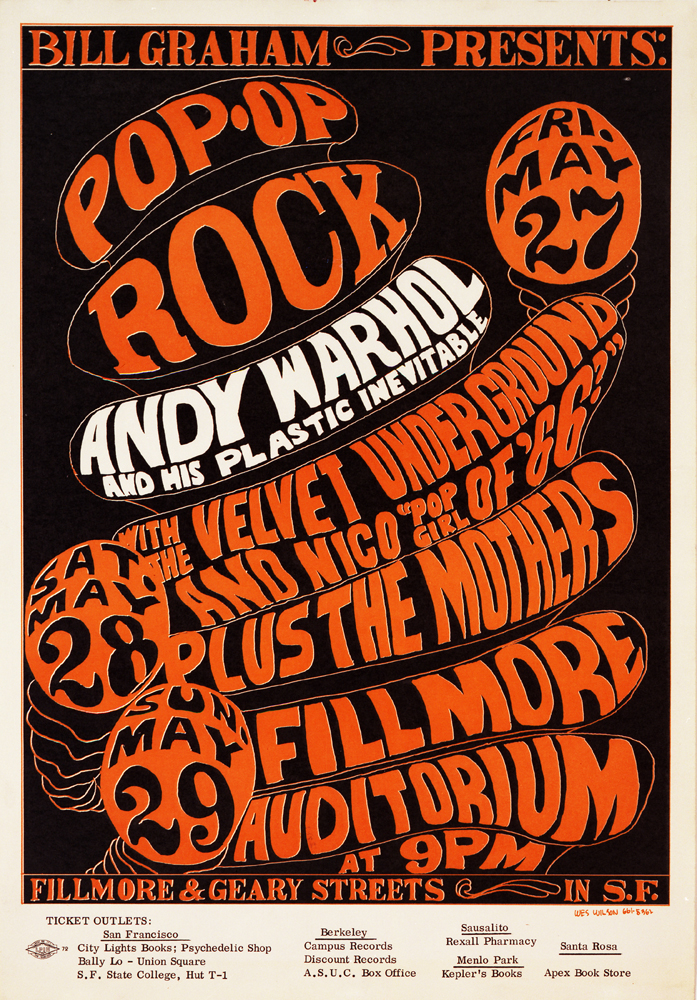
The room full of posters is very interesting and evocative. There is the iconic poster for the film Chelsea Girls and many of the other films he made. There are also some great ones of live performances like The Exploding Plastic Inevitable (although I see it’s called Andy Warhol and his Plastic Inevitable on the poster) which advertises a residency at the Filmore West on the same weekend as my birthday a year before the first Velvet Undergound album was released. What great joys I encounter!

Poster for The Exploding Plastic Inevitable. I like the bit that says Nico “Pop Girl of 66”! Doesn’t quite fit the ominous ballads she comes out with!

The room with the large later paintings sees Warhol returning to his earlier themes. There are soup cans, Brillo boxes and multiple screen prints. The one that attracted me most, although I’m not sure why, is the huge canvas called Repent And Sin No More. This is a typical evangelical statement that doesn’t quite seem to make sense. There is an element of contradiction and irony in it. Warhol would no doubt insist that it has no meaning beneath the surface.

image

Repent and and sin no more

The permanent displays in the gallery are very good. Some really nice Renaissance pictures.
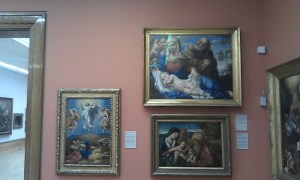
Ferens Gallery. Renaissance section.

More Renaissance!

Of interest in the gallery are pictures by two women artists from the 19th Century, Rosa Bonheur and Emma Sandys. It is one of the few galleries I have visited recently that have work by women. Rosa Bonheur’s painting is on a large scale and is quite striking.

Rosa Bonheur Lions at Home 1881

Emma Sandys The Beautiful Wallflower

Well, time for lunch before I go on to see the Transport Museum and Wilberforce House. Went to Wetherspoons and actually did have a curry this time which was pretty good. Not bad to have a drink and a meal for just over £6!

The Transport Museum was fun with interactive displays and film shows. A great place to take the kids. There is a good display of early cars including electrical powered ones from the 19th century. It seems strange because electric cars seem like a new idea. There is also a tram and various buses and reconstructed streets and shops. Great fun and quite nostalgic.
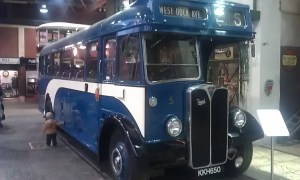
Bus in Transport Museum with the tram behind it.

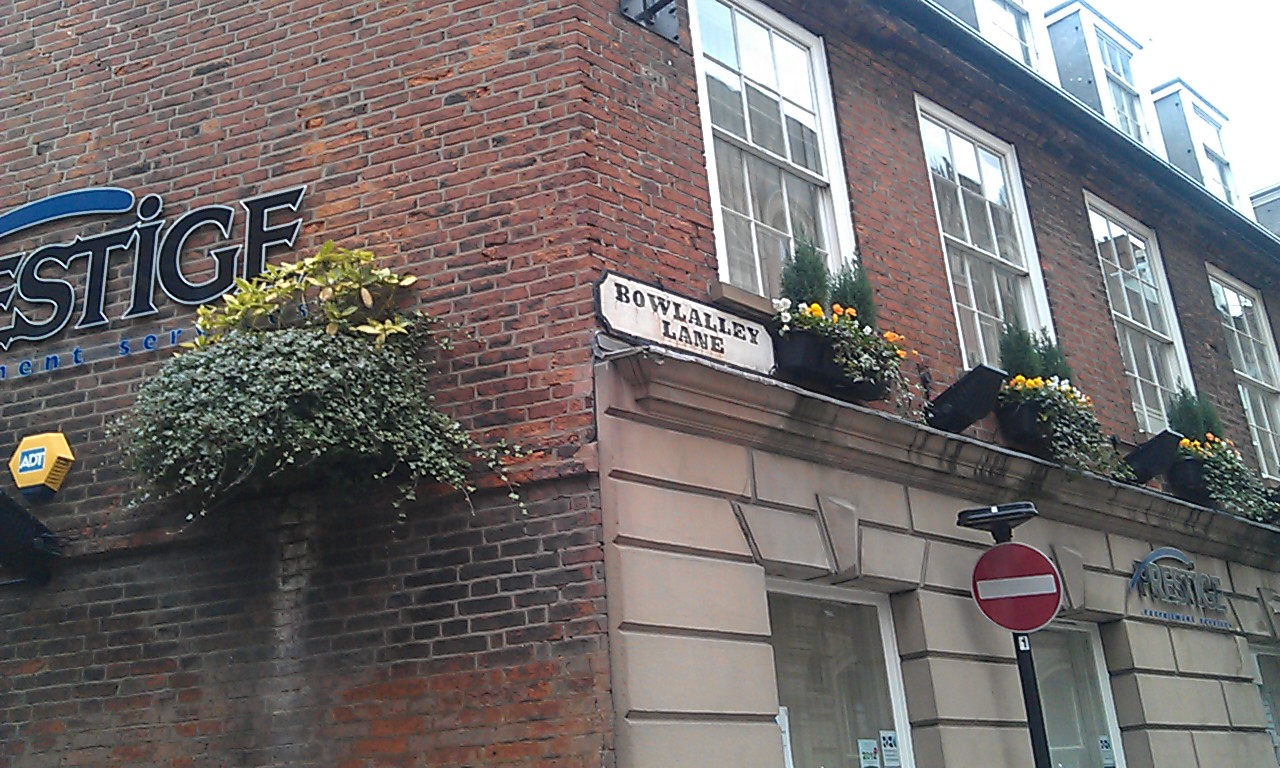
Actually, the bus looks like something out of Harry Potter and as I walk around the old town the street names seem to be out of Harry Potter too. You can’t help but like a place that has a road called Land of Green Ginger or Bowlalley Lane.

Land of Green Ginger
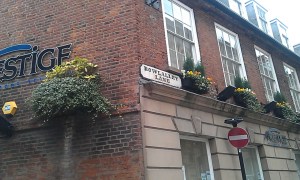
Bowlalley Lane

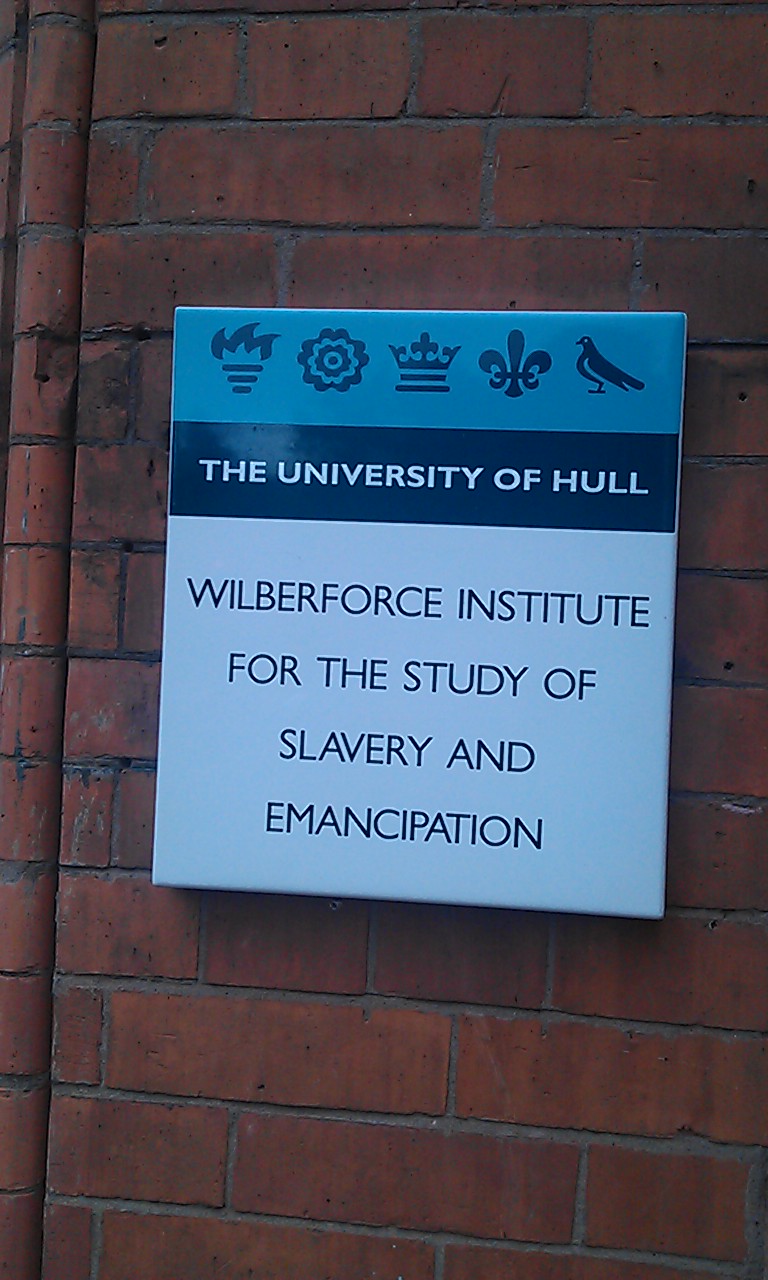
Yes, Hull is a nice place. The last place I visit is Wilberforce House. William Wilberforce was one of the most prominent slavery abolitionists in the 18th/19th Centuries. It took him years to get an anti-slavery bill through Parliament but eventually succeeded and deserves great credit for this. It seems incredible that the slave trade lasted as long as it did and makes a mockery of the idea of Free Trade. There is a hard hitting exhibition about the history and background of slavery in the museum that, quite frankly, left me in tears. It is astonishing that supposedly civilised people could have allowed it to continue for so long. As a crime against humanity it is as great as the holocaust and lasted much longer. Almost contradictorily, Wilberforce didn’t seem to share the same concerns about working conditions in England at the time. In a period when William Blake referred to Dark Satanic Mills and the exploitation of children was rife Wilberforce was a signatory to an act that outlawed trades unions. Of course, this doesn’t lessen the importance of what he did but it does raise other questions. Namely, WHY? It could be said that wage slavery is not much different to actual slavery. Still, it is an important and sobering exhibition.
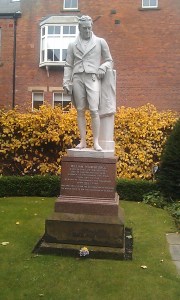
Statue of William Wilberforce

Department at Hull University concerning slavery.

A Week in Florence

image

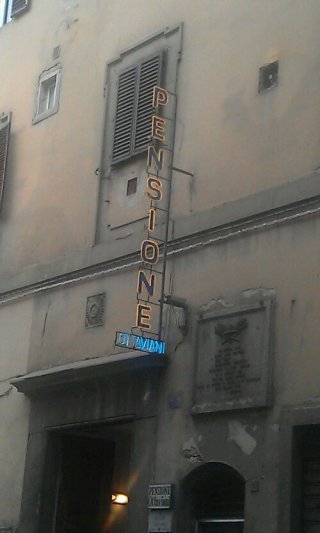
Pensione Ottaviani where we were staying. Excellent and friendly small hotel in the heart of the city.

Here we are. First day on a trip to Florence staying at a delightful little hotel called Pensione Ottaviani right in the heart of the city. The beautiful church of Santa Maria Novella is just across the road and the Duomo is a short walk away. The weather is good but not too hot. Perfect weather for sightseeing. The only problem is deciding where to go first. It’s Sunday so there may be problems visiting churches unless we attend mass. No, I think maybe the best thing is to visit the Piazza del Duomo and then to the Ponte Vecchio and across the river to the Boboli gardens and the Palazzo Pitti. Yes, that’s a good idea.

image

Palazzo Pitti. Grim palace that looks a bit like a prison. Home of the Medicis at one time. The Boboli Gardens behind are very nice.

The Palazzo Pitti is a pretty grim looking place that was the residence of one of the wealthy dukes that dominated Florence. It looks a bit like a prison from the outside and there are no benches or chairs to sit on in the square in front. They obviously still want the peasants to suffer! The Boboli Gardens in the rear are very pleasant and afford a very good walk if you can afford it. The reason for going inside is to view one of the best exhibitions of Renaissance art there is with works by Raphael and Titian and many others. They are hung in the way they would have been presented originally and so give a different perspective to the paintings than in a normal gallery. There are some excellent pictures in there but also quite a few that I would consider mediocre. In some ways I found it quite a depressing litany of images of the rich and powerful who don’t really deserve to be remembered. They stare blankly from the walls and you feel they are trapped forever in their own conceit. The whole experience is like a homage to a vacant and meaningless materialism. The religious pictures sit uneasily with the portraits. Why did they want pictures of the dieing Christ on their walls? The sheer scale of the opulence of the palace scream out against any kind of humility or charity. This is a truly bizarre experience and one that is quite tiring because there are so few chairs and benches inside as well. Time for a nice cappuccino I think.

image

Florence, place of great cappuccinos!! Or should that be cappuccini!

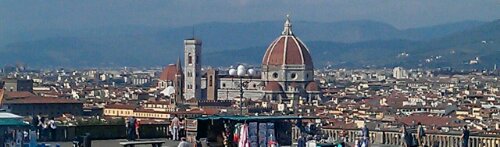
OK, time to move on. The Duomo is a truly astonishing place. It’s size is immense. Apparently, it took over a hundred years and the genius of Bruneleschi to work out how to put a roof on it without it falling down. It represents an amazing ambition to create something that had never been done before. This cathedral dominates the city of Florence and is clearly visible from all the vantage points in the surrounding hills.

Another view of the Cathedral and the Campanile. Astonishing buildings and so big!

Florence is a lovely city and is very self contained. The people are also very friendly even though it is packed with tourists, even in October. It is easy to walk to all the main attractions and the restaurants are also good. It’s a bit on the expensive side but I suppose that’s to be expected. Next stop is Ponte Vecchio which is truly remarkable lined mainly with jewelry shops.

Ponte Vecchio

The first big exhibition we went to was at the Palazzo Strozzi called “The Thirties. The Arts in Italy Beyond Fascism”. This was a fascinating exhibition that demonstrated the variety of artistic expression that was taking place even under the cultural,totalitarian restrictions of Fascism. There were some disturbing examples of Fascist and Nazi art alongside experimentalism and expressionistic work. Things got really bad in 1938 though when Italy enacted it’s own racial law under pressure from the Nazis. The holocaust had reached Italy! This is what the curator says about the exhibition:

“The Thirties. The Arts in Italy Beyond Fascism comprises 96 paintings, 17 sculptures and 20 objects of design and tells the story of a crucial era characterised by an extremely vigorous arts scene in the years of the Fascist regime, against a backdrop that included the embryonic development of mass communication in Italy – radio, cinema and illustrated magazines – which stole numerous ideas from the “fine” arts and transmitted them to a broader audience. This retrospective illustrates an era that profoundly changed the history of Italy. The 1930s also witnessed the increasing mass production of household objects, which led to dramatic changes in people’s lifestyle, allowing ordinary families to live out a dream of modernity surrounded by designer objects, a practice that continues to this day”.

I would recommend this exhibition if it comes your way.

Programme for the exhibition

Palazzo Strozzi

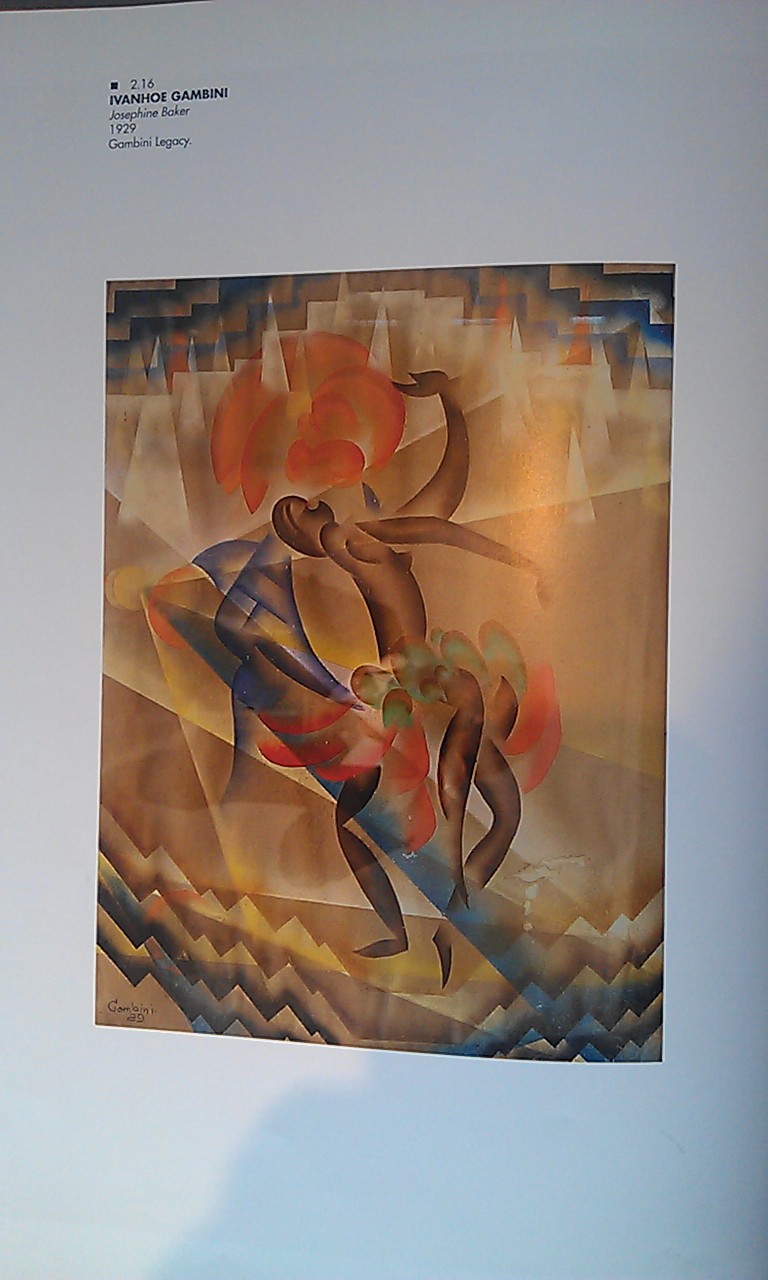
Josephine Baker.

Crude propaganda using Futurist techniques with a touch of Art Deco!

Dream Complex No.1

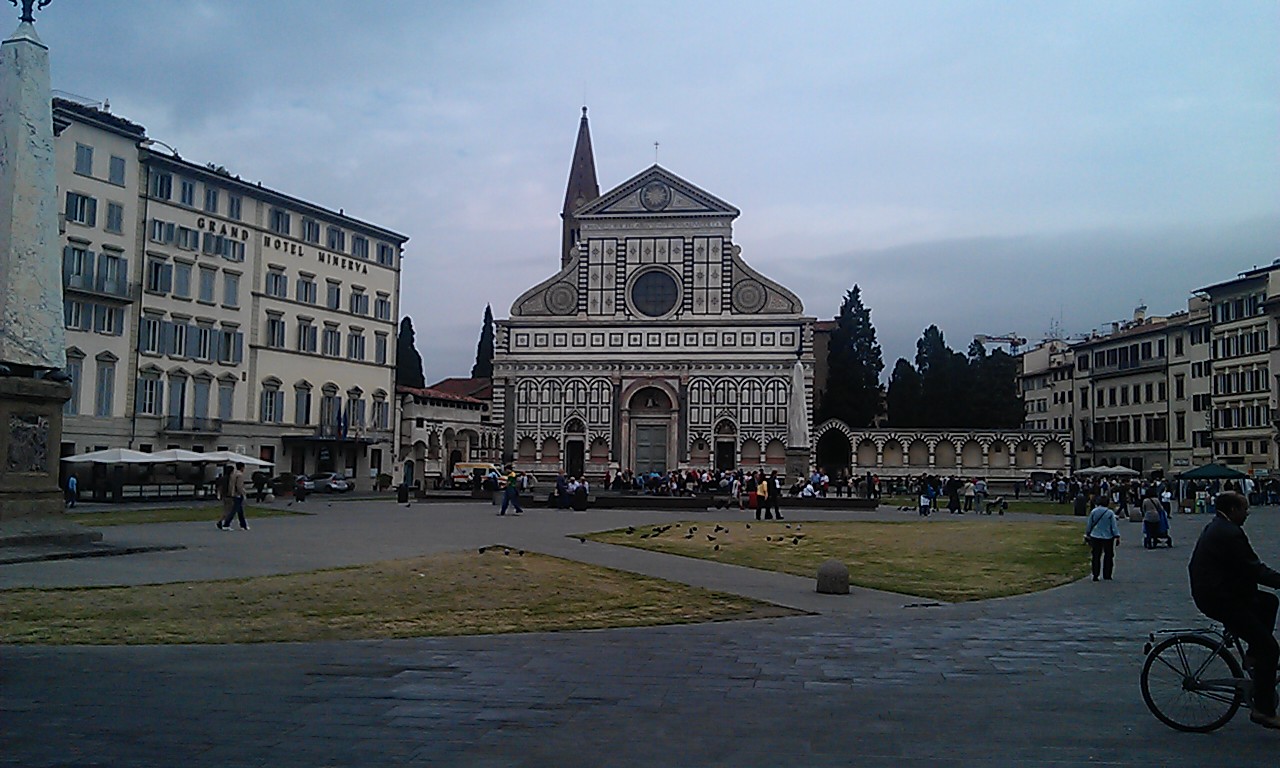
It’s a hard slog walking around exhibitions (but in this case worth it). Time for a nice sit down and a rest outside the Santa Maria Novella church.

Santa Maria Novella

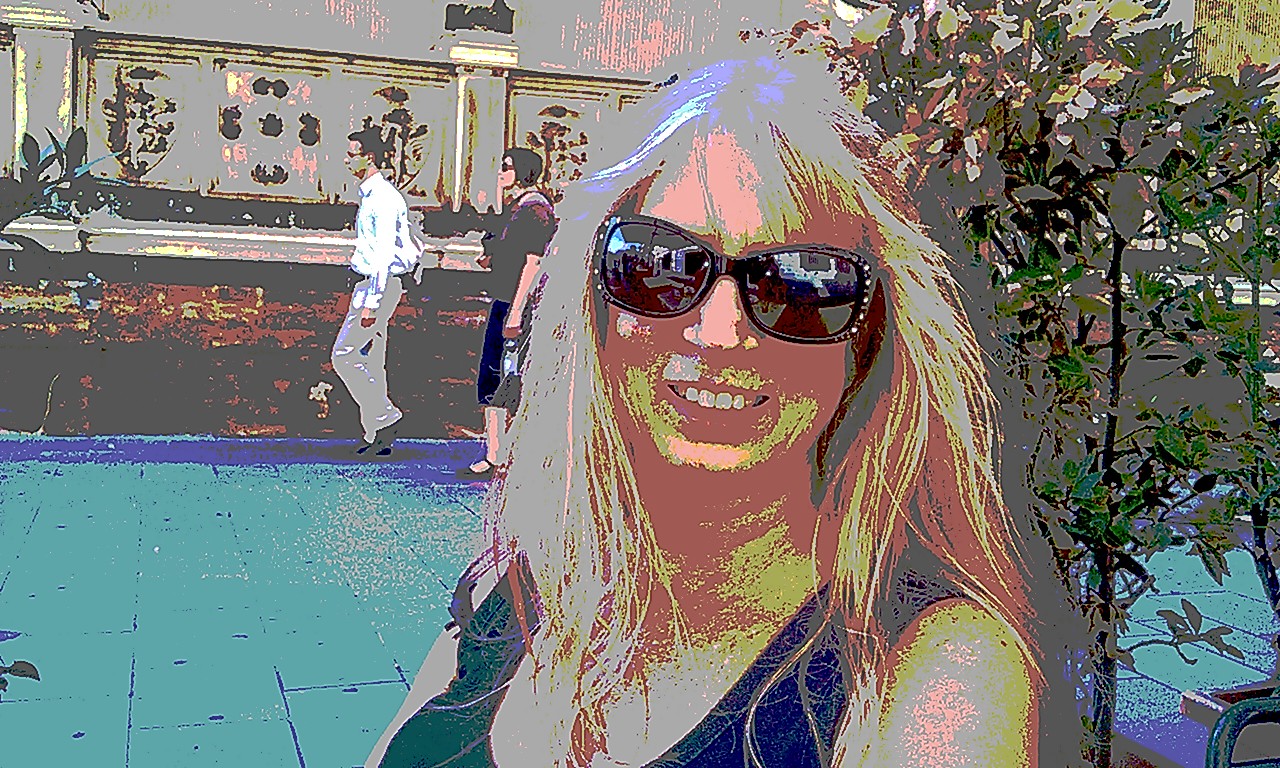
Sue outside Santa Maria Novella

Nice caffe!!

Beautiful cloisters at Santa Maria Novella.

Mmm, Special Effects! That’s what that button does!!

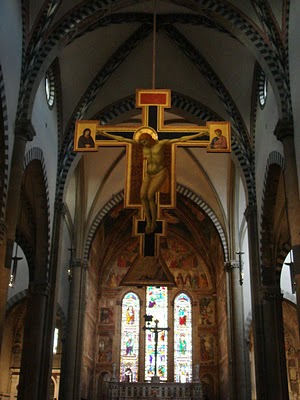
The church of Santa Maria Novella is beautiful and contains many astounding frescoes. Unfortunately they don’t allow you to take photos ( a common thing in most museums and art galleries which I think is a bit mean really). The stand out feature though is the crucifix painted by Giotto. It is a sublime and beautiful piece of work.

Crucifix painted by Giotto.

We spent two days travelling round Florence on an open top bus. Fortunately, the weather remained good for most of the time although there were a few heavy showers at times. The view from Piazzale Michelangelo is breathtaking and it contains one of the many copies of David, the sculpture of which Vasali said that once you’ve seen it you’ll never need to see another sculpture. The original is in the Accademia which we visited and it really is breathtaking. The hands and feet look like they might start moving any minute! It is enormous and seems to be alive!

Michelangelo’s David

Thursday night we went to the open mic at the Irish pub “The Fiddler’s Elbow” on Piazza Santa Maria Novello. Not many people there but had a really good time. Was asked to play at a Bob Festival to be held next May. That’ll be fun!

On the last day we went to Pisa where we were flying from. Spent the afternoon having a meal with the leaning tower in the background. Very nice!

The leaning tower. Nice hat!

The cathedral at Pisa.