My Favourite Albums of All Time (Part Two)

This is the second part of my favourite albums of all time. You can find the first part here My Favourite Albums of All Time Part One.

6. Astral Weeks by Van Morrison

VanMorrisonAstralWeeks

Astral Weeks is unique like many of the albums on my list. I’m not that much of a Van Morrison fan. I find most of his records fairly bland and stylised. I’ve heard most of them and am not that impressed apart from his early work with the seminal rock band Them. Here Comes The Night  is a genius three minutes of pop and Baby Please Don’t Go is the essence of R&B. Astral Weeks was recorded and released soon after Them split up. As already said, it is unique and genre busting. Yes, it’s kind of jazz, kind of folk and kind of poetry but more of an amalgam of all three with a dose of unintentional classical music thrown in. How it ever came to be recorded by a major label is one of the wonders of the late sixties when good music came to be commercial. Or was it? It was quite a long time before anyone heard it or was aware of it. However, it ranks as one of the most creative records released by a commercial record company ever.

Without knowing the full details behind the creation of this album I feel that it contains the essence of a real sadness and sense of loss. I don’t know this, I feel it! It is like a folk/jazz equivalent of T.S. Eliot’s The Waste Land with it’s evocative phrases and overwhelming sense of sorrow and psychic pain. This really IS the blues. Not the black American blues of the southern plantations and urban ghettos but the white blues of a psychologically dislocated Brit in the heart of Belfast, Northern Ireland. To add to the sense of alienation it was recorded in New York in 1968.

You know you’re in a different creative universe right from the word go. The first song Astral Weeks tells the listener that he is nothing but a stranger in this world and would like to be born again. The final song Slim Slow Slider describes a woman who has a brand new boy and a Cadillac but who is dying and every time I see you
I just don’t know what to do. The song ends in a blast of free jazz. Pretty bleak stuff!

In the meantime we have various shades of misery apart from The Way Young Lovers Do which is surprisingly upbeat and even optimistic. The real standout track is Madam George which in his Belfast/American drawl seems to sound like Madam JOY. He seems to plaintively be singing say goodbye to Madam JOY, wonder why for Madam JOY while the violins weep and intertwine around the three chord riff . Amazing stuff!!

7. Blonde on Blonde by Bob Dylan
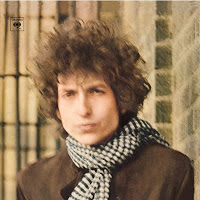
blondeblonde

Blonde on Blonde is a truly amazing album. The first double album in history with a price tag to match. How did anyone afford to buy it? I don’t know but I certainly couldn’t. I had to make do with the single releases until years later when I had a girlfriend who owned it. No, it wasn’t her only attraction!

This record continues the surreal imagery of Highway 61 Revisited but his voice has changed and the playing seems thinner and less aggressive. It was a thin, mercurial sound. When I first heard I Want You on a radio in Glasgow I thought it was a joke, a bad imitation of Dylan but I was wrong. I bought the single and soon realized it’s brilliance. The B side contained the rarely heard since version of Just Like Tom Thumbs Blues recorded live in Liverpool 1966. With screaming feedback and yelled lyrics it’s a complete contrast to the studio version.

Dylan in the 60s never stood still and he was a complete enigma. Not only did his voice change with each record so did the way he looked. It was like he was trying to stay one step ahead of everyone but he couldn’t, especially the growing army of crazies who were hanging on to his every word and before long were going through his garbage in search of even deeper meanings.

The real standout tracks on this album in my opinion are Visions of JohannaSad Eyed Lady of the Lowlands, Just Like a Woman and I Want You but the rest is incredibly interesting. The anger has been dissipated and he is investigating relationships and general absurdity. He’s like the bastard offspring of Albert Camus lost in an absurd universe. In fact, throughout the album there is an expressed desire not to have to go through all of these things twice. A really brilliant record!

8. White Light, White Heat by The Velvet Underground

163132

Dylan had the thin, mercurial sound but the Velvet Underground had the loud, distorted, grating  sound delivered to perfection on this second album. Nico is no longer present and the soft, folky ballads have gone apart from the song Here She Comes Now. The rest of it is self-consciously anti-beauty. According to Lou Reed the producer, Tom Wilson ( who also produced Bob Dylan’s Like a Rolling Stone), was so pissed off with the cacophony of Sister Ray that he left the studio and showed them the record button and told them to do it themselves. Fantastic, it’s one of my favourite tracks. Although, Andy Warhol was no longer involved with the Velvets his influence is still felt with the extremity of the lyrics and the overall sound.

Although it sold few copies when first released it became one of the biggest influences on British Punk Rock. Apparently The Buzzcocks formed  after members followed an advertisement looking for musicians who could collaborate on a Sister Ray cover.

Apart from the title song another truly great track is I Heard Her Call My Name which features uncontrolled guitar feedback accompanied with the cry of And then my mind split open by Lou Reed. It seems the band were disappointed with the recording of this because it didn’t match the energy or intensity of their live performance. Mercy!!

I actually bought this record when it was first released but I couldn’t convince many of my friends to share my love of it. In fact most of them thought it was terrible. How wrong they were!! Interestingly, Lou Reed was a very reluctant hero of Punk and, in fact, he had no time for it even though he is often presented as the ultimate Junkie Punk Persona. Many of his songs are quite complex both musically and lyrically and don’t fit into the simplistic barbarism of Punk. Okay, White Light, White Heat is the exception!

9. Hunky Dory by David Bowie

tumblr_l0hdtmBmwk1qa86nxo1_500

White Light, White Heat leads neatly into this album because David Bowie was a big fan of the Velvets. He featured that song in his live sets and even recorded it twice. He also references the Velvet Underground on the sleeve notes of Hunky Dory as an influence on the song Queen Bitch.

Hunky Dory didn’t sell much when it was released in 1971 but people in the right places were aware of it and liked it. Bowie says that it was the first album he made that other people talked about and were interested in. Until then he was a promising singer/songwriter who had had one big hit with Space Oddity. His record company still had a lot of confidence in him, obviously.

It is a surprisingly mature piece of work for someone who is still finding his voice. It ranges from total all out pop to introspective gloom. He includes songs about Bob Dylan and Andy Warhol which are hard to fathom. Are they hero-worship or sneering sarcasm? There seems to be a bit of both there. Andy Warhol looks a scream hanging on my wall, Andy Warhol silver screen can’t tell them apart at all. The sleeve is interesting in that he deliberately creates an androgynous image, based on a picture of Marlene Dietrich apparently. He is developing and extending the kind of cross-dressing and gender-bending that had already begun with Mick Jagger who wore a dress at the Hyde Park Free Concert in 1969. Bowie also wears a dress on the cover of his album The Man Who Sold The World.

This really is a seminal album that throws up all kinds of interesting things. When William Burroughs interviewed Bowie he said that he thought the 8 Line Poem was referring to T.S. Eliot’s The Waste Land. Bowie professed to know nothing about T.S. Eliot but, almost certainly, went away and found out about him because he was so in awe of William BurroughsBurroughs describes The Waste Land as the first cut-up poem, a technique that Bowie used in many of his songs.

One of the standout tracks is Life On Mars which along with O You Pretty Things illustrates one of the aspects I find most disturbing about Bowie’s work i.e. his flirtation with Nietzscheanism and the idea of the Superman. This idea features in many of Bowie’s songs e.g. The Man Who Sold The World, The Supermen etc.  I’m not saying he is a Nazi but he comes dangerously close at times, especially when he gave a Nazi salute in Berlin in the mid 70s (he blamed it on the coke!). Oh you pretty things don’t you know you’re driving your Mamas and Papas insane let me make it plain, you’ve got to make way for the Homo Superior! Hippie ideology this aint!! And it’s all wrapped up in a fluffy pop package.

This is a brilliant record, though and gets better with each play. I particularly like the Bewley Brothers. This song has a sense of mystery and loss about a musical group who obviously make a big impact but maybe were never famous (or were they like the Beatles?). Like all good poems you can draw your own conclusions and read many different things into it.

This album became a hit after the success of Ziggy Stardust and the Spiders From Mars. Ziggy made Bowie a big star but the standout record of this time, I think, is Hunky Dory.

10.  GP/Grievous Angel by Gram Parsons

Gram_Parsons-Gp_Grievous_Angel-Frontal

I discovered this record in 1975 about the first time I met Ric Grech. I was running a folk club in the top room of the Town Arms, Leicester U.K.at the time where many aspirational songwriters turned up. One night Ric arrived in his Ferrari with a violin and joined in. He had recently arrived from America having just made a record with super-group KGB. Okay, why he left LA and came to Leicester I don’t know but he was in awe of Gram Parsons and was interested in forming a country group with Leicester musicians playing his ( Ric’s) songs which were actually very good. He had collaborated with Gram on his two solo albums before he inconveniently died (Parsons that is. Ric inconveniently died some time later!) and two of the songs are written by him Kiss the Children and Las Vegas. He also had Gram’s guitar, a Gibson Dove, with him.
Gram Parsons had a big effect on people he met. English musician and hippie doctor Hank Wangford became a country singer because of his influence. By proxy, through Ric, he became a big influence on the local Leicester scene where many people turned to Country which had previously been a much maligned genre and was considered reactionary, corny and simplistic.

Parsons is considered the inventor of Country Rock but this isn’t apparent from his solo records which are actually quite traditional in many ways. He certainly didn’t like the sound of the Eagles who were becoming very successful at the time, members of which had played in various groups with him. What really stands out in his records are the ethereal quality of his songs, his voice, the brilliance of the band that included many top musicians like guitarist James Burton and the duets he sang with Emmylou Harris. In fact, after his death Emmylou Harris became a major star in her own right and continued Gram’s ideas for many years.

These records don’t leap out at you like Astral Weeks and others on this list but they definitely grow on you. Standout tracks include $1000 Dollar Wedding and Love Hurts. Gram and Emmylou are outstanding together, something that Bob Dylan picked up on when he hired Emmylou to sing on the Desire album. He also makes you aware of some really great country singers and songwriters that were not well-known at the time like The Louvin Brothers.

Definitely worth listening to, but give it time!

Painters Painting, a 1973 Documentary Featuring Andy Warhol, Jasper Johns, Willem de Kooning, and More

My Favourite Albums of All Time (Part One)

This is a tricky one. I’ve never been that impressed with ‘best of’ lists but I found myself sitting in a hotel room listening to music on my phone and I began thinking about what my favourite (and most influential) albums of all-time were. I say influential because, as some of you know, I am a musician and song-writer who has followed in the footsteps of numerous greats. It’s a hard choice but here’s my favourite 10. I’ve limited myself to two albums by the same artist or else they would probably be all by Bob Dylan ! I also realise, having completed the list, that, with the exception of the first 5, the rest are in no particular order. I’m also aware that there are countless others that could, and probably should, be included. Alright, it’s a stupid idea but here it is!

1. Highway 61 Revisited by Bob Dylan.

Highway+61+Revisited+Bob+Dylan++Highway+61+Revisite

Okay, what can I say about this album apart from the fact that it is probably the most inspired piece of work I have EVER heard (notice the Dylanesque emphasis) and I’m not just talking about music! I have read reports about the session and all participants agree that something very special happened here. It contains, in my opinion, the greatest rock song of all time “Like a Rolling Stone” but this is not really the essence of the album. It stands apart and, indeed, was produced by a different person from the rest of the record. The remainder contains Dylan at his most aggressive and elusive best. The most interesting song, again in my opinion, is Desolation Row, a surreal trawl through 20th Century culture and ideas. “Ezra Pound and T.S. Eliot fighting in the captain’s tower, while calypso singers laugh at them and fishermen hold flowers”. This isn’t just poetry and music it is an assault on the senses and intellect! “The Agents” and “The Superhuman Crew” check to see that no one is escaping to Desolation Row. The famous voice that people either love or hate is at it’s expressive best. Like many albums on my list this one is unique. There was nothing like it before and there’s been nothing like it since. Even the titles of the songs were a new departure with weird names like “Queen Jane Approximately”, “Just Like Tom Thumb’s Blues” and “Ballad of a Thin Man” that seemed to have nothing to do with the lyrics of the songs but probably did have. Pop music had found Symbolist poetry and the kids loved it!! (Well, this one did). It stands alone and sounds forever modern and archaic at the same time. Dylan himself has said that he had no idea how he wrote the songs and wouldn’t be able to do them now. The musicianship is impeccable especially the electric guitar playing of Mike Bloomfield and the acoustic lead of Charlie McCoy imported especially from Nashville for just one track!

2. The Songs of Leonard Cohen220px-SongsOfLeonardCohen

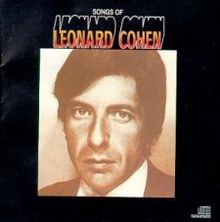
If Bob Dylan in the mid sixties was on an amphetamine fueled creative voyage into oblivion Leonard Cohen was on a quietly mannered journey back from it. This album emerged in 1968 and gradually became a bedsit legend as many sad young men and women took the songs to heart. Okay, it has been called music to slit your wrists to and Cohen’s voice has probably been even less complimented than Dylan’s but to those in the know this is an album of beautifully crafted songs whose underlying message is surprisingly optimistic completely unlike the eternal whinging of say Morrissey and the Smiths who actually DID create music to slit your wrists to. Cohen’s songs deal with ideas that had seldom been dealt with by popular music before. Despair, spirituality, sexual love and he wrote like a real poet which of course is what he was. He was also a well known novelist before he became a singer and a songwriter. A very different pedigree to most of the pop singers and rock and rollers at the time. He was a remarkable performer though and managed to follow Jimi Hendrix at 4 in the morning at the 1970 Isle of Wight Festival and still get a standing ovation. Producer Bob Johnson was so impressed with him that he gave up producing and joined his band as a keyboardist. This was his first album and contains classics like “Suzanne” and “Hey That’s No Way to Say Goodbye”. My favourite is “The Stranger Song” that manages to evoke feelings of loss, alienation and redemption. ” And then sweeping up the jokers that he left behind you find he did not leave you very much not even laughter. Like any dealer he was watching for the card that is so high and wild he’ll never need to deal another.He was just some Joseph looking for a manger”. It also has his trade mark guitar ripple which is quite difficult to do. The perfect song for existentialists.

3. The Velvet Underground & Nico

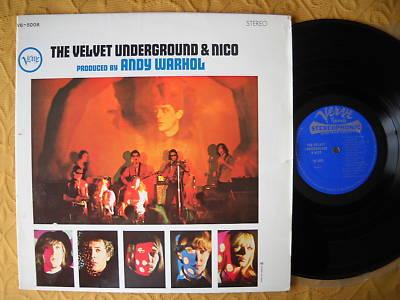
The Warhol Banana cover is more well known but this was the original cover in the UK.

The Warhol Banana cover is more well known but this was the original cover in the UK. The record label is wrong. It should be black.

If Leonard Cohen was the poet laureate of despair and alienation the Velvet Underground were like a sound track to the heroin drenched ravings of William Burroughs in “The Naked Lunch”. Here we have tracks like “Heroin”, “The Black Angel’s Death Song” and “Waiting for the Man” complete with drones and excruciating feed back. This is like the antithesis of pop music, both disturbed and deranged. Not surprisingly it was neither played on the radio nor bought in any quantity by the general public at the time. It has since of course been cited as one of the greatest records of all time and was a massive influence on punk rock. Famously produced by Andy Warhol (or should that be non-produced as he knew nothing about music or record production!) it also contained some sweet ballads dealing with wholesome events like “All Tomorrow’s Parties”, “Femme Fatale” and “Venus in Furs” that reference both mental insecurity and sado-masochistic sex. Not your typical pop song.! This is a truly adorable record that managed to both scare and make me smile. Lou Reed thinks that if it had NOT been produced by Warhol it might have sold a lot more as he was so universally detested at the time (Warhol that is. Lou Reed has only become detested more recently!) and his name on the record put people off. On the other hand it would never have been released as it is without his influence. Some PROPER record producer would have cleaned it up and totally ruined it.

4. Strange Days by The Doorsfreecovers.net

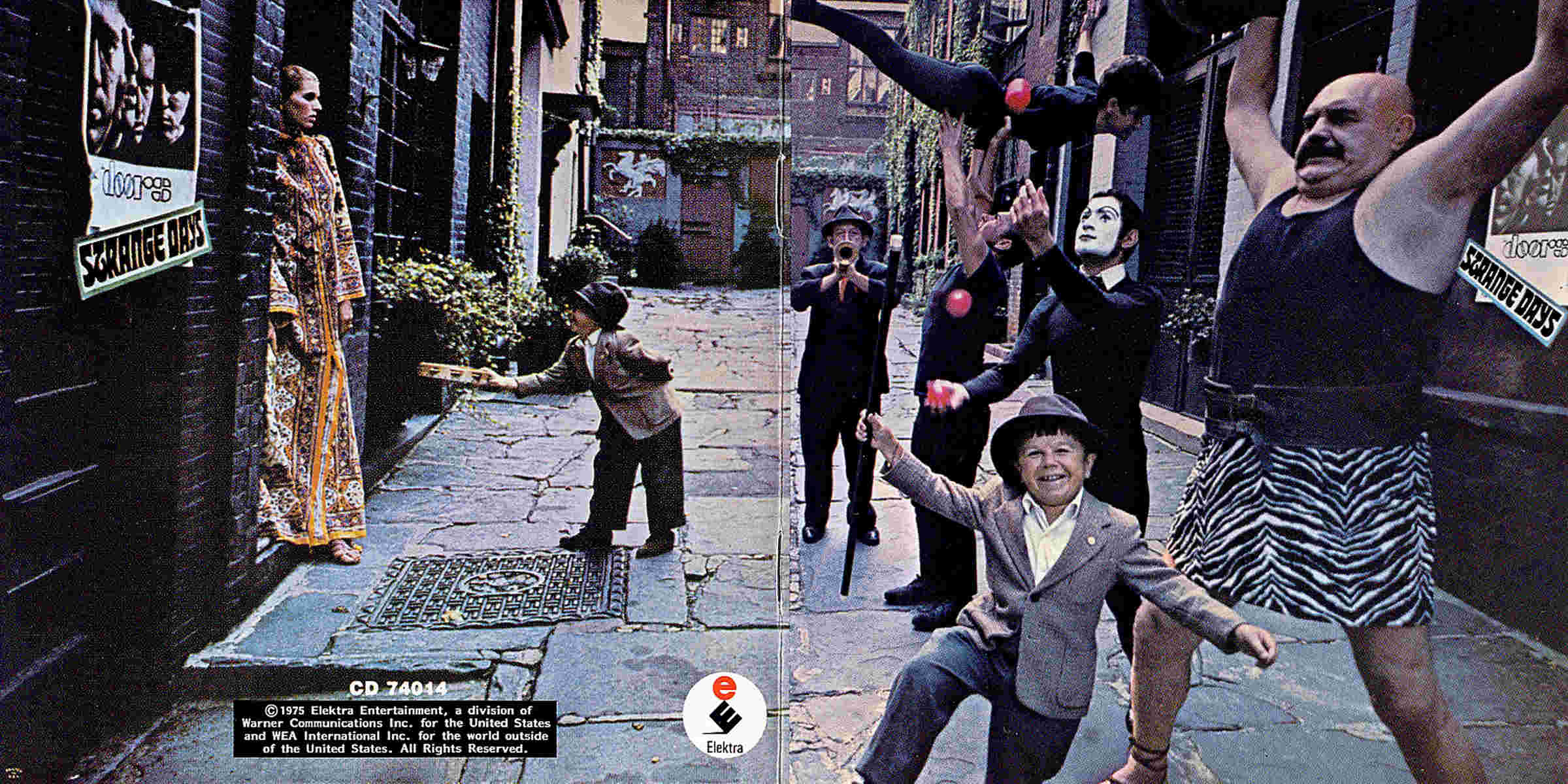
You may wonder why this record by the Doors is so high up the chart and not their dazzling first LP. Well, the answer is simple. Apart from a couple of singles like “Light My Fire” I missed the first one and went straight into “Strange Days” which I think is absolutely brilliant. The sound of the Doors is wonderful and the quality of Jim Morrison’s voice is just perfect. He described it as “sick crooning” as he had based it on the sound of Frank Sinatra. Mind you, he doesn’t sound much like Frank when he bellows out “Cancel my subscription to the Resurrection!!” He was a great lyricist who raided the poems of William Blake and created something new. The final song “When the Music’s Over” is monumental and gives the impression of spontaneity and improvisation. Morrison introduced performance poetry to pop music and created the way for great artists like Patti Smith. I just love the line “Before I sink into the big sleep, I want to hear the scream of the butterfly”. It has been said by some critics that this album is not as good as the first and they used up all their best songs on that one. I disagree, I think this is just as good and,in my mind, perhaps even better. Mind you, I also love “Waiting for the Sun” and even the song “Hello, I Love You” which attracted some derision at the time because it was seen as cynically commercial (and plagiarised The Kinks)! I guess the Doors can do no wrong for me!

5. Revolver by The Beatles220px-Revolver

In a similar way that I missed the first Doors album I also missed “Rubber Soul” by the Beatles. If I hadn’t have done it would probably have been my favourite Beatles record. As it is, I didn’t listen to it in it’s entirety until years later! However, “Revolver” still stands up as the most ambitious Beatles record until that date. “Sgt. Pepper” is probably more ambitious but it is not as interesting, in my opinion, with the exception perhaps of “Day in the Life”. “Revolver” totally knocked my socks off. From the opening count-in of “Taxman” to the wailing drones of “Tomorrow Never Knows” I was captivated. This was music I had never heard before and I loved it! It also had the first real use of Indian music. Sure, George had used the sitar on “Rubber Soul” but here we have a full Indian ensemble including tabla with George crooning mystically over the top of it. Totally brilliant!! There is also the first use of experimentation with the recording of reverse guitar tracks and tape loops. The Beatles are growing up and trying new things! This record probably has the Beatles playing together at their best. George’s lead guitar playing has improved and changed considerably. Ringo’s drumming has never been better. John and Paul’s voices are perfectly matched. It is interesting that in the same year that they gave up playing live they produced their tightest recordings ever. Songs like “And Your Bird Can Sing” and “She Said, She Said” are miniature gems of great writing and playing. Oh, and the sleeve’s pretty cool as well!

DAVID BOWIE EXHIBITION

David Bowie Exhibition (reprinted from ‘That’s Not My Age‘)

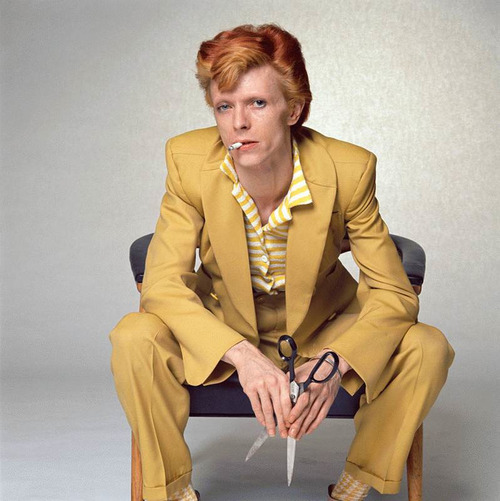
Starman suit.

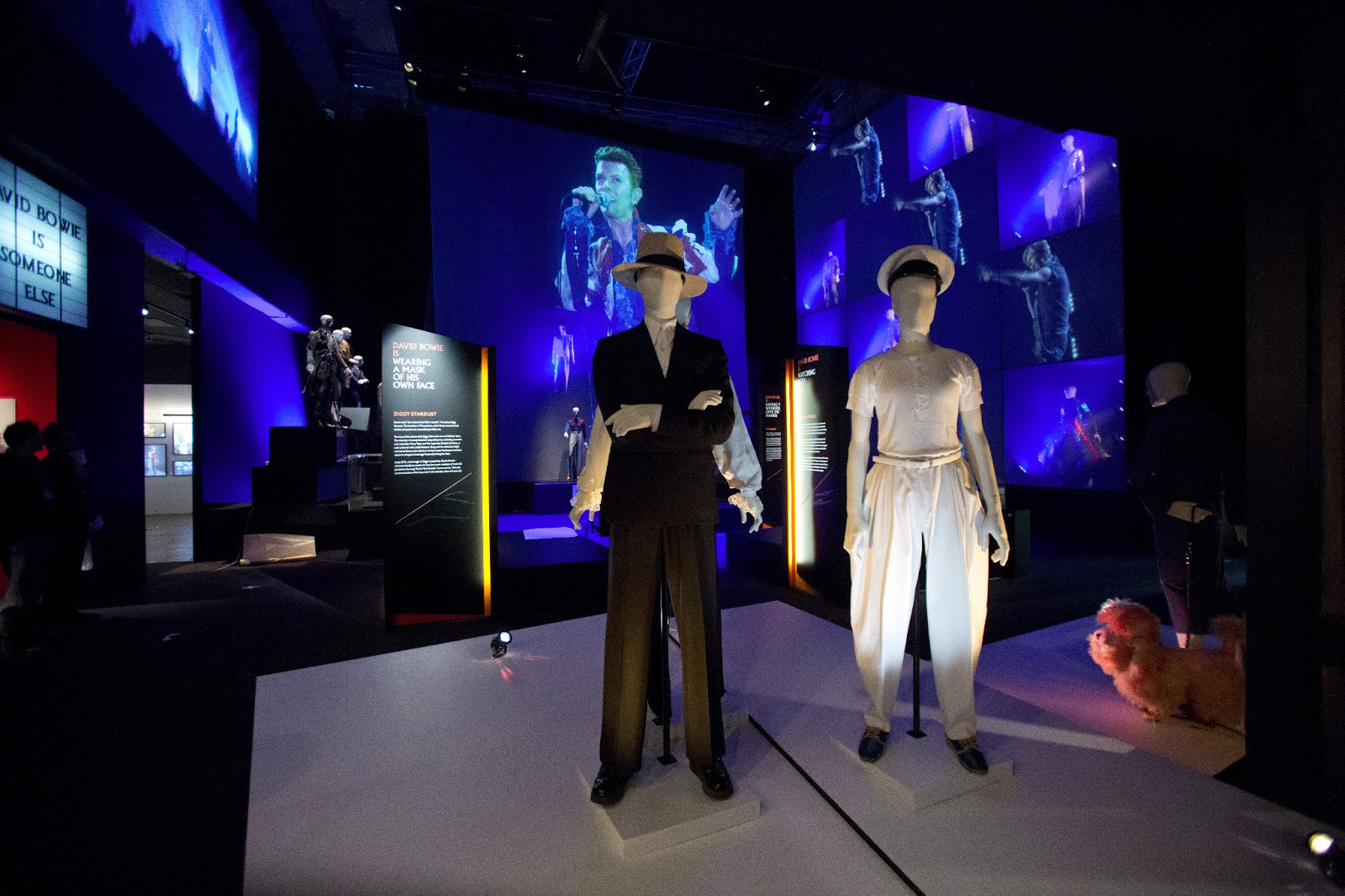
Bowie Mania has come to town – and I like it. Record advance ticket sales (an astounding 47 thousand) for the V&A’s exhibition and a number one album highlight this 66-year old superstar’s enduring appeal. From the Ziggy Stardust neon flash in the foyer, to the floor-to-ceiling surround-sound Bowie Fest in the penultimate room, this exhibition documents the artist’s life, sound and vision-style. And if there’s one artist who’s life is worth documenting in a world-class museum, here he is. Stereo headphones for the soundtrack – thankfully there’s no Tin Machine – and banks of video screens for the Man Who Fell To Earth visuals, immerse visitors in the World of Bowie.

More than 300 objects from His Majesty’s personal archive – wonky handwritten lyrics, naive sketches, even a crumpled up tissue with Bowie’s lipstick on it (much redder than you’d imagine) – are on show for the first time. I’m not a fan of blockbuster shows, Art Rage is something I can live without, but it was worth being jostled by journalists and clobbered by cameramen at this exclusive preview. I loved seeing the stage costumes, over 60 of them – the teeny tiny waisted, pale blue suit from his Life On Mars video, the Aladdin Sane knitted all-in-one, designer gear from McQueen, Mugler and Slimane – plus photos and videos of the artist’s many guises, are a reminder of Bowie’s radical individualism and his massive influence on fashion, style and popular culture. Not that we ever needed one.

Knitted Love: Aladdin Sane
Remember when everyone wore Bowie pants?
Diamond Dogs suit.
Photo: Terry O’Neil.

Towards the end of the show there’s a ‘David Bowie is all around you’ installation, highlighting his impact on musicians/artists/fashion designers/Tilda Swinton, and The Periodic Table of Bowie by Paul Robertson (poster available in the museum shop).

As the Jon Savage quote goes, ‘David Bowie has lasted. To the public he is beyond a pop star.’

And now I’m off for a lie down. I’ll be dreaming of BBC2’s feature length profile on Bowie scheduled for May.

Richard Hamilton Late Works at the National Gallery

I had a lovely time visiting London this week. Like New York it is a place that makes me feel good just by being there, walking around! This time I went to The National Gallery to see the Richard Hamilton exhibition before it closed.

ecard-RH-with-text-revised2

Richard Hamilton is one of the first artists to describe what he was doing as Pop Art a long time before Andy Warhol started using the term. His iconic picture from  1957 is called “Just what is it that makes today’s homes so different, so appealing?

Just what is it that makes todays homes so different so appealing

Just what is it that makes today’s homes so different, so appealing? Notice the word Pop on the lollipop.

Here is his potential manifesto for Pop Art written in January 1957:

“16th January 1957

Dear Peter and Alison,

I have been thinking about our conversation of the other evening and thought that it might be a good idea to get something on paper, as much to sort it out for myself as to put a point of view to you.

There have been a number of manifestations in the post-war years in London which I would select as important and which have a bearing on what I take to be an objective:

Parallel of Life and Art
(investigation into an imagery of general value)

Man, Machine and Motion
(investigation into a particular technological imagery)
Reyner Banham’s research on automobile styling
Ad image research (Paolozzi, Smithson, McHale)
Independent Group discussion on Pop Art – Fine Art relationship
House of the Future
(conversion of Pop Art attitudes in industrial design to scale of domestic architecture)

This is Tomorrow
Group 2 presentation of Pop Art and perception material attempted impersonal treatment. Group 6 presentation of human needs in terms of a strong personal idiom.

Looking at this list is is clear that the Pop Art/Technology background emerges as the important feature.

The disadvantage (as well as the great virtue) of the TIT show was its incoherence and obscurity of language.

My view is that another show should be as highly disciplined and unified in conception as this one was chaotic. Is it possible that the participants could relinquish their existing personal solutions and try to bring about some new formal conception complying with a strict, mutually agreed programme?

Suppose we were to start with the objective of providing a unique solution to the specific requirement of a domestic environment e.g. some kind of shelter, some kind of equipment, some kind of art. This solution could then be formulated and rated on the basis of compliance with a table of characteristics of Pop Art.

Pop Art is:
Popular (designed for a mass audience)
Transient (short-term solution)
Expendable (easily-forgotten)
Low cost
Mass produced
Young (aimed at youth)
Witty
Sexy
Gimmicky
Glamorous
Big Business

This is just a beginning. Perhaps the first part of our task is the analysis of Pop Art and the production of a table. I find I am not yet sure about the “sincerity” of Pop Art. It is not a characteristic of all but it is of some – at least, a pseudo-sincerity is. Maybe we have to subdivide Pop Art into its various categories and decide into which category each of the subdivisions of our project fits. What do you think?

Yours,

(The letter was unanswered but I used the suggestion made in it as the theoretical basis for a painting called Hommage á Chrylsler Corp., the first product of a slowly contrived programme. R.H.)”(Collected Words 1953-1982)

The exhibition for the Late Works was in preparation before Hamilton died on 13th September 2011. It seems odd to have such contemporary images in the conservative National Gallery but it is based on his studies of works that are in there. There is a particular interest in Renaissance perspective. There are also allusions to work by his hero Marcel Duchamp.

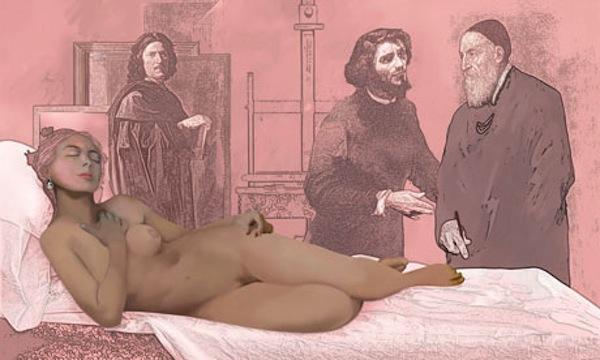
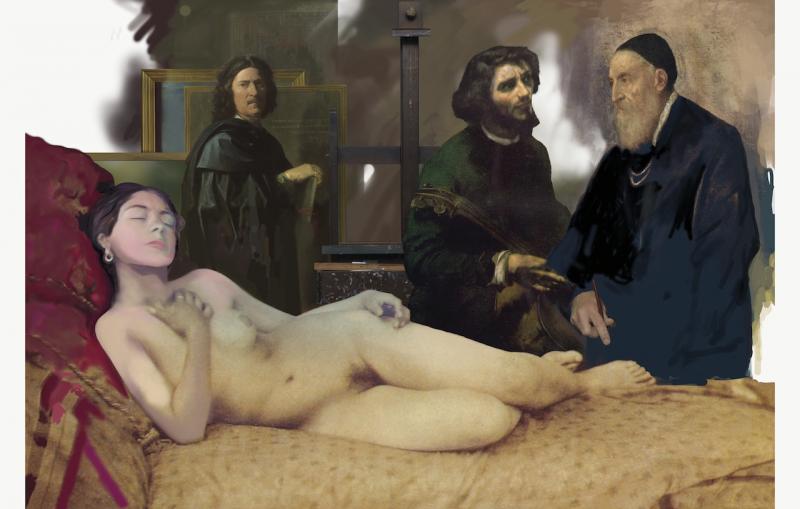
I found the exhibition very interesting although I know some others were disappointed. I am most impressed that right into old age Hamilton was still experimenting and using computers and Photoshop to create his images. I was particularly impressed by the culmination of the exhibition Le chef-d’oeuvre inconnu in which three great painters contemplate a reclining nude. This is very evocative and emotional.

3420

Le chef-d’oeuvre inconnu

Richard Hamilton_Venus

Le chef-d’oeuvre inconnu

An evocation of Marcel Duchamp

An evocation of Marcel Duchamp

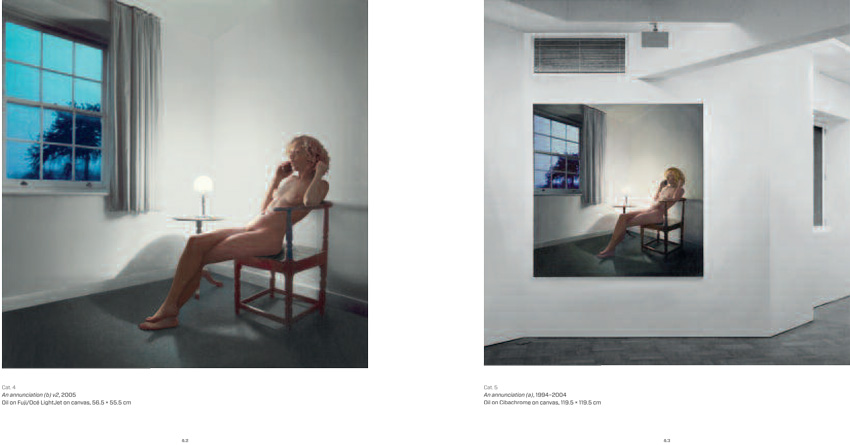
An annunciation

An annunciation

The Passage of the Angel to the Virgin, 2007

The Passage of the Angel to the Virgin, 2007

Yes, I am very impressed by these pictures and would recommend this exhibition if it moves somewhere else although I think it was particularly curated for the National Gallery with it’s many references to pictures in it’s collection and the building itself.

Day Trip to Hull

I woke up early this morning and decided to go somewhere. But where? Well, there are many places I have never been to that I want to see. Not all of them are pretty or picturesque but there is always something worth seeing and interesting people to meet. So, I decided on Hull. It’s not a place with the best reputation and it’s not the sort of place you pass through. You have to make a deliberate decision to go there. So, here I am on a train headed for Sheffield, then to Doncaster, then to Hull. Total travelling time three hours but you couldn’t drive it any quicker. I’m quite excited really. What will I find when I get there? Many interesting things no doubt. It will also be nice to be by the sea although I won’t be doing any sunbathing today, or any bathing for that matter!

image

Humber Bridge

Travelled on a tiny two coach train from Doncaster to Hull that stopped at every station. Had a good view of the Humber bridge which is pretty amazing. The Hull station is very nice with a statue of poet Philip Larkin who lived in Hull for thirty years. He’s the one who came out with the famous line about sex being invented in 1963 between the trial of Lady Chatterley and the Beatles first LP. Good stuff. Initial impression of Hull is quite good. It’s got a nice feel about it and the people are friendly with a great accent. Now to find the interesting bits.

image

Philip Larkin at Hull station

Hull is bigger than I expected and there are many grand civic buildings attesting to it’s obvious great wealth in the past as a major port. It is also colder than Leicester presumably because of it’s proximity to the sea. Actually, it’s not as near the sea as I thought. The main tributaries are the mighty Humber River and the River Hull where the main docks were. There are some nice anomalies like the cream telephone boxes . Very strange after a lifetime of seeing red boxes (although I know many are just glass now!) There are also some really nice Victorian shopping arcades with delightful specialty shops.

Cream telephone boxes!

Lovely shopping arcades!

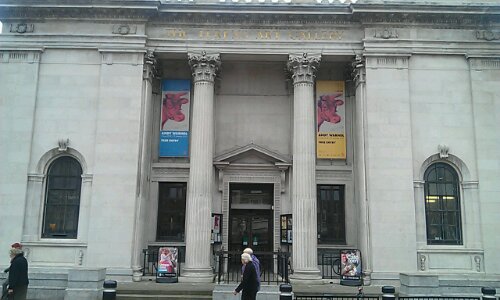
Of course, my first stop was Caffe Nero where I had a nice cappuccino. Then I walked into the centre of town where there are many museums and galleries. I was amazed to find a major Andy Warhol exhibition at the Ferens Art Gallery. This was totally unexpected. I hadn’t done any research before I came so to find this was quite strange. Warhol seems to be everywhere! I’m beginning to think that rather than being famous, in the future everyone will be Andy Warhol for 15 minutes. This exhibition is huge. There is a room full of later paintings, a room with stitched pictures and a room full of posters for the many events and films he was involved with.

image

Ferens Art Gallery

I’d never come aross the stitched pictures before. There are his trade mark multiple representations of the same picture but not like his silk screen prints. They are exactly the same picture but sewn together with thread, with bits of cotton dangling down which show exactly how they are done. Venus In A Shell alludes to Boticcelli but is set in the garden of a 60s Las Vegas house. Very intriguing. One of the remarkable things about the early screen printed multiple images is the way they change across the canvas because of the random way the technique works. They are all the same, but different. Like the images of Elvis that gradually fade away. There are no changes in the photographs. The only changes are caused by the dangling thread.

Venus in a Shell by Andy Warhol

Poster for Chelsea Girls

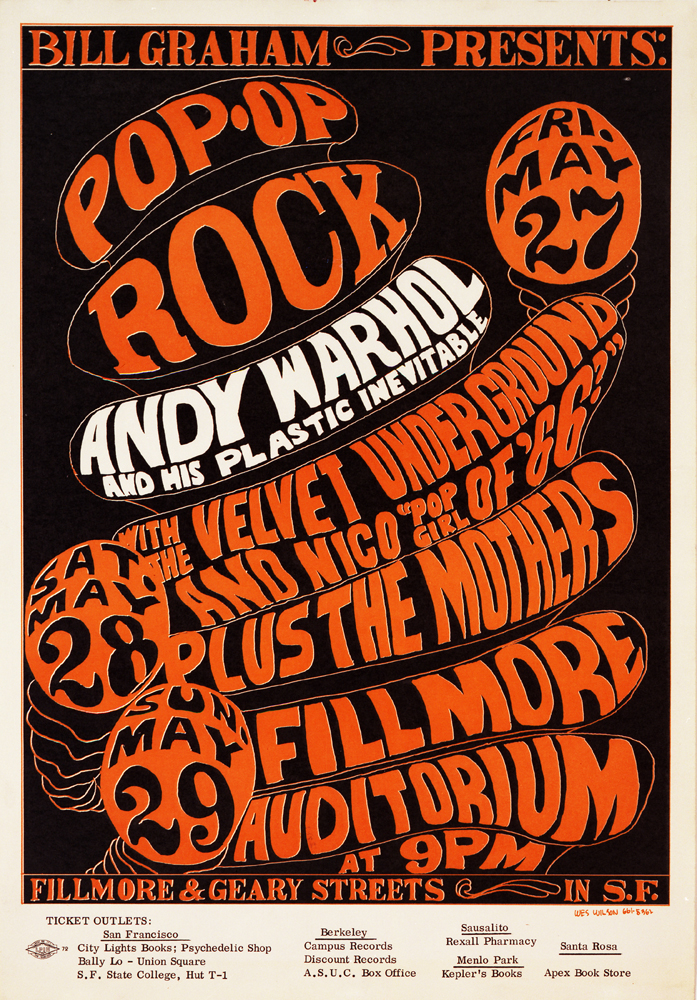
The room full of posters is very interesting and evocative. There is the iconic poster for the film Chelsea Girls and many of the other films he made. There are also some great ones of live performances like The Exploding Plastic Inevitable (although I see it’s called Andy Warhol and his Plastic Inevitable on the poster) which advertises a residency at the Filmore West on the same weekend as my birthday a year before the first Velvet Undergound album was released. What great joys I encounter!

Poster for The Exploding Plastic Inevitable. I like the bit that says Nico “Pop Girl of 66”! Doesn’t quite fit the ominous ballads she comes out with!

The room with the large later paintings sees Warhol returning to his earlier themes. There are soup cans, Brillo boxes and multiple screen prints. The one that attracted me most, although I’m not sure why, is the huge canvas called Repent And Sin No More. This is a typical evangelical statement that doesn’t quite seem to make sense. There is an element of contradiction and irony in it. Warhol would no doubt insist that it has no meaning beneath the surface.

image

Repent and and sin no more

The permanent displays in the gallery are very good. Some really nice Renaissance pictures.

Ferens Gallery. Renaissance section.

More Renaissance!

Of interest in the gallery are pictures by two women artists from the 19th Century, Rosa Bonheur and Emma Sandys. It is one of the few galleries I have visited recently that have work by women. Rosa Bonheur’s painting is on a large scale and is quite striking.

Rosa Bonheur Lions at Home 1881

Emma Sandys The Beautiful Wallflower

Well, time for lunch before I go on to see the Transport Museum and Wilberforce House. Went to Wetherspoons and actually did have a curry this time which was pretty good. Not bad to have a drink and a meal for just over £6!

The Transport Museum was fun with interactive displays and film shows. A great place to take the kids. There is a good display of early cars including electrical powered ones from the 19th century. It seems strange because electric cars seem like a new idea. There is also a tram and various buses and reconstructed streets and shops. Great fun and quite nostalgic.

Bus in Transport Museum with the tram behind it.

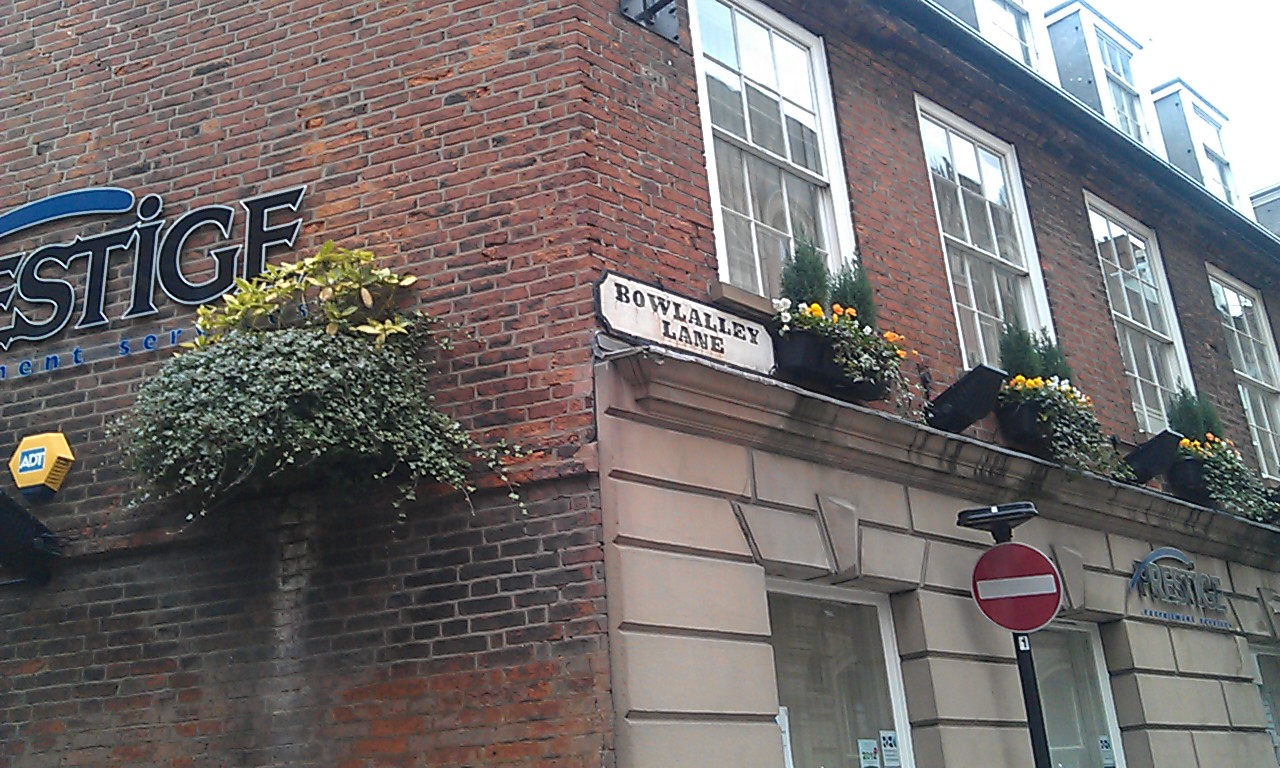
Actually, the bus looks like something out of Harry Potter and as I walk around the old town the street names seem to be out of Harry Potter too. You can’t help but like a place that has a road called Land of Green Ginger or Bowlalley Lane.

Land of Green Ginger

Bowlalley Lane

Yes, Hull is a nice place. The last place I visit is Wilberforce House. William Wilberforce was one of the most prominent slavery abolitionists in the 18th/19th Centuries. It took him years to get an anti-slavery bill through Parliament but eventually succeeded and deserves great credit for this. It seems incredible that the slave trade lasted as long as it did and makes a mockery of the idea of Free Trade. There is a hard hitting exhibition about the history and background of slavery in the museum that, quite frankly, left me in tears. It is astonishing that supposedly civilised people could have allowed it to continue for so long. As a crime against humanity it is as great as the holocaust and lasted much longer. Almost contradictorily, Wilberforce didn’t seem to share the same concerns about working conditions in England at the time. In a period when William Blake referred to Dark Satanic Mills and the exploitation of children was rife Wilberforce was a signatory to an act that outlawed trades unions. Of course, this doesn’t lessen the importance of what he did but it does raise other questions. Namely, WHY? It could be said that wage slavery is not much different to actual slavery. Still, it is an important and sobering exhibition.

Statue of William Wilberforce

Department at Hull University concerning slavery.

Day Trip to Sheffield

Decided to go to Sheffield today and give a running commentary of while I am here. Just got off the train and am now in the town centre sitting in a Caffe Nero. You probably realise by now that my life centres around Caffe Neros and Wetherspoons. One sells expensive coffee and the other sells cheap beer. They both use the same free WiFi provider though and I can use the same login details. God, this is even beginning to bore me! Sorry!

image

Caffe Nero. Town Hall in the background. It looks a bit like a fairy tale castle. Incredibly grandiose!

Sheffield is amazing. This is the first time I’ve looked around the city although I’ve been here times in the past doing gigs. Same thing happened in Derby. I felt like I knew the places but I don’t at all. Well, at least I’m making up for it now.

image

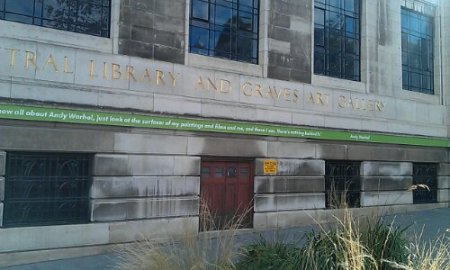
Graves Gallery

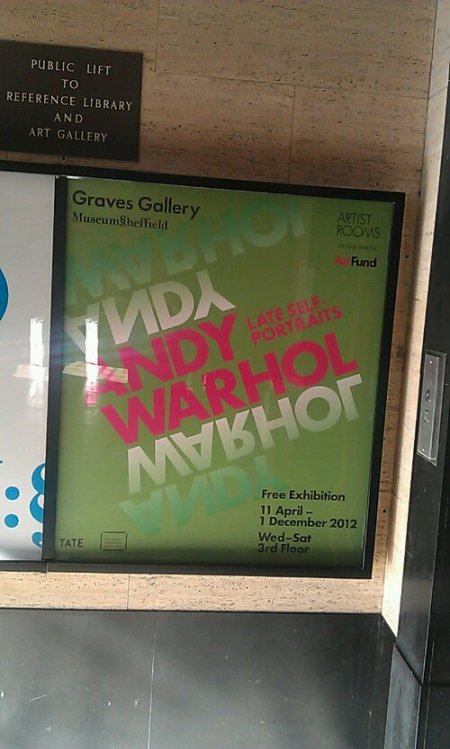
One of the reasons for coming here was to visit Graves Art Gallery where there is an exhibition of Andy Warhol self portraits. I’ve been interested in Warhol since the heady days of the 60s. Initially it was because of his association with the Velvet Underground and the hedonistic partying of the Factory. This became the stuff of legends and was attractive to an impressionable teenager like me. We tried to create our own version of The Factory in Leicester. At that time Warhol was the pre-eminent underground film maker and many of his films were shown in Leicester at our self created Arts Lab. I was impressed by their extreme nature and humour. I then became interested in his art but saw it mainly as iconoclastic and nihilistic which suited my state of mind at the time. I’ve since seen many of his paintings in galleries and realise he was a great stylist who had much to say. Even his car crash pictures have a strange kind of beauty about them and I never realised how big they were! It is clear he loved baiting the art establishment and he also loved critics and intellectuals who found a meaning in his work he never thought was there. His real achievement was to create profundity out of the ordinary, something I respect and have always tried to emulate. The mundane can be interesting with the right mental attitude. In fact, I believe everything is interesting! By making a Brillo box and Campbell’s soup cans ART he exposed the shallow commercialism of all art. They are ordinary objects in a supermarket but display them in a gallery and they become ART. There is no difference between a Warhol on the art market and a Van Gogh or a Da Vinci. Van Gogh may have been a tortured genius attempting to communicate with the world but his work is now seen as a high value commodity. Da Vinci was a product of the patronage of the Medicis of Florence. Their works are  just expensive and rare products that the rich invest in, more valuable than gold! Essentially, they are all the same. Even the Abstract Expressionists played the same game. They may not have liked it but they were just part of the system. Warhol knew exactly what it was about: MONEY. When he moved from advertising to being an ARTIST he really saw no difference in the two areas apart from the fact that ART could be far more lucrative to the artist and give him fame and celebrity. That’s why the art establishment hated him so much. He exposed it’s commercial core. Some of his comments like “everyone in the future will be famous for 15 minutes” ,”art is what you can get away with” and “I’m a deeply superficial person” show a real insight into the workings of the art and culture industries. Notice the emphasis on “deeply“. He wasn’t totally superficial he was deeply superficial. The ultimate post-modernist statement!

image

Andy Warhol poster

Well, true to form I came on the day when the Graves Gallery was closed. I seem to make a habit of this. So, I didn’t see the self portraits of Andy Warhol but I did see the public library that it is part of. Very impressive as is the square that it belongs to. I went to the Millenium Gallery nearby that has several exhibitions in it. The John Ruskin gallery is nice but didn’t really rock my boat.

image

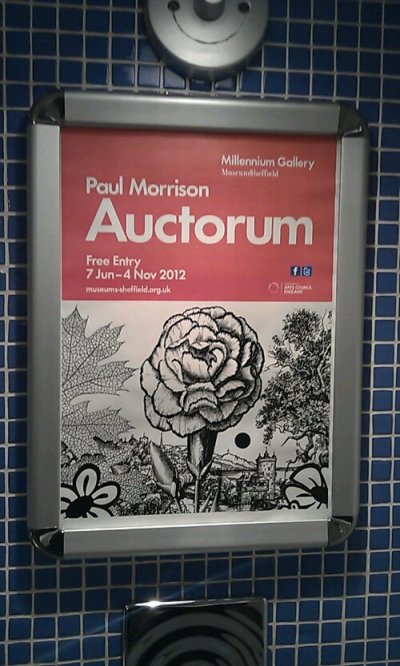
Paul Morrison poster

The exhibition of Paul Morrison was far more impressive. He is a local Sheffield artist who has achieved some fame and renown around the world. I really liked his work. He creates weird landscapes that seem strangely normal until you look closer and realise the anomalies. His video art is also interesting with changing views of water and aquarian growth. He is truly post-modern borrowing from nearly everything. I particularly liked his Bridget Riley inspired op-art piece which unfortunately did not translate into my photograph. Sheffield, I WILL be back!

image

Paul Morrison op-art flower

Feeling nervous!

Am sorting out the details for my trip. Feeling kind of nervous and excited. Not sure what is going to happen or even if I’m going to get there, but I’m sure I will!  Have practiced being a lone visitor in Berlin and it was weird but worthwhile. It’s not just about going somewhere far away to see what’s there but also about finding things out about myself which you can only do when you’re far from your comfort zone.

Why New York? Well, it’s the home I never knew apart from blasts of beat poetry, jazz and the folk scene. It was the sounds of the Velvet Underground in my suburban home in Leicester. It was the skyscrapers and Superman. It was the abstract expressionists and the weird goings on in the Andy Warhol factory. It was the complete fantasy. It was Positively 4th Street, where I am staying just round the corner in the Jane Hotel. It’s the Statue of Liberty and countless black and white movies from the 50s. In short, it was a dream of an alternative reality that I had always been part of but had never been to. I am going to pursue a dream. Is this wise? No, but I am driven to it like a moth to a flame.